Tag Archives: Italian

Meet the Maker: An Introduction to Valtellina’s Mountain Nebbiolo and Wines

After our post about Tenuta San Guido (the Bolgheri estate where Sassicaia is made) and our interview of Tenuta San Guido’s owner, Marchese Nicolo’ Incisa della Rocchetta, here come three new posts in our “Meet the Maker” series.

This time around we move from Bolgheri, Tuscany, all the way north to the Valtellina district in Lombardia to:

  1. Provide an overview of this very special area and its wines;
  2. Present one of the finest Valtellina producers, Ar.Pe.Pe., and taste certain of their wines; and
  3. Interview Isabella Pellizzatti Perego, Ar.Pe.Pe.’s enologist and co-owner.
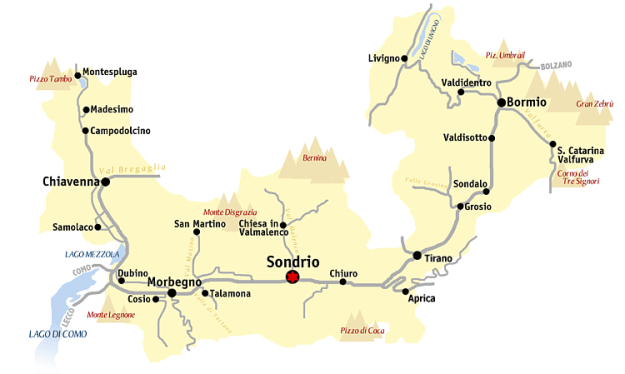
Map of Valtellina

Map of Valtellina, Courtesy of Wikimedia Commons

About the Territory and History

The Valtellina district is an area in the northernest part of Italy’s Lombardia region, close to the border with Switzerland, that comprises two mountain ranges stretching from west to east (known, from north to south, as Alpi Retiche and Alpi Orobiche) and a narrow valley in between, where the town of Sondrio lies.

Due to the geography of this area, viticulture in Valtellina has always been challenging, since most of the vineyards grow at an altitude of about 1,300 to 2,300 feet (400 to 700 meters) above sea level on narrow stone-walled terraces carved from the steep southern slopes of the northern mountain range (Alpi Retiche), so as to maximize the grapevines’ sun exposure. The rocks of the Alpi Retiche mountain range are prevalently granite-based, which means that the soil where the Valtellina grapevines grow is a sand-limestone mix and a very shallow one, as it is often less than 3 feet/1 meter deep.

Valtellina’s harsh geography means that vineyard mechanization is virtually nonexistent, with grapevine treatments, pruning and harvesting being made exclusively by hand, thus significantly increasing the average production cost.
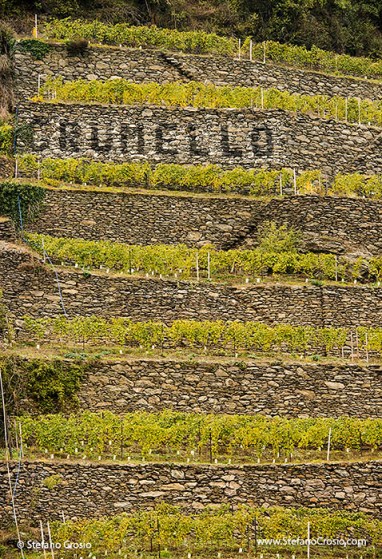

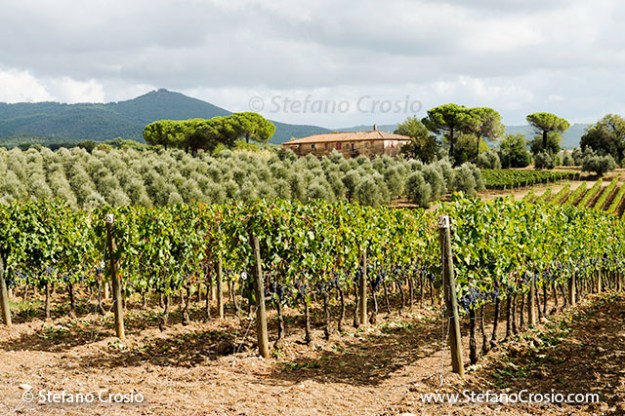
Valtellina mountain vineyards

Historically, the first evidence of viticulture in Valtellina dates back to the IX century (specifically, to year 837 of the Common Era). We have to wait until the XVI century, however, to have the first documented information about the size of the Valtellina vineyards, which back then were about 3,500 HA. As a result of the spread of the grapevine pathogen Uncinula necator (a fungus that causes powdery mildew of grapes) and the Grape phylloxera (an aphid-like pest that attacks the roots of Vitis vinifera grapevines and that almost completely destroyed the vineyards throughout Europe in the late XIX century), the overall size of the Valtellina vineyards dropped to less than 1,200 HA in the XX century.

The relevance of Valtellina as a wine grape landscape of significant cultural value is underscored by the fact that Italy put forward Valtellina’s candidacy (together with that of the Langhe/Roero/Monferrato area in Piemonte) to be nominated as a UNESCO World Heritage Site: Valtellina’s candidacy is currently still pending and is part of UNESCO’s Tentative List.

About the Appellations

The Valtellina district comprises two DOCG, one DOC and one IGT appellations, as follows:

  • Valtellina Superiore DOCG
  • Sforzato di Valtellina DOCG
  • Valtellina Rosso DOC
  • Terrazze Retiche di Sondrio IGT

The Valtellina Superiore DOCG appellation, which we are going to focus on for the purpose of this post, encompasses a territory of approximately 430 HA in the vicinities of the town of Sondrio. The appellation is further divided into five subzones, as follows:

  1. Grumello (about 78 HA)
  2. Inferno (about 55 HA)
  3. Maroggia (about 25 HA)
  4. Sassella (about 130 HA)
  5. Valgella (about 137 HA)

The appellation regulations require that wines be made from 90% or more Nebbiolo grapes and that they be aged (i) for a minimum of 24 months, at least 12 of which in wood barrels for the base version of Valtellina Superiore or (ii) for a minimum of 36 months, at least 12 of which in wood barrels for the “Riserva” version.
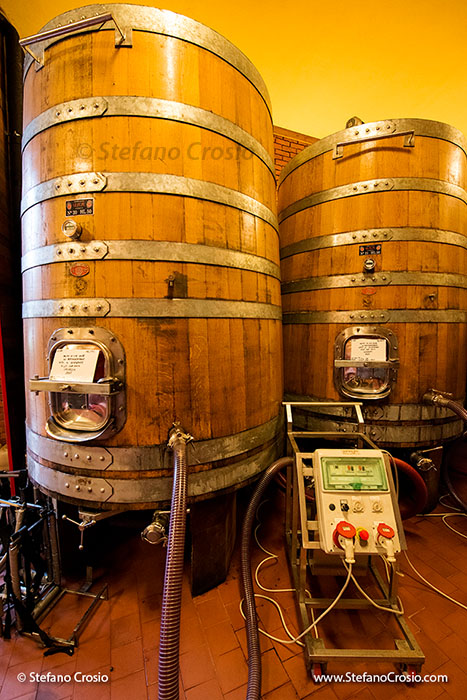
Ar.Pe.Pe.'s fermenting barrels

About the Grape Variety

As mentioned above, in Valtellina Nebbiolo (which is locally known as Chiavennasca – pronounced “key-avennasca”) is king.

The regulations of both of Valtellina’s DOCG appellations and the Valtellina Rosso DOC appellation all require that wines be made from 90% or more Nebbiolo grapes.

You can find several cool facts and much information about Nebbiolo on our Grape Variety Archive page (which has been compiled based on Information taken from the excellent volume Wine Grapes, by Robinson-Harding-Vouillamoz, Allen Lane 2012) – here is just a short abstract:

Nebbiolo is without a doubt Piemonte’s most world-famous black-berried grape variety. Researchers have recently been able to trace back the origins of (or at least the first documented reference to) Nebbiolo to 1266, at which time the grape was called Nibiol. This makes Nebbiolo one of the oldest grape varieties in Piemonte. While Nebbiolo is definitely an Italian indigenous variety, doubts still remain as to whether it originated from Piemonte or Valtellina (a mountainous district in the neighboring region of Lombardia, where Nebbiolo is still grown nowadays and locally known as Chiavennasca).


Ar.Pe.Pe.'s 5.5 HL wood tonneau aging casks

About the Wines

The wines of Valtellina are not very well known to the general public, but they resonate with Italian wine connoisseurs because those wines that are made by serious producers are fabulous Nebbiolo-based reds, that pack tons of quality and structure, are suitable for long-term aging and still can be had for significantly less expensive prices than their better-known counterparts from Piemonte.

Interestingly enough, 2013 marked the first year in which a wine from one of Valtellina’s top producers (Mamete Prevostini, Valtellina Superiore Sassella “Sommarovina” DOCG 2009) made it into Wine Spectator’s Top 100 Wines of 2013 (in 82nd position – congratulations!): perhaps this will contribute bringing the wines of Valtellina more into the limelight with wine aficionados.

On the next post, we will focus on one among my absolute favorite Valtellina producers: Ar.Pe.Pe. and on a tasting of certain of their wines. On the last post of this mini-series, we will then publish an interview of Ar.Pe.Pe.’s enologist and co-owner, Isabella Pellizzatti Perego. Stay tuned! 🙂


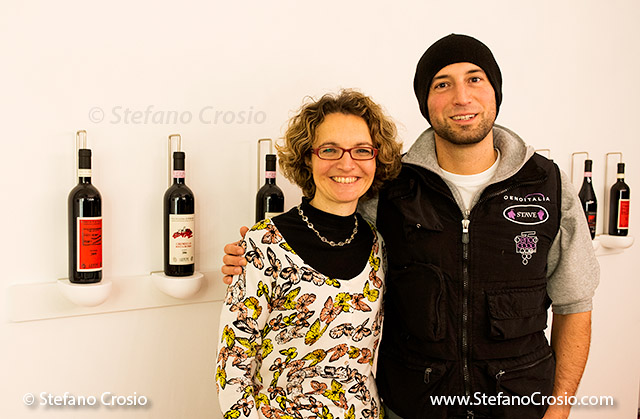
Ar.Pe.Pe.'s enologist and co-owner with her brother Emanuele in their tasting room

Wine Spectator’s Top 100 Wines of 2013

A few days ago, Wine Spectator magazine has published the entire list of their Top 100 Wines of 2013… according to them, of course! :-)

Like last year, these are in a nutshell a few comments about their 2013 top 10 wines:

  • CVNE‘s Rioja Imperial Gran Reserva 2004 is Wine Spectator’s Wine of the Year 2013 (rated 95 points) as well as the first Spanish wine to date to earn top ranking in Wine Spectator’s Top 100 list: congratulations!
  • Five U.S. wines made it to the Top 10 (3 from California, 1 from Oregon and 1 from Washington State), up from three last year
  • Only one Italian wine made it to the Top 10 scoring sixth place and 95 points (Giuseppe Mascarello‘s Barolo “Monprivato” 2008 DOCG), same number as last year but better placement, up three spots
  • France put three of their wines in the Top 10, down from four last year
  • A wine from Bordeaux’s Right Bank was awarded second place (and 96 points) in the Top 10: Chateau Canon-La Gaffeliere 2010, a Saint Emilion Premier Grand Cru Classé B (for more information and a photograph of the Chateau, check out our previous post on the Saint Emilion appellations and wine classification)
  • For the presumable happiness of The Drunken Cyclist 😉 a Pinot Noir from Oregon scored third place in the Top 10: Domaine Serene‘s Pinot Noir Willamette Valley, Evenstad Reserve, 2010 (rated 95 points)
  • Just like in 2011 and 2012, 9 of the top 10 wines are red and only one is white, Kongsgaard‘s Chardonnay Napa Valley 2010 (fifth place, rated 95 points)
  • Four out of the top five wines are below the $100 price mark, with the Wine of the Year 2013 being the least expensive at $63 and confirming how much good value for money can be found in a Rioja, even a top of the line one like CVNE’s; on the other hand, all wines in sixth to tenth place are above $100 (thank you, Anatoli, for suggesting this additional bullet!)

For more detailed information and access to the full Top 100 list, please refer to Wine Spectator’s Website.

Wine Review: Two Chardonnays from Piemonte – Coppo, Chardonnay “Monteriolo” Piemonte DOC 2007 & Chardonnay “Costebianche” Piemonte DOC 2010

Disclaimer: this review is of samples that I received from the producer’s US importer. My review has been conducted in compliance with my Samples Policy and the ISA wine tasting protocol and the opinions I am going to share on the wines are my own.

Today we are going to review two Chardonnays from the northern Italian region of Piemonte, made by Italian producer Coppo.

About the Grape

A few notions about Chardonnay as a grape variety, that you can also find on our Grape Variety Archive page, along with several other varieties that we have previously reviewed.

Chardonnay is a white-berried variety that is indigenous to the French area between Lyon and Dijon, encompassing Burgundy and Champagne. The earliest documented mention of Chardonnay dates back to the late XVII century in the village of Saint Sorlin (today known as La Roche Vineuse) under the name “Chardonnet“, although the variety takes its name from the village of Chardonnay near the town of Uchizy in southern Burgundy.

DNA analysis showed that Chardonnay is a natural cross between Pinot and Gouais Blanc.

Chardonnay Rose is a color mutation of Chardonnay, while Chardonnay Musque’ is a mutation with Muscat-like aromas.

Chardonnay is one of the most versatile and adaptable white grape varieties, which explains in part why it has been so extensively grown all over the world. Chardonnay grapes are generally high in sugar levels and do not have a dominant flavor of their own, so the wines made out of them tend to take on a variety of aromas depending on where the grapes are grown and how the wines are made. Thus Chardonnays run the gamut from subtle and savory to rich and spicy still wines as well as being one of the base wines for Champagne and other Classic Method sparkling wines.

Chardonnay is a typical international variety given how widely it is cultivated on a worldwide basis, from native France, to Italy, North and South America and Australia.

As always, this grape variety information is taken from the excellent guide Wine Grapes, by Robinson-Harding-Vouillamoz, Allen Lane 2012.

About the Producer and the Estate

You may find information regarding the producer, Coppo, and the estate in the first post of this series of reviews of the Coppo lineup.

Our Reviews

The Coppo lineup comprises three Chardonnays: beside the top of the line Riserva della Famiglia (which is currently not available in the US), Coppo makes the mid-range Monteriolo and the entry-level Costebianche, both of which we are going to review today.

As usual, for my reviews I will use a simplified version of the ISA wine tasting protocol that we described in a previous post: should you have doubts as to any of the terms used below please refer to that post for a refresher.

1. Coppo, Chardonnay “Monteriolo” ($60)

Coppo, Chardonnay "Monteriolo"The first wine that we are going to review is Coppo, Chardonnay “Monteriolo” Piemonte DOC 2007.

1.1 The Bottom Line

Overall, the Monteriolo was a good, solid “gently-oaked” Chardonnay. Both its bouquet and mouth flavors are pleasant and “clean”, if just a tad subdued, presenting a nice balance between secondary and tertiary aromas. In my view, however, the $60 suggested retail price is pretty steep and makes the Monteriolo face tough competition in the premium Chardonnay market segment.

Rating: Good to Very Good Good to Very Good – $$$

(Explanation of our Rating and Pricing Systems)

1.2 Detailed Information

The 2007 Monteriolo was 12.5% ABV and was made out of 100% Chardonnay grapes harvested from Coppo’s vineyards near the town of Canelli, Piemonte.

The must fermented for about 12/15 days at 59F/15C in stainless steel vessels. The wine then rested for nine months in 50% new and 50% previously used French oak barrique casks, plus eight additional months in bottle before becoming available for sale. The Monteriolo has a suggested retail price in the US of $60, but can be found for retail prices in the neighborhood of $50.

Let’s now see how the Monteriolo performed in our tasting.

In the glass, the wine poured golden yellow and quite thick when swirled.

On the nose, the bouquet was quite intense, quite complex and fine, with aromas of citrus, apple, herbs, and hints of butter, vanilla and roasted hazelnut.

In the mouth, the wine was dry, quite warm, smooth; fresh and quite tasty. It was balanced and medium-bodied, with quite intense and fine mouth flavors of citrus, apple, butter, and hints of vanilla and roasted hazelnut. The finish was quite long and the evolutionary state was ready (meaning, fine to drink now, but may improve with one or two years of cellaring).

2. Coppo, Chardonnay “Costebianche” ($20)

Coppo, Chardonnay "Costebianche"The second wine that we are going to review is Coppo, Chardonnay “Costebianche” Piemonte DOC 2010.

2.1 The Bottom Line

Overall, the Costebianche was a pretty good Chardonnay. Its bouquet is pleasant, although a bit narrow and veered toward tertiary aromas, those that develop with oak aging, that in this case tended to be dominant over the fruity aromas. Also, I found the Costebianche a little “thin” in the mouth – I wished it had a little more body (this feeling is confirmed by its quite low ABV and glycerol levels, which both contribute to determine the structure of a wine). All in all, a fairly good, if a bit “soulless”, wine.

Rating: Fairly Good Fairly Good – $

(Explanation of our Rating and Pricing Systems)

2.2 Detailed Information

The 2010 Costebianche was 12% ABV and was made out of 100% Chardonnay grapes harvested from Coppo’s vineyards near the towns of Canelli and Aglianico.

The wine underwent partial malolactic fermentation and then six months of aging, during which 70% of the wine rested in French oak barrique casks and the remaining 30% in steel vats, plus six additional months in bottle before becoming available for sale. In the US the Costebianche has a suggested retail price of about $20.

Let’s see how the Costebianche did in our tasting.

In the glass, the wine poured straw yellow with greenish hints and quite thick when swirled.

On the nose, the bouquet was intense, fairly narrow and quite fine, with aromas of Granny Smith apple, roasted hazelnut, and butter.

In the mouth, the wine was dry, quite warm, quite smooth; fresh and tasty. It was balanced and light-bodied, with intense and fine mouth flavors of citrus, Granny Smith apple, roasted hazelnut, butter, and wild herbs. The finish was quite long and the evolutionary state was ready.

Wine Review: Coppo, Gavi “La Rocca” DOCG

Disclaimer: this review is of a sample that I received from the producer’s US importer. My review has been conducted in compliance with my Samples Policy and the ISA wine tasting protocol and the opinions I am going to share on the wine are my own.

The white wine that we will review today is a Gavi (an appellation in the southern part of Italy’s Piemonte region) made by Italian producer Coppo from Cortese grapes, namely CoppoGavi “La Rocca” 2011 DOCG ($17).

The Bottom Line

Overall, honestly I was not particularly impressed by this Gavi, but it did not disappoint either: I wish its bouquet and mouth flavors showed more complexity and the wine a bit more personality, but it is still an enjoyable (if very focused), “easy to drink” white wine, with lively acidity and tastiness. In my view, it is not a show stopper, but at a retail price of about $17, it may be an option worth bearing in mind.

Rating: Fairly Good Fairly Good – $

(Explanation of our Rating and Pricing Systems)

About the Grape and the Appellation

1. The Grape. Cortese is an indigenous Italian white-berried grape variety whose first documented mention dates back to 1614 in Italy’s Piemonte region.

Nowadays, it is mostly grown in the area surrounding the towns of Asti and Alessandria (in south-eastern Piemonte), where it especially is the only grape variety allowed by the Gavi (or Cortese di Gavi) DOCG appellation. Cortese generally makes wines with rather neutral aromas and good acidity.

(Information on the grape variety taken from Wine Grapes, by Robinson-Harding-Vouillamoz, Allen Lane 2012 – for more information about grape varieties, check out our Grape Variety Archive)

2. The Appellation. The Gavi (AKA Cortese di Gavi) appellation was created in 1974 as a DOC and was upgraded to DOCG status in 1998. Gavi DOCG encompasses the territory surrounding the town of Gavi (near Alessandria) and certain other neighboring small towns. The appellation rules require that the wines be made exclusively from Cortese grapes and that “Gavi Riserva” wines be aged for a minimum of 12 months (of which at least 6 in wood barrels), and “Gavi Spumante” wines be aged for a minimum of 24 months (of which at least 18 on their lees).

About the Producer and the Estate

You may find information regarding the producer, Coppo, and the estate in the first post of this series of reviews of the Coppo lineup.

Our Detailed Review

The wine that we are going to review today is CoppoGavi “La Rocca” 2011 DOCG.

The 2011 La Rocca was 12.5% ABV and was made out of 100% Cortese grapes harvested from Coppo’s vineyards in Monterotondo di Gavi (near the town of Alessandria).

The must fermented for 20 days at 59F/15C in stainless steel vessels, with no malolactic fermentation. The wine then rested for 2 months in steel vats, plus three additional months in bottle before becoming available for sale. It is a wine that is intended for immediate consumption, not for cellaring. The Gavi La Rocca retails in the US for about $17.

As usual, for my review I will use a simplified version of the ISA wine tasting protocol that we described in a previous post: should you have doubts as to any of the terms used below please refer to that post for a refresher.

In the glass, the wine poured straw yellow and moderately thick when swirled.

On the nose, the bouquet was intensenarrow and quite fine, with aromas of peach and citrus.

In the mouth, the wine was dry, quite warm, smooth; fresh and tasty. It was balanced and medium-bodied, with intense and fine mouth flavors of citrus and peach and mineral notes. The finish was quite long and the evolutionary state was mature (meaning, drink it now, it will not benefit from cellaring).

Meet the Maker: An Interview with “Mr Sassicaia”

Italy, Bolgheri: Marchese Nicolo' Incisa della Rocchetta in the Tenuta San Guido wine aging cellarOn my previous post we talked about my visit to Tenuta San Guido (the estate where fabled Sassicaia is made) and my tasting of the latest available vintages of the estate’s wine lineup: Le Difese 2011, Guidalberto 2011 and Sassicaia 2010.

Also, on a previous post we went through the history of Super Tuscans and particularly of their archetype, Sassicaia, and how this great wine came to be. If you missed those posts, I suggest you take the time to check them out as they provide a lot context for this post.

Now, without further ado, let’s move on to my interview of Marchese Nicolo’ Incisa della Rocchetta, the owner of Tenuta San Guido, a true gentleman and big time dog lover (he has some 40 dogs, most of whom he got from the shelter) beside of course being the son of Marchese Mario Incisa della Rocchetta, the man who created the myth Sassicaia.

Here are the questions I asked the Marchese, along with a summary of his answers:

Q1. Which vintage of Sassicaia are you most fond of and why?

A1. If I had to pick one, it would be 1988: of course everyone goes crazy about 1985 because it received a perfect score from Parker, but to me 1988 was also a stellar year that really shows the Sassicaia style loud and clear and that vintage also did extremely well in the Tasting of the Bordeaux Premier Growths.

Italy, Bolgheri: vineyards at Tenuta San Guido ready for harvesting with olive tree orchard in the background

Q2. Certain consumers worry about investing a considerable amount of money into a bottle of wine like Sassicaia, which they normally plan to hold on for several years before opening, because they fear that when they do open it, it might be corked. Do you or your distributors have a policy in place as to how to handle situations like that?

A2. In Europe, our distributors replace corked bottles, I am not sure whether our US distributor has a similar policy in place. The good news is that, while of course it is impossible to avoid the risk of the occasional corked bottle altogether, the incidence of cork taint on Sassicaia is much lower than the average: we estimate that there are about 10 corked bottles of Sassicaia for each vintage.

Italy, Bolgheri: Tenuta San Guido

Q3. Speaking of corks, certain of the top quality producers around the world have started experimenting with closure systems alternative to cork, such as synthetic or screw caps, one very visible example being Chateau Margaux. Are you also looking into it? Current regulations require that Sassicaia be sealed with a cork: looking ahead, do you think that using a closure other than cork for a wine like Sassicaia would still be perceived by consumers with a negative connotation?

A3. No, we are just not interested. A bottle of a wine like Sassicaia deserves being sealed by a cork, period. On top of that, the minimal contact with oxygen that the cork ensures makes a wine like Sassicaia that is generally meant for several years of in bottle aging beautifully evolve.

Italy, Bolgheri: Bolgheri sunsetQ4. Italian enologist Graziana Grassini has recently taken over the honor and the responsibilities of making Sassicaia from guru enologist Giacomo Tachis, who can be seen as the father of Sassicaia, along with your father of course. How did she approach the myth Sassicaia? Is she following the path of tradition or is she trying to leave her own mark on Sassicaia?

A4. It seems to me that she is walking in Tachis’s footsteps: they both have this approach that they are there just to underscore the unique terroir of the Sassicaia vineyards and make it shine in the wine they make. Tachis hated being called a winemaker, because he felt he was not there “making” (in the sense of artificially “building”) Sassicaia – he considered himself the guardian of the brilliant characteristics of those Cabernet clones that my father planted in the heart of the Maremma almost three quarters of a century ago and the terroir they grow in.

Q5. All your three wines are blends and all three have Cabernet Sauvignon as their prevailing variety in the blend, but each of them pairs it with a different blending partner: Cabernet Franc for Sassicaia, Merlot for Guidalberto and Sangiovese for Le Difese. Taken as a given that the Sassicaia is at the peak of the pyramid of the wines you produce, how would you briefly describe the concepts behind the Guidalberto and Le Difese?

A5. The Guidalberto was introduced to the market with vintage 2000 and we do not consider it the second vin of the Sassicaia. It was developed as a more affordable wine with its own identity, different from Sassicaia’s. A wine that can be enjoyed earlier than Sassicaia but is all the same meant for aging up to 10 years. Only about 10% of the Cabernet Sauvignon grapes used in the making of Guidalberto come from the Sassicaia vieyards, the rest comes from dedicated, younger vineyards. Le Difese was launched with vintage 2002 and we view it as the second vin of the Guidalberto: it was developed with the idea of an affordable wine that is ready to be enjoyed upon release and is not meant for aging.

Italy, Bolgheri: vineyards and olive trees

Q6. How much of the wine you produce gets exported, and which are the top three countries you export to?

A5. We export about 60% of the production. By far the number one country we export to is the United States, followed by Germany and, maybe surprisingly considering its relatively small size, Switzerland. We are slowly starting to export to China too, but we want to be cautious: it is a huge market with an incredible demand for luxury products, including top wines like Sassicaia, and it is easy to let that cloud your vision. Considering that the number of bottles of Sassicaia that we make is not going to increase, what we do not want to do is penalize our historical and loyal customer base and distributors in the countries we are already in just to jump onto the Chinese bandwagon. It will be a gradual process.

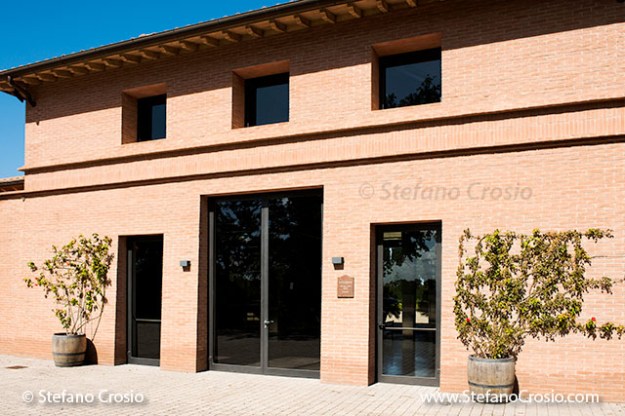
Italy, Bolgheri: One of the buidings in the Tenuta San Guido estate

Q7. Organic viticulture: are you considering to embrace it or staying away from it?

A7. We view it as an emerging marketing trend which certainly appeals to consumers, but whose risks overweigh the benefits. In other words, we do spray our vines but we have always done so in the least pervasive way, as has been done for decades in traditional viticulture. We are a relatively small operation and we just cannot afford the risk of a blighted crop.

Q8. Let’s talk about your winemaking process: do you use pre-fermentation cold maceration? And how about micro-oxygenation?

A8. No to both questions: we feel our wine does not need the additional extraction of color or aromas that pre-fermentation maceration allows, and we certainly stay away from micro-oxygenation: we much rather let time do its work by leaving our wine in the barriques for as long as we think appropriate for it to be exposed to the oxygen that naturally breathes into the casks. No need to fast-track anything.

Italy, Bolgheri: vineyards ready for harvesting

Q9. What kind of fermentation do you go for: selected yeasts or spontaneous (indigenous yeasts)? Same question for malolactic fermentation: do you inoculate lactic bacteria or does it start spontaneously?

A9. In both cases we opt for spontaneous fermentation: we do not add anything to our wine, we just let the temperature start both fermentations spontaneously. We think this practice helps give our wines their own, individual character, which makes them different from other wines.

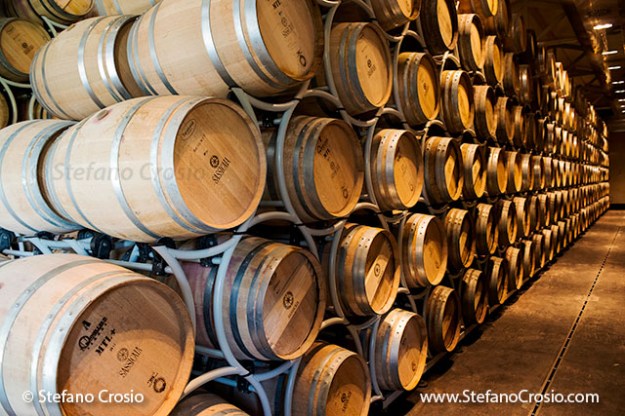
Italy, Bolgheri: Sassicaia French oak barrique cask

Q10. Last question: which barrique casks do you use to age Sassicaia and are they new, previously used or a mix of the two?

A10. In the beginning we used Slavonian oak, but then we realized that those barrels were assembled with sawn planks, which occasionally were not perfectly airtight. So we switched to French oak, where planks are axe-split instead of sawn. For the aging of Sassicaia we use barriques made of French oak coming from the Massif Central region of France, because oak from that area is known to release the least tannins/tertiary aromas to the wine and therefore we prefer it over more intrusive oak. Sassicaia ages in 1/3 new barriques and 2/3 previously used ones, which may be up to a maximum of 8-time used before, after which we retire the barrique.

Thant’s all: I hope you enjoyed the read as much as I enjoyed having this informational and pleasant conversation with Marchese Nicolo’ Incisa della Rocchetta.

As a final note, I would like to take the opportunity to sincerely thank the Marchese for his graciousness and for the time he took to sit down with me and answer my questions. I also wish to extend my dy deepest gratitude to Carlo Paoli for his kindness in making all of this happen.

Italy, Bolgheri: vineyards and cypress trees

Meet the Maker: A New Column plus a Tasting of Sassicaia 2010 and Its Little Brothers

Italy, Bolgheri: Carlo Paoli, Tenuta San Guido's General Manager

A New Column: Meet the Maker

This post is going to be the first in a new column that I thought I would call Meet the Maker – this column will provide interviews with wine producers or other key players in the wine industry.

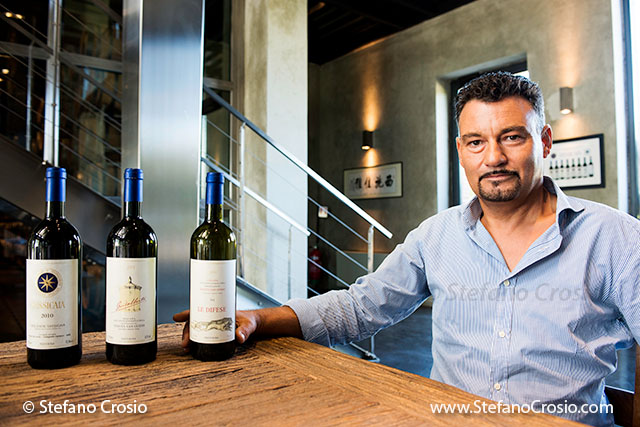
When I decided to give this new feature a go, I thought I might as well just start big 😉 so with some luck and lots of gratitude to Carlo Paoli, the gracious General Manager of Tenuta San Guido, I had the pleasure of sitting down for an hour or so in the wine tasting room of Tenuta San Guido with Carlo and Mr Sassicaia himself, Marchese Nicolo’ Incisa della Rocchetta, who was kind enough to answer my questions while we were tasting the whole lineup of the estate, which was something pretty cool.

Italy, Bolgheri: Tenuta San Guido

About the Estate: Tenuta San Guido

But let’s start from the beginning: as you may know, Tenuta San Guido is a huge 2,500 HA estate that is located in that beautiful stretch of forested coastal Tuscany known as Maremma and it belongs to the Italian noble family of the Marchesi Incisa della Rocchetta. The estate encompasses a 513 HA wildlife preserve managed by the WWF (Oasi Padule di Bolgheri), the training facility for the Dormello-Olgiata thoroughbred race horses, the most famous of whom was legendary “superhorse” Ribot, and of course 90 HA of vineyards from which glorious Sassicaia plus two more wines (called Guidalberto and Le Difese) are made.

More specifically, 70 of those 90 HA of vineyards are dedicated to the production of Sassicaia and therefore are for the most part Cabernet Sauvignon with some Cabernet Franc. In the remaining 20 HA, Merlot and Sangiovese (the blending partners of, respectively, Guidalberto and Le Difese) are grown, beside Cabernet Sauvignon (the common variety in all three blends). Among the three labels, Tenuta San Guido produces about 700,000 bottles per year.

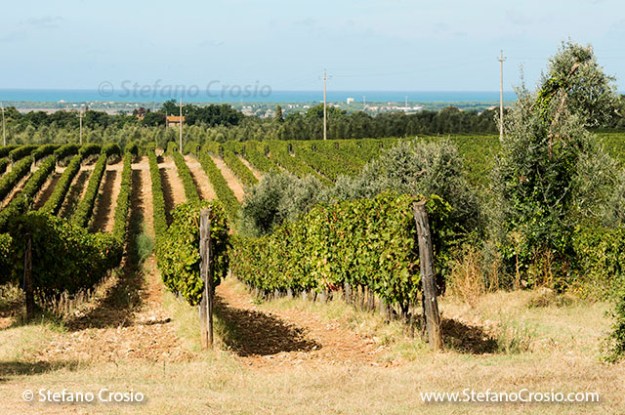
Italy, Bolgheri: vineyards approaching harvest time with the Bolgheri church in the background

On a previous post, I have provided a pretty detailed story of the vision of an enlightened man, Marchese Mario Incisa della Rocchetta (Nicolo’s father, the creator of Sassicaia), how Sassicaia came to be and how it became the archetype of all Super Tuscans, so if you missed it, I would suggest you go back and take a look before you continue reading this post.

As is described in detail on that previous post, the turning point for Sassicaia was Marchese Mario’s intuition to hire Antinori’s enologist, Giacomo Tachis, in the late 1960’s. Tachis optimized Sassicaia’s production process turning Sassicaia from a good wine to the wine that was awarded a perfect 100 score by Robert Parker for the 1985 vintage. Mr Tachis, arguably the most famous and revered among Italian enologists, eventually retired and Graziana Grassini took the helm of making Sassicaia (along with the responsibility to ensure that the legend lives on) as of the 2009 vintage.

Italy, Bolgheri: Tenuta San Guido's wine aging cellar and wine tasting room

About the Appellation

Interestingly enough, in an effort to recognize Marchese Mario’s vision and tenacity in creating a wine that gave Italian winemaking international lustre and fame, in 1983 Italy created a DOC appellation called “Bolgheri DOC” that would encompass a small territory surrounding the Tuscan town of Castagneto Carducci (in the Maremma, near Livorno) and within that territory a specific subzone was identified by the name of “Sassicaia” which precisely matches those about 70 HA owned by Tenuta San Guido where the Sassicaia is made. This has been the first case in Italy in which an official subzone of an appellation has been created to precisely overlap with the area where a single producer’s wine is made. As a result, Sassicaia is the only wine that can be made in the “Bolgheri Sassicaia DOC” appellation.

In terms of permitted grape varieties, the “Bolgheri Sassicaia DOC” appellation requires the use of at least 80% Cabernet Sauvignon, which can be blended with up to 20% of other black-berried varieties permitted in Tuscany, and a minimum aging of 24 months, at least 18 of which must be in oak barrique casks.

Italy, Bolgheri: vineyards in the Bolgheri DOC appellation

Our Tasting Notes

Before moving on to the actual interview of Marchese Nicolo’ Incisa della Rocchetta (which will be the subject matter of the next post), these are my succint tasting notes of the three wines in the Tenuta San Guido lineup that I got to taste with the Marchese:

1. Le Difese 2011 ($35):

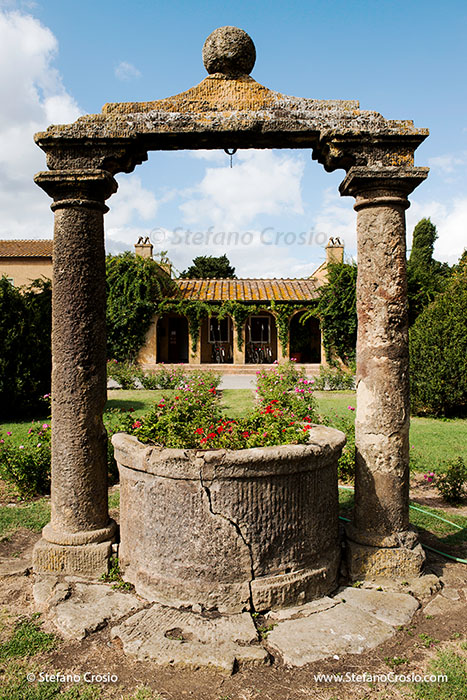
Italy, Bolgheri: An old well at Tenuta San GuidoTenuta San Guido’s entry-level wine, whose first vintage was 2002. It is a 70% Cabernet Sauvignon, 30% Sangiovese blend that is aged for 12 months in French and American oak barrique casks and is released ready to be enjoyed (it is not meant for aging).

Pleasant and linear, with no frills: nice (although not particularly intense) nose of wild berries with hints of licorice and ground coffee. Well integrated tannins and good structure in the mouth for an enjoyable red with a good QPR.

Rating: Good Good – $$

(Explanation of our Rating and Pricing Systems)

2. Guidalberto 2011 ($40):

Tenuta San Guido’s mid-range wine (not Sassicaia’s second wine, as the Marchese pointed out in the course of the interview). It was released with vintage 2000 and it is a 60% Cabernet Sauvignon, 40% Merlot blend, aged for 15 months in mostly French and in small part American oak barrique casks, plus 3 additional months of in-bottle aging. The Guidalberto is a wine that can be enjoyed right away, but is meant for aging up to 10 years.

A very good wine, despite its young age, with an enticing nose of black berries, ground coffee, tobacco, cocoa and black pepper. In the mouth it was already round and smooth, with tame tannins and significant structure as well as a long finish. In my view, with a few more years under its belt, the Guidalberto will give plenty of joy to those who can wait.

Rating: Very Good Very Good – $$

(Explanation of our Rating and Pricing Systems)

Italy, Bolgheri: Tenuta San Guido's Sassicaia aging cellar

3. Sassicaia 2010 ($155):

The King of the Hill, of which we already said much in relation to its 1995 vintage on a previous post. It is an 85% Cabernet Sauvignon, 15% Cabernet Franc blend that is fermented in steel vats and undergoes 15 days of maceration. It ages for 24 months in all French oak barrique casks plus 6 additional months in bottle. Sassicaia is a wine that is meant for aging and in my view it should not be enjoyed before at least 5/7 years after its vintage year.

The 2010 vintage that I tasted was already mind-blowing: the nose was very intense with a symphony of black cherries, blackberries, cocoa, licorice, coffee, sandalwood and leather. In the mouth it is still a bit “separate” in its core elements, which need time to fully assemble and integrate, but it already showed glimpses of how spectacular a wine it will be for those who can wait: full-bodied, with plenty of structure and tannins that are already supple, intense mouth flavors and good acidity, topped off by a long finish. Perfect to be cellared and forgotten for a few years and then enjoyed the way it deserves.

Rating: Outstanding Outstanding – $$$$$

(Explanation of our Rating and Pricing Systems)

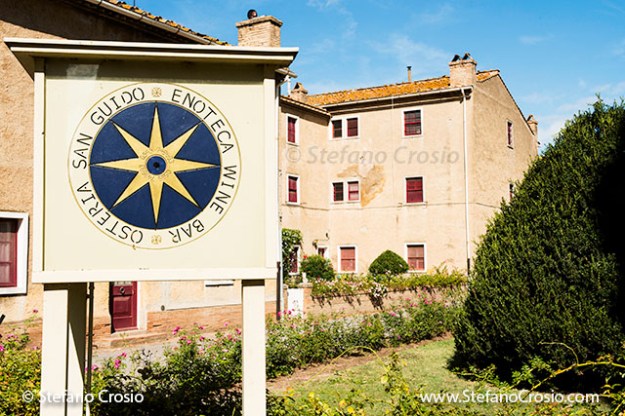
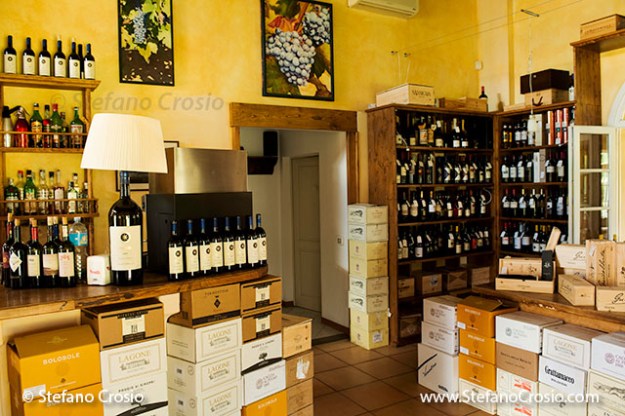
Italy, Bolgheri: Tenuta San Guido's wine bar/store

That’s all for today: until the next post, which will feature my interview to Marchese Nicolo’ Incisa della Rocchetta.

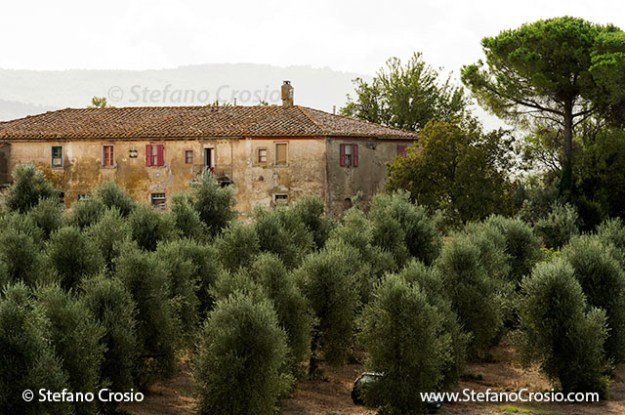
Italy, Bolgheri: One of the buidings in the Tenuta San Guido estate

Wine Review: Coppo, Monferrato “Alterego” 2007 DOC

Disclaimer: this review is of a sample that I received from the producer’s US importer. My review has been conducted in compliance with my Samples Policy and the ISA wine tasting protocol and the opinions I am going to share on the wine are my own.

Our overview of the wines in the Coppo range that are imported into the US continues on with the review of a wine that “on paper” had piqued my interest because of its unusual blend: enter the Alterego, a 60/40 Cabernet Sauvignon/Barbera blend.

The Bottom Line

Overall, Coppo, Monferrato “Alterego” 2007 DOC ($35) was a good, pleasant to drink wine, a good match to red meat, game or meat-based pasta. Ideally, I wish its bouquet were a little more intense on the nose, but the aromas (if a little muted) are certainly pleasant. Also, it is a nicely balanced wine, where its ABV, acidity and tamed tannins exhibit an enjoyable equilibrium.

Rating: Good and Recommended Good – $$

(Explanation of our Rating and Pricing Systems)

About the Grapes and the Appellation

1. Barbera: You may find all relevat information regarding Barbera as a grape variety on the “Barbera” entry of our Grape Variety Archive.

2. Cabernet Sauvignon: Regarding worldwide famous Cabernet Sauvignon, this is a black-berried variety that originates from the Gironde region in south-west France. The oldest documented reference to it (under the name “Petit Cabernet”) dates back to the second half of the XVIII century.

DNA profiling showed that Cabernet Sauvignon originated as a (probably spontaneous) cross between Cabernet Franc and Sauvignon Blanc. In the XX century, there happened two genetic mutations of Cabernet Sauvignon in Australia that produced in one case pinky bronzed berries (now known as Malian) and in the other case white berries (now known as Shalistin).

Cabernet Sauvignon grapes make deep colored, concentrated and tannic wines, apt for long-term aging. Beside its native Bordeaux region, where Cabernet Sauvignon plays a key role in Bordeaux blends, it is a variety that has been planted extensively around the world and that (along with Merlot and Chardonnay) has become the epitome of the international varieties.

(Information on the grape varieties taken from Wine Grapes, by Robinson-Harding-Vouillamoz, Allen Lane 2012 – for more information about grape varieties, check out our Grape Variety Archive)

3. Monferrato DOC: Finally, the appellation Monferrato DOC was created in 1994 and it stretches across a fairly large territory near the towns of Alessandria and Asti, in Italy’s Piemonte region. Monferrato DOC is a loosely regulated appellation as regards grape varieties, in that the wines may be made out of any of the grape varieties that applicable regulations permit to grow in the Piemonte region, with the only exception of aromatic varieties that are not allowed.

About the Producer and the Estate

You may find information regarding the producer, Coppo, and the estate in the first post of this series of reviews of the Coppo lineup.

Our Detailed Review

The wine we are going to review today, Coppo, Monferrato “Alterego” 2007 DOC, is the only red blend in the Coppo lineup: it has 14% ABV and retails in the US for about $35.

Alterego is a blend of 60% Cabernet Sauvignon grapes and 40% Barbera grapes grown in the estate vineyards around the town of Canelli, in Piemonte’s Monferrato district. The wine is fermented for about 10 days in stainless steel vats, goes through malolactic fermentation and is aged in new French oak barrels for 12 months.

As usual, for my review I will use a simplified version of the ISA wine tasting protocol that we described in a previous post: should you have doubts as to any of the terms used below please refer to that post for a refresher.

In the glass, Alterego poured ruby red and viscous when swirled.

On the nose, its bouquet was moderately intense, moderately complex and fine, with aromas of blackberry, plum, tobacco, cocoa and black pepper.

In the mouth, the wine was dry, with high ABV and smooth; it was acidic, tannic (with noticeable but well integrated tannins) and tasty. It was full-bodied and balanced, with intense and fine mouth flavors of wild berries, plum, dark chocolate and black pepper. It had a medium finish and its evolutionary state was ready (i.e., absolutely fine to drink right away, but probably even better if you let it rest a couple more years in your cellar).

Wine Review: Planeta, Syrah Sicilia Rosso IGT 2007

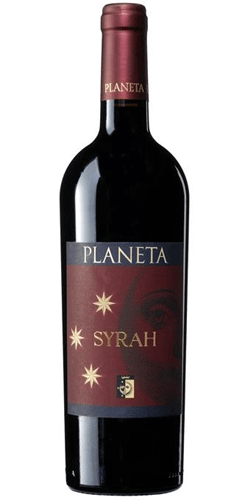
Planeta, Syrah Sicilia Rosso IGTToday’s review is of a Sicilian varietal Syrah made by excellent Sicilian winemakers Planeta.

As usual, let’s first provide a brief overview of the Syrah grape variety.

The Bottom Line

Overall, I loved this Sicilian take of an international grape variety! PlanetaSyrah Sicilia Rosso IGT 2007 ($35) was a luscious red, with an elegant bouquet, interestingly devoid of those animal fur notes that Syrah from other geographic regions may exhibit. Despite its muscular ABV, the wine was wonderfully balanced and offered supple tannins counterbalancing its silky smoothness. Its rich, pleasant mouth flavors completed the picture.

Rating: Very Good and definitely Recommended Very Good – $$

(Explanation of our Rating and Pricing Systems)

About the Grape

Syrah is a black-berried grape variety that is indigenous to the northern Rhone region of France, where it was first mentioned in a document dating back to 1781 under the name “Sira de l’Hermitage“.

DNA analysis proved that Syrah is a natural cross between Mondeuse Blanche (a Savoie variety) and Dureza (an Ardeche variety) that probably took place in the Rhone-Alps region.

Syrah has historically been mostly grown in the Rhone Valley in France and in Australia under the name Shiraz, although recently its planting has become more widespread (as in the case of the Sicilian Syrah that we are going to review) as a result of an increasing popularity of its wines.

(Information on the grape variety taken from Wine Grapes, by Robinson-Harding-Vouillamoz, Allen Lane 2012 – for more information about grape varieties, check out our Grape Variety Archive)

About the Estate

Planeta’s Syrah is made out of grapes coming from the 42 HA Maroccoli vineyard situated at 450 mt/1,475 ft above sea level within Planeta’s Ulmo estate, located near the town of Sambuca di Sicilia (Agrigento), on the western coast of Sicily. The Maroccoli vineyard density is 5,000 vines/HA.

Ulmo is the first and the oldest among Planeta’s current estates: it became operational in 1995, along with its winery, and it encompasses some 93 HA of vineyards (including Maroccoli) where Chardonnay, Merlot, Grecanico, Nero d’Avola and of course Syrah are grown in different crus.

Our Detailed Review

The PlanetaSyrah Sicilia Rosso IGT 2007 that I had was a red wine made from 100% Syrah grapes grown in the Maroccoli vineyard and had 14.5% ABV. It is available in the US where it retails for about $35.

The wine fermented in steel vats for 12 days at 25C/77F and aged 12 months in French oak barrique casks, 1/3 of which were new and the remaining 2/3 previously used ones. As you may know, the reason for using barrels that had already been used before is to limit the interference of the oak with the organoleptic profile of the wine, so that the tertiary aromas developed during the barrique aging period do not overwhelm but rather coherently complement the fruity secondary aromas developed by the wine in the fermentation phase.

As usual, for my review I will use a simplified version of the ISA wine tasting protocol that we described in a previous post: should you have doubts as to any of the terms used below please refer to that post for a refresher.

In the glass, the wine poured ruby red with purple hints and viscous when swirled.

On the nose, its bouquet was intense, moderately complex and fine, with aromas of black cherry, plum, tobacco, soil and leather.

In the mouth, the wine was dry, with high ABV and smooth; it was moderately acidictannic and tasty. It was full-bodied and perfectly balanced. Its mouth flavors were intense and fine, with notes of black cherry, dark chocolate, sweet tobacco and black pepper. Its tannins were supple and masterfully integrated. The wine had a long finish and its evolutionary state was in my view approaching its maturity, meaning the peak in terms of its potential (in other words, for best results enjoy it now or in the next year or so).

Wine Review: The Barbera Trilogy #3 – Coppo, Barbera d’Asti “Pomorosso” 2006 DOCG

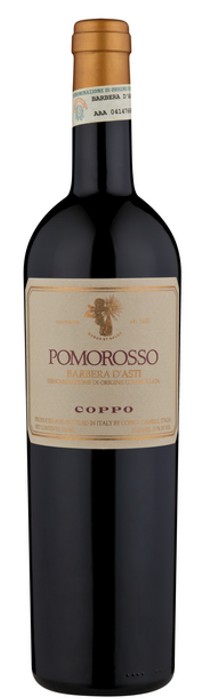
Coppo, Barbera d'Asti "Pomorosso" DOCG For the epilogue of our “Barbera Trilogy” series, I am going to readapt here my review of the Pomorosso that I published a while ago.

The Bottom Line

Overall, I found CoppoBarbera d’Asti “Pomorosso” 2006 DOCG ($60) to be one of the best Barbera’s that I have had so far, a wine that is a pleasure to drink and savor sip after sip – a perfect companion for a red meat dinner.

Rating: Outstanding and definitely Recommended Outstanding – $$$

(Explanation of our Rating and Pricing Systems)

About the Grape and the Appellations

You may find all relevat information regarding Barbera as a grape variety and the four appellations in Piemonte where Barbera is the main grape variety on the “Barbera” entry of our Grape Variety Archive.

About the Producer and the Estate

You may find information regarding the producer, Coppo, and the estate in the first post of this series of reviews of the Coppo lineup.

Our Detailed Review

The wine that we are going to review today is Coppo, Barbera d’Asti “Pomorosso” 2006 DOCG.

The Pomorosso is the flagship varietal Barbera in the Coppo offering (which, as we have seen in previous posts, includes two less structured, less expensive alternatives: L’Avvocata and Camp du Rouss).

It is definitely a complex Barbera: it is made out of 100% Barbera grapes grown in selected vineyards of the 56 HA Coppo estate located in the surroundings of the town of Canelli, near Asti (Piemonte). The Pomorosso 2006 had 13.5% ABV, was fermented and macerated in stainless steel vats for 12 days at 28-30C/82-86F, went through full malolactic fermentation and aged for 14 months in all new French oak barrique casks. In the U.S. it has a suggested retail price of $70, but its street price is generally around $55-60.

Let me say outright that the Pomorosso is a great, structured red wine, that is suitable for several years of aging (the 2006 vintage that I had was a symphony of aromas, flavors and balance). But let’s now move on to the technical wine tasting.

As usual, I will use a simplified version of the ISA wine tasting protocol that we described in a previous post: should you have doubts as to any of the terms used below please refer to that post for a refresher.

In the glass, the 2006 Pomorosso poured ruby red and viscous.

On the nose, its bouquet was intense, complex and fine with a sequence of aromas of violet, plums, blueberries, cherries, tobacco and chocolate.

In the mouth, the Pomorosso was dry, with high ABV and smooth; it was acidic, tannic and tasty. It was a full-bodied, perfectly balanced wine and its mouth flavors were intense and fine, showing good correlation with its bouquet as well as a perfect integration of the oaky notes released by its barrique aging. Its tannins, although very discernible, were also equally gentle and supple, with their delicate astringency counterbalancing the wine’s lively acidity. The Pomorosso had a long finish, with its flavors pleasantly lingering in the mouth for a very long time. Its evolutionary state in my view was mature, meaning that, with 7 years of aging under its belt, it was at or approaching its peak in terms of quality, making me think that additional aging, while certainly possible, would not likely improve its quality any further.

Wine Review: The Barbera Trilogy #2 – Coppo, Barbera d’Asti “Camp du Rouss” 2009 DOCG

Disclaimer: this review is of a sample that I received from the producer’s US importer. My review has been conducted in compliance with my Samples Policy and the ISA wine tasting protocol and the opinions I am going to share on the wine are my own.

In this second post of the “Barbera Trilogy” we will review Coppo‘s mid-range Barbera, “Camp du Rouss”, a fancy name which, in the dialect of Piemonte, means “field of the red-headed”(!) – apparently, the reason for the name is that the previous owner of the vineyard where the grapes for this wine are grown was a red-headed man.

The Bottom Line

Overall, CoppoBarbera d’Asti “Camp du Rouss” 2009 DOCG ($23) was a good, muscular Barbera, with a nice balance between its secondary, fruity aromas and the tertiary, spicy ones as well as an appealing price. It makes a good complement for red meat dishes. As a matter of personal preference, while I liked the Camp du Rouss, I liked L’Avvocata a tad better, because of the slightly lower ABV and more delicate tannins. But again, this is just a question of personal taste and YMMV! 😉

Rating: Good and Recommended, considering its good QPR Good – $$

(Explanation of our Rating and Pricing Systems)

About the Grape and the Appellation

You may find all relevat information regarding Barbera as a grape variety and the four appellations in Piemonte where Barbera is the main grape variety on the “Barbera” entry of our Grape Variety Archive.

About the Producer and the Estate

You may find information regarding the producer, Coppo, and the estate in the first post of this series of reviews of the Coppo lineup.

Our Detailed Review

The wine that we are going to review today is CoppoBarbera d’Asti “Camp du Rouss” 2009 DOCG.

It has a muscular 14.5% ABV and is fermented for 14 days in stainless steel vats, before going through full malolactic fermentation. It then ages for 12 months in French oak barrique casks, 80% previously used ones and 20% new ones. The reason for utilizing used barriques is to limit the interference of the oak with the organoleptic profile of the wine, so that the tertiary aromas developed during the barrique aging period do not overwhelm but rather complement the fruity secondary aromas developed during the fermentation phase. The wine finally ages for an additional 12 months in-bottle before being released for sale. In the U.S., it retails for about $23.

As usual, for my review I will use a simplified version of the ISA wine tasting protocol that we described in a previous post: should you have doubts as to any of the terms used below please refer to that post for a refresher.

In the glass, the Camp du Rouss poured ruby red and unsurprisingly thick when swirled.

On the nose, its bouquet was intensequite complex and fine, with aromas of red cherries, raspberries, leather, and cigar box.

In the mouth, the wine was drywarm (you can distinctly feel the “heath” of its ABV on your palate!) and smoothfreshtannic (with firm but not harsh tannins) and tasty. It was full-bodied and balanced, with intense and fine mouth flavors of wild cherries and black pepper. The finish was quite long and the evolutionary state ready (i.e., fine to drink right away, but likely better if you let it rest 2/3 more years in your cellar).

Wine Review: The Barbera Trilogy #1 – Coppo, Barbera d’Asti “L’Avvocata” 2011 DOCG

Disclaimer: this review is of a sample that I received from the producer’s US importer. My review has been conducted in compliance with my Samples Policy and the ISA wine tasting protocol and the opinions I am going to share on the wine are my own.

In the next three posts we will review and discover the three Barbera’s in the Coppo range that are imported into the US: L’Avvocata, Camp du Rouss, and the flagship Pomorosso.

In this post, we will start from Coppo‘s entry-level Barbera, “L’Avvocata”, a fancy name which literally means “the female lawyer”(!)

The Bottom Line

Overall, CoppoBarbera d’Asti “L’Avvocata” 2011 DOCG ($15) was a solid, “clean” entry-level Barbera, with a great price point for the quality it delivers. Needless to say, and to state the obvious, the Pomorosso it is not, but L’Avvocata is still a very enjoyable wine to pair with pasta dishes with meat-based sauces or veal-based dishes.

Rating: Good to Very Good and Recommended, considering its great QPR Good to Very Good – $

(Explanation of our Rating and Pricing Systems)

About the Grape and the Appellation

Barbera is a grape variety that is indigenous to the Monferrato district in the north Italian region of Piemonte. The first written references to Barbera date back to the end of the XVIII century. Nowadays it is the most widespread grape variety in Piemonte, from which wines are made that display lively acidity and a deep ruby color.

In Piemonte, Barbera is the main grape of four different appellations:

  • Barbera d’Asti DOCG (encompassing an area surrounding the towns of Asti and Alessandria, and requiring the use of 90% or more of Barbera grapes and a minimum aging of 4 months for the base version or 14 months, of which at least 6 months in wood barrels, for the “Superiore” version);
  • Barbera del Monferrato Superiore DOCG (encompassing the Monferrato district near Alessandria and an area near the town of Asti, requiring the use of 85% or more of Barbera grapes and a minimum aging of 14 months, of which at least 6 months in wood barrels)
  • Barbera d’Alba DOC (encompassing an area in the vicinities of the town of Cuneo and requiring the use of 85% or more of Barbera grapes)
  • Barbera del Monferrato DOC (encompassing the Monferrato district near Alessandria and an area near the town of Asti, requiring the use of 85% or more of Barbera grapes)

Given its wide distribution, Barbera is produced in a variety of styles, ranging from simpler, “younger” versions that are only aged in steel vats to more structured and evolved versions that are aged in oak barrels, including sometimes barrique casks.

(Information on the grape variety taken from Wine Grapes, by Robinson-Harding-Vouillamoz, Allen Lane 2012 – for more information about grape varieties, check out our Grape Variety Archive)

About the Producer and the Estate

You may find information regarding the producer, Coppo, and the estate in the first post of this series of reviews of the Coppo lineup.

Our Detailed Review

As we said at the beginning of this post, the wine we are going to review today, Coppo, Barbera d’Asti “L’Avvocata” 2011 DOCG, is the entry-level Barbera in the Coppo lineup: it has 14% ABV and retails in the US for an attractive price of $15.

L’Avvocata is made from 100% Barbera grapes grown in the estate vineyards around the town of Canelli, in Piemonte’s Monferrato district. The wine is fermented in stainless steel vats, goes through malolactic fermentation and is aged in large French oak barrels (therefore, not barriques) for 6 to 8 months. L’Avvocata is a Barbera that is not meant for aging (although some cellaring will certainly not hurt!): it is released ready to be enjoyed.

As usual, for my review I will use a simplified version of the ISA wine tasting protocol that we described in a previous post: should you have doubts as to any of the terms used below please refer to that post for a refresher.

In the glass, L’Avvocata poured ruby red with purple hints and thick when swirled.

On the nose, its bouquet was intense, quite complex and fine, with pleasant aromas of wild cherries, redcurrant, ground coffee, wet soil and hints of tobacco.

In the mouth, the wine was dry, warm and smooth; fresh, tannic (with present but pleasantly supple, well integrated tannins despite the young age) and tasty. It was medium-bodied and balanced, with intense and fine mouth flavors that nicely matched its bouquet. The finish was quite long and the evolutionary state ready (i.e., absolutely fine to drink right away, probably even better if you let it rest a couple more years in your cellar).

Coppo: The Winery that Reinvented Barbera

The US importer of the well-known Italian winery Coppo has been kind enough to send me samples of most wines in the Coppo lineup (those that are currently imported into the US) for me to taste and review: thank you, Rebecca, Brittany and Mari!

So, let’s start from the beginning, with some information about the producer, the estate, and the Coppo lineup.

About the Producer and the Estate

Coppo‘s 56 HA estate is located in Italy’s Piemonte region, in the Monferrato district, near the town of Canelli (Asti), an area where traditionally Moscato grapes had mostly been grown, especially for making sweet Asti Spumante using the Charmat-Martinotti Method (for more information, check out our previous post about Charmat-Martinotti sparkling wines).

The Coppo family has been making wines at the estate since the early XX century, but the turning point took place in the mid Eighties, when the family extended their product range to encompass, beside Moscato, Barbera and certain international varieties such as Chardonnay and Cabernet Sauvignon and modernized their production line.

Specifically, 1984 marked the first vintage of Coppo’s probably most famous, revolutionary wine: the Pomorosso, the successful result of efforts and investments aimed at coming up with a high-quality Barbera that would be meant for aging and be a tribute to such variety and its territory.

About the Wines

Coppo has been recognized as one of Piedmontese winemakers that have focused on high-quality production and preservation of the local traditions. Nowadays, the full Coppo lineup encompasses 16 wines:

  • 4 Barbera‘s
  • 1 Barbera-Cabernet Sauvignon blend
  • 1 Barolo (from Nebbiolo grapes grown in a vineyard outside the geographical boundaries of the appellation, but grandfathered so as to still let them use the Barolo DOCG appellation because production predated the creation of the appellation)
  • 1 Freisa
  • 1 Gavi (from Cortese grapes grown in a separate vineyard within the Gavi DOCG appellation territory)
  • 3 Chardonnay‘s
  • 4 Classic Method sparkling wines
  • 1 sweet Moscato

Out of those 16 wines, Coppo’s US importer was kind enough to send me 9 to taste and review, namely those 9 that are currently imported into the U.S.

Considering the number of wines to review, in an effort not to just focus on one producer for an extended period of time, I will review them over time, so in the next months you will see posts coming up devoted to each of such 9 wines, mixed up with posts on different wines, so please stay tuned!

The Coppo Wines We Are Going to Review

The 9 wines in the Coppo lineup that I am going to review are the following:

  1. Barbera d’Asti “Pomorosso” DOCG
  2. Barbera d’Asti “Camp du Rouss” DOCG
  3. Barbera d’Asti “L’Avvocata” DOCG
  4. Barolo DOCG
  5. “Alterego” Monferrato DOC (a Cabernet Sauvignon/Barbera blend)
  6. Chardonnay “Monteriolo” Piemonte DOC
  7. Chardonnay “Costebianche” Piemonte DOC
  8. Gavi “La Rocca” DOCG
  9. Moscato d’Asti “Moncalvina” DOCG

To get the series started, I am going to launch “the Barbera Trilogy” 🙂 that is I will review the three Barbera’s in the Coppo range, starting from the entry-level “L’Avvocata” and culminating with the flagship “Pomorosso”, which I had already reviewed on a previous post. The other wines will follow later on.

As always, let me know if you happened to try any of the wines in the Coppo range and, if you did, how you liked them!

Wine Review: Valdo, Prosecco Brut Metodo Classico “Numero 10” 2009 DOC

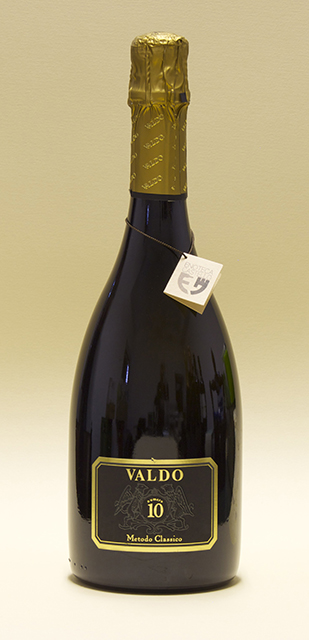
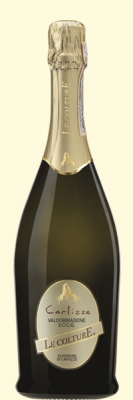
Valdo, Prosecco Brut Metodo Classico "Numero 10" DOCAs you may already know if you have been reading this blog for a while, I am not a big fan of Prosecco: with very few exceptions (as in the case of Le Colture), I prefer the greater structure, complexity and finer perlage of a good Classic Method sparkling wine over most Charmat-Martinotti Method Prosecco’s.

However… drum roll… enter Valdo, Prosecco Brut Metodo Classico “Numero 10” DOC (€18), the game changer, the ideal bridge connecting Prosecco with Classic Method.

The Bottom Line

Overall, as I think you will be able to tell from my tasting notes, I really quite liked this Prosecco: personally, I applaud the producer who departed from the traditional way to make Prosecco (according to the Charmat-Martinotti Method) and instead went the Classic Method way. I think this gave to the Numero 10 that extra complexity and structure that I have almost regularly found lacking in the vast majority of the Prosecco’s that I have had so far. The choice of a relatively short period of aging on the lees also ensured that the secondary aromas would not become too pronounced at the expense of the fresh and fruity primary aromas of the Glera variety. All in all, a really solid sparkling wine for a reasonable price (at least in Italy): I seriously hope that the Numero 10 will become available in the US soon, maybe in time for next spring?… 😉

Rating: Good to Very Good and Recommended given its good QPR Good to Very Good – €

(Explanation of our Rating and Pricing Systems)

Classic Method vs. Charmat-Martinotti Method

Let’s start from the beginning: the world of sparkling wines (in Italian, “spumante“) is essentially divided into two camps: Classic Method sparklers (the archetype of which is Champagne) and Charmat-Martinotti Method sparklers (such as most Prosecco and Asti Spumante). We have discussed at length the differences between the two methods and the relevant production processes on previous posts, one regarding the Classic Method and the other one the Charmat-Martinotti Method, so you can refer to them in case of doubts.

The point here is that the wine we are going to review today is one of the very few Prosecco’s that are made according to the Classic Method, and therefore through in-bottle refermentation. Let’s dig deeper into it.

About the Grape and the Appellation

The main grape variety that is used in the production of the wine Prosecco was called Prosecco Tondo (now Glera) which DNA profiling has shown to be identical to a rare variety that is indigenous to the Istria region of Croatia named Teran Bijeli. This evidence supports the theory of an Istrian origin for the Prosecco/Glera grape variety. Glera is a partly-aromatic white-berried grape variety (grape variety information taken from Wine Grapes, by Robinson-Harding-Vouillamoz, Allen Lane 2012).

Prosecco wine is made in two Italian DOCG appellations and in one more loosely regulated inter-regional DOC appellation, as follows:

  • Prosecco di Conegliano Valdobbiadene (or simply Prosecco di ValdobbiadeneDOCG in the Veneto region, near the town of Treviso;
  • Prosecco dei Colli Asolani DOCG in the Veneto region, near and including the town of Asolo;
  • Prosecco Spumante DOC, an appellation which covers a vast territory stretching between the regions of Veneto and Friuli.

The regulations of the two DOCG appellations require that their Prosecco wines be made for 85% or more from Glera grapes, to which up to 15% of Verdiso, Bianchetta Trevigiana, Perera or Glera Lunga white-berried grapes may be blended. The regulations of the DOC appellation are similar but permit that a few additional grape varieties be blended to the Glera base grapes, as follows: Chardonnay, Pinot Bianco, Pinot Grigio or Pinot Noir.

For more detailed information about Prosecco and the Glera grape variety, please refer to our post on the Charmat-Martinotti Method and to the “Glera” entry in our Grape Variety Archive.

About the Producer

Valdo is one of the historical producers of Prosecco in the premium hilly Valdobbiadene area, near the town of Treviso, in Italy’s Veneto region: they have been in the sparkling wine business since 1926.

With its main offices smack in the center of the town of Valdobbiadene, Valdo nowadays is a big player, with an annual production of 5 million bottles, one third of which are exported.

The Valdo wine range is divided into four lines:

Our Detailed Review

Moving on to the actual review of Valdo, Prosecco Brut Metodo Classico “Numero 10” 2009 DOC, I need to preliminarily point out that unfortunately at this time this wine is not among those in the Valdo range that are imported to the U.S.

I have reached out to Valdo’s U.S. importer to find out if they were planning on making it available in the largest wine market of the world any time soon and they told me that, while no decision has been made yet, it is something they are considering. So… not all hope is lost! 🙂

Be as it may, the bottle of Valdo “Numero 10” I had was a typical 12.5% ABV – in Italy, it retails for about €18.

The Numero 10 was made from 100% Glera white-berried grapes grown in Valdo’s vineyards in the premium Valdobbiadene area, which makes the Numero 10 a Blanc de Blancs. After the soft pressing of the grapes, the must goes through a first fermentation phase at 15C/59F. As a result of the subsequent in-bottle refermentation, the wine rests in bottle on its lees for 10 months, plus an additional 6 months following degorgement.

As usual, for my review I will use a simplified version of the ISA wine tasting protocol that we described in a previous post: should you have doubts as to any of the terms used below please refer to that post for a refresher.

In the flute, the Numero 10’s color was an intense straw yellow with golden hints; the bubbles in its perlage were numerousaverage in size and long-lasting.

On the nose, the bouquet of the Numero 10 was intense, moderately complex and fine, and especially it was immediately captivating as it seemed to merge the fresh and fruity primary aromas that are typical of the semi-aromatic Glera grapes with the more complex, secondary aromas deriving from the double fermentation process and aging on the lees that are instead typical of a Classic Method sparkling wine. So, its kaleidoscopic bouquet offered aromas of Granny Smith apples, herbs (mint), apricot, and hints of minerals (graphite, chalk) and yeast.

In the mouth, the Numero 10 was dry, with medium ABV and moderately smooth; it was acidic and tasty. It was medium-bodied and balanced, with intense and fine mouth flavors of minerals, brine, lime, Granny Smith apples and mint. It had a medium finish and its evolutionary state was mature (i.e., ready to be enjoyed now).

Wine Review: Muri-Gries, Alto Adige Lagrein “Abtei Muri” Riserva 2007 DOC

Today’s review is about a northern Italian red wine that I particularly love (Muri-GriesAlto Adige Lagrein “Abtei Muri” Riserva DOC 2007 – $38) which is made from an Italian indigenous grape variety that in my view undeservedly gets too little attention in the wine world: Lagrein.

Muri-Gries, Alto Adige Lagrein "Abtei Muri" Riserva DOC

The Bottom Line

Overall, the Abtei Muri was an extremely good, marvelously smooth, fruit-forward wine with supple tannins and good structure, an ideal companion to a red meat dinner. I think that with a couple more years of evolution under its belt, this wine may become truly spectacular: I will have to look for one more bottle from the 2007 vintage, if I can find one!

Rating: Outstanding and definitely Recommended, given its great QPR Outstanding – $$

(Explanation of our Rating and Pricing Systems)

About the Grape

The earliest mention of Lagrein is contained in a 1318 document found (of all places!) in Gries, near Bolzano, and surprisingly it refers to a white wine, that researchers have not been able to identify yet. Instead, the first reference to the red Lagrein that we know dates back to 1526.

Recent DNA analysis proved that Lagrein is a variety that is indigenous to the Alto Adige region of Italy, that it originated as a natural cross between Teroldego and an unknown variety and that, among other cool facts, it is a sibling of Marzemino and a cousin of Syrah!

In Italy, Lagrein is mostly grown in the northern regions of Alto Adige and Trentino. Outside of Italy, Lagrein can be found in California (Paso Robles) and Australia.

(Information on the grape variety taken from Wine Grapes, by Robinson-Harding-Vouillamoz, Allen Lane 2012 – for more information about grape varieties, check out our Grape Variety Archive)

About the Appellation

A few words about the appellation. Alto Adige is a portion of the northern, mountainous region of Italy known as Trentino Alto Adige that is close to Austria and produces several wines of excellent quality, including indigenous Lagrein and very good Schiava and Pinot Noir among the reds and excellent whites ranging from Riesling and Sylvaner to Chardonnay and Sauvignon Blanc.

Given the great quality of the wines from this area of Italy, it is somewhat sad to notice that they all come from one single appellation that encompasses the entire Alto Adige area, known as Alto Adige DOC. It is true that this macro-appellation includes a few subzones (among which St. Magdalener, Terlaner and Valle Isarco) but still, one appellation with over 20 permitted grape varieties??? Talk about the importance of terroir… 😦  So, as of today one can mostly rely on the seriousness and commitment to quality of many Alto Adige producers. Personally, I hope that at some point at least certain of those subzones may be upgraded to self-standing appellations, focusing only on the grapes that are best suited for that specific subregion.

About the Estate

Muri-Gries is currently a Benedictine monastery in the village known as Gries near the town of Bolzano (Bozen), in the northeastern Italian region of Alto Adige. The original building was erected in the XI century as a fortress and kept that purpose until 1407, when it was gifted to Augustinian canons who had lost their monastery due to a flood and it was converted into a monastery. Grapevine growing and winemaking started in 1845, when the monastery passed on to Benedictine friars, who had been ousted from their monastery in Muri, Switzerland, and who eventually settled in the Gries monastery, which changed its name to the current Muri-Gries. As of today, the Benedectine friars still take care of the monastery and its vineyards.

The monastery owns nearly 30 HA (75 acres) of vineyards (80% of which are Lagrein) and 52 HA (131 acres) of orchards, beside some 45 cattle, which make the monastery essentially self-sufficient. Even part of the wine made in the monastery is earmarked for the friars’ own consumption.

Our Detailed Review

Let’s now move on to the actual review of the Muri-Gries, Alto Adige Lagrein “Abtei Muri” Riserva 2007 DOC that I recently tasted.

For starters, “Abtei Muri” is the flagship line of the monastery wine production. This premium lineup comprises four wines: the Lagrein that we are about to review, a Pinot Noir, a white blend of Pinot Blanc and Pinot Grigio, and a sweet Moscato Rosa.

Our Abtei Muri Lagrein was made from 100% Lagrein grapes and was fermented in steel vats and then aged for 16 months in barrique oak casks. It is 13.5% ABV and it retails in the US for about $38, which (as you will soon find out if you keep reading) is great value for this wine.

As usual, for my review I will use a simplified version of the ISA wine tasting protocol that we described in a previous post: should you have doubts as to any of the terms used below please refer to that post for a refresher.

In the glass, the wine poured ruby red with purple hints and thick when swirled

On the nose, its bouquet was intense, complex and fine, with aromas of blueberry, blackberry, black pepper, tobacco and licorice.

In the mouth, it was dry, warm, smooth; quite fresh, with deliciously supple tannins, and tasty. The wine was full-bodied and perfectly balanced. The mouth flavors were intense and fine, with nice correspondence to the aromatic palette and hints of blueberry, blackberry and black pepper. It had a quite long finish and its evolutionary state was ready (that is, perfectly good to enjoy now, but will probably evolve even more with two or three years of additional aging).

Wine Review P2: Marchesi de’ Frescobaldi, “Tenuta dell’Ammiraglia” Range

Disclaimer: this review is of samples that I received from the producer’s US importer. My review of the wines has been conducted in compliance with my Samples Policy and the ISA wine tasting protocol and the opinions I am going to share on the wines are my own.

After learning about the producer, Marchesi de’ Frescobaldi, the estate “Tenuta dell’Ammiraglia and the “Ammiraglia” wine range in general on our previous post (should you have missed it, please refer to it before reading this one), let’s now focus on the actual contents of the three bottles that I got to taste and move forward with my tasting notes.

In an effort not to make this post too lengthy, if you are interested in some very cool facts about the various grape varieties from which the wines in the Ammiraglia lineup are made (i.e., Vermentino, Cabernet Sauvignon, Cabernet Franc, Merlot, Syrah, Sangiovese and Ciliegiolo), by all means check them out on our Grape Variety Archive page. As always, such information is taken from the excellent guide Wine Grapes, by Robinson-Harding-Vouillamoz, Allen Lane 2012,

As usual, for my review I will use a simplified version of the ISA wine tasting protocol that we described in a previous post: should you have doubts as to any of the terms used below please refer to that post for a refresher.

1.  Marchesi de’ Frescobaldi, Vermentino “Ammiraglia” Toscana IGT 2012 ($18)

The 2012 Vermentino Ammiraglia was 12.5% ABV and was made out of 100% Vermentino grapes harvested from just 5 HA of vineyards in the Tenuta dell’Ammiraglia estate, which achieve a good 5,500 vines/HA density.

After the grapes underwent a partial cryomaceration phase, the must fermented for 10 days at 68F/20C in stainless steel vessels, with no malolactic fermentation. After that, the wine rested for 4 months in steel vats, plus one additional month in bottle before becoming available for sale.

The fact that part of the grapes did cryomaceration and that the wine did not do any oak are both indications that the wine was made in such a way as to emphasize primary and secondary aromas and that it is intended for immediate consumption, not for cellaring. The Vermentino Ammiraglia retails in the US for about $18.

In the glass, the wine poured a light straw yellow and moderately thick when swirled.

On the nose, the bouquet was quite intense, quite complex and fine, with aromas of grapefruit, citrus, honey, orange blossoms, with herbs and almond hints. One important factor to keep in mind to fully appreciate its aromas is service temperature: if you serve this wine too chilled, its bouquet will be restrained and will not do it justice. I noticed that a temperature of about 53-55F/12-13C is where the wine’s aromas peak, so bear that in mind if you buy a bottle.

In the mouth, the wine was dry, quite warm, smooth; fresh and tasty. It was balanced and medium-bodied, with intense and fine mouth flavors of citrus, almond, minerals and evident iodine notes. The finish was quite long (to reinforce the wine’s mineral and iodine flavors, the aftertaste leaves you a slight feeling almost of saltwater in your mouth!) and the evolutionary state was mature (meaning, drink it now, it will not benefit from cellaring).

Overall, I really enjoyed this Vermentino: ideally, I wish its aromas were a touch more intense, but its aromatic palette is quite complex (if tasted at the right temperature) and very enjoyable, as are its balance and tasty mouth flavors. And at a retail price of about $18, I think this wine delivers plenty of bang for the buck.

Rating: Good to Very Good and Recommended, given its great QPR Good to Very Good – $

(Explanation of our Rating and Pricing Systems)

2. Marchesi de’ Frescobaldi, “Terre More dell’Ammiraglia” Maremma Toscana DOC 2011 ($18)

The 2011 Terre More was a whopping 14.5% ABV Bordeaux-style blend of 70% Cabernet Sauvignon, 15% Cabernet Franc, 10% Merlot and 5% Syrah grown in 55 HA of vineyards in the estate with a good density of 5,500 vines/HA, on par with the Vermentino.

The must fermented for 10 days in stainless steel vats at 82F/28C and underwent 12 days of maceration as well as full malolactic fermentation. The wine finally aged for 12 months in second or third time used French oak barrique casks before becoming available for sale. The Terre More retails in the US for about $18.

In the glass, the wine poured ruby red with purple hints and unsurprisingly (given its ABV) thick when swirled.

On the nose, the bouquet was quite intense, complex and fine, with aromas of wild cherry, plum, blackberry, leather, coffee, tobacco and black pepper, with the tertiary, spicy aromas given by the oak aging being a little dominant over the secondary, fruity aromas (despite the wise choice of second/third time used barriques).

In the mouth, the Terre More was dry, definitely warm, quite smooth; fresh, tannic, quite tasty. I have to say that the wine’s muscular ABV was very evident, and tended to tip the wine mouthfeel a little bit off balance. The tannins were firm but quite integrated, despite the wine’s young age. The wine was full-bodied and had intense and fine mouth flavors of plum, blackberry, coffee (quite evident) and black pepper. The finish was quite long and the evolutionary state ready, meaning you can drink it now but it will most likely benefit from a few years of additional in-bottle aging.

Overall, I ended up having mixed feelings about the Terre More: I quite liked its bouquet (despite the slight prevalence of oaky, tertiary aromas and it being not as intense as I would have hoped), but was not entirely convinced by its mouthfeel: despite its pleasant flavor profile, the heat of the wine’s ABV was in my view a little too evident. Truth be told, it is still a very young wine and a few years of cellaring would likely be beneficial. Having said that, with a retail price of $18, I think this wine is still a pretty good deal to pair with a juicy steak just off the grill.

Rating: Fairly Good Fairly Good – $

(Explanation of our Rating and Pricing Systems)

3. Marchesi de’ Frescobaldi, “Pietraregia dell’Ammiraglia” Morellino di Scansano Riserva DOCG 2010 ($25)

As mentioned on our previous post, the 2010 Pietraregia started off on the right foot by having a nice cork closure. 😉 Beside that, the wine was 14% ABV and was a blend of 85% Sangiovese, 10% Ciliegiolo and 5% Syrah.

The must fermented in stainless steel vats for 10 days at 86F/30C, underwent 20 days of maceration on the skins and did full malolactic fermentation, The wine aged for 24 months in French oak barrique casks and 2 additional months in bottle before becoming available for sale. The Pietraregia retails in the US for about $25.

In the glass, it poured dark ruby red and thick when swirled.

On the nose, its bouquet was quite intense and a bit narrow, with aromas of plum, blackberry, violet and black pepper, but certainly fine. It is interesting to note how few spicy tertiary aromas the wine picked up after spending 24 months in French oak barrique casks. Honestly, I would have hoped that the nose of this wine delivered a bit more than it did.

In the mouth, the Pietraregia was dry, warm, smooth; fresh, tannic, tasty. It was a full-bodied wine with intense and fine mouth flavors of plum and dark chocolate. The finish was quite long and its evolutionary state was ready (you know what that means: fine to drink now, but if you cellar it for a few years it will likely improve over time).

Overall, I liked the Pietraregia: while I wish it had more to give in its bouquet, in my view the pleasant mouthfeel of this wine definitely made up for whatever it lacked in its aromatic palette. Once you sip this wine, it will make you happy, especially if you still remember that you paid some 25 bucks for it, which I think is more than adequate for what you get.

Rating: Good and Recommended Good – $$ 

(Explanation of our Rating and Pricing Systems)

So, to sum things up real quick:

1. I am generally pleased by the quality that the three wines of the Ammiraglia range that I got to taste delivered, of course given their price points.

2. Personally, I would definitely buy the Vermentino and the Pietraregia, which in my view are good value for money, while (once again, personally speaking) I think I would pass on the Terre More as, while it certainly is not a bad wine, it does not quite meet my own tastes.

And of course, many thanks to Marchesi de’ Frescobaldi’s US importer for providing the samples.

As always, if you get to taste any of these wines, please share your experience in the comment section!

Wine Review P1: Marchesi de’ Frescobaldi, “Tenuta dell’Ammiraglia” Range

Disclaimer: this review is of samples that I received from the producer’s US importer. My review of the wines has been conducted in compliance with my Samples Policy and the ISA wine tasting protocol and the opinions I am going to share on the wines are my own.

The US importer of the Italian winery Marchesi de’ Frescobaldi has been so nice as to mail me samples of a range of wines that are literally just being launched in the US market as we publish this post so I could try them out and see how I liked them… which I gladly did! Needless to say, the opinions in my review are my own and are untainted by the fact that the wines I reviewed were free samples (which is something that, however, I greatly appreciated as it gave me the opportunity to preview a range of wines that I was not familiar with!)

The wines that I am going to review are made by well-known Tuscan producer Marchesi de’ Frescobaldi and they are part of a line called “Ammiraglia”, after the name of the estate (Tenuta dell’Ammiraglia) where the grapes from which the wines are made come from.

In order not to make this post unbearably long, I am going to break it down into two parts: (i) this post will provide information about the producer, the estate and the Ammiraglia range in general, and (ii) the next post is going to focus on my tasting notes of the three wines in the Ammiraglia lineup that I had the opportunity to taste.

About the Producer

The Frescobaldi’s are an Italian (florentine) family of noble descent that, among other endeavors, have been in the wine business for quite a while. More specifically, the oldest documented reference to their wine production activities dates back to… the year 1300 (!) at the historic estate of Tenuta di Castiglioni in Val di Pesa, southwest of Florence.

According to the Frescobaldi’s records, their wine business took off pretty well pretty soon, as by the beginning of the 1400’s great Italian Renaissance artists such as Donatello and Michelozzo Michelozzi had become loyal clients. One century later, the Frescobaldi wines were served at the tables of the Papal Court and the Court of Henry the Eighth of England.

According to the Frescobaldi’s Web site, in the second half of the XIX century they were also at the forefront of wine making innovation in Italy, as in 1855, at their estates of Nipozzano and Pomino, they were the first in Tuscany to plant Cabernet Sauvignon, Merlot, Pinot Noir and Chardonnay, while in 1894 at Pomino they built the first Italian gravity-fed cellars.

About the Estate

Tenuta dell’Ammiraglia is the Frescobaldi’s latest project. This estate is situated in Magliano, near the town of Grosseto, in that beautiful, sunny and wild part of coastal Tuscany that is known as Maremma. Commercial production of the Ammiraglia wine range started recently, with the first vintage of two of the wines in the lineup being 2006, while the remaining two wines were introduced in 2009 and 2012 (see below for details). Even the state-of-the-art, environmentally conscious Ammiraglia estate winery was completed and became operational only in 2011.

About the Ammiraglia Range

The Ammiraglia lineup comprises four wines:

1. Vermentino Ammiraglia: the only white wine in the range and its newest addition (first vintage: 2012)
2. Terre More: a Bordeux-style blend (first vintage: 2009)
3. Pietraregia: a Sangiovese-based Morellino di Scansano Riserva (first vintage: 2006)
4. Ammiraglia: a varietal Syrah (first vintage: 2006)

However, currently only the first three wines in the Ammiraglia range have been imported into the US and therefore will be covered by my review. Word has it, though, that it will not be long before even the missing Syrah joins the other three wines on US wine store racks (probably, as early as next year).

Before we wrap this post up, here are three general observations on the wines that I have tasted – two good and one… not so good.  😉

– The good ones:

(A) The price: if these wines deliver in terms of quality (I don’t want to spoil the outcome of my reviews here, so stay tuned for the next post!) I think they are going to sell really well: two of the three have a suggested retail price of $18 and the third one (the Pietraregia) of $25: certainly appealing.

(B) The capsule: the three wines come with a nice tin capsule, which I like so much better than cheap feeling and cheap looking plastic capsules. Besides, tin foil is much easier to take off in the context of a proper wine opening procedure (yes, at some point I will write a post about what this entails exactly!)

– The not so good one (at least to me): only one of the three wines that I tasted (the more expensive Pietraregia) utilizes cork as a closure. The other two resort to a synthetic closure in a color that vaguely resembles cork.

Now, I realize that retailing at some $18 these two wines are not premium segment wines and using synthetic instead of cork helps keep the retail price down; I understand that they are not meant for long-term aging and this takes care of the question marks about the long-term effectiveness of synthetic closures; and I also appreciate that using synthetic avoids the dreaded TCA taint problem (AKA, the occasional corked bottle) altogether. I get all that, of course. Still, my personal reaction to a synthetic closure in a bottle of wine is not one of excitement: I don’t know, I may be old school and everything, but to me, it just makes the bottle feel cheap.

By the way, if you are interested in the whole wine closure debate, I have come across a pretty interesting article published by the American Society for Enology and Viticulture summarizing the outcome of research conducted in 2007 at Oregon State University’s Food Innovation Center regarding the “Effects of Wine Bottle Closure Type on Consumer Purchase Intent and Price Expectation” that essentially shows how consumer appreciation and price expectations of a bottle of wine (a Chardonnay and a Merlot) were affected by the use of a screw cap, a synthetic closure or a real cork (the article also cites the outcome of previous studies on this topic).

Anyway, forget about my prejudice about synthetic closures: this is the end of part 1 of this review. On the next post, we will get to my actual tasting notes of the three wines that I got to taste, so stay tuned for more! 🙂

Wine Review: Le Colture, Prosecco di Valdobbiadene Superiore di Cartizze Dry DOCG

LeColture, Prosecco di Valdobbiadene Superiore di Cartizze DOCGSummer has finally made its way to us, with some delay. So, what is there more refreshing and satisfying than a chilled bottled of foamy bubbles?

Before we even continue, though, I feel I have a confession to make. While I love a glass of good sparkling wine, I am definitely partial to Champagne or anyway to quality Classic Method sparklers, such as a nice Franciacorta or Trento DOC. Instead, I am not a big fan of Prosecco, I have to admit, or more in general of sparkling wines made with the Charmat-Martinotti Method. I just prefer the greater structure, the more complex aromatic and flavor palette of the former over the latter. There, I said it.

This, however, is a question of personal taste and is not meant to say that there are no good Prosecco’s out there (although you definitely need to know which ones are the quality producers if you want to avoid disappointments) or that there is no place for a good bottle of a Charmat-Martinotti Method sparkler on your table! To prove this, today I am going to tell you about the one Charmat-Martinotti Method Prosecco that, to date, I like best among those that I have had an opportunity to taste so far: Le ColtureProsecco di Valdobbiadene Superiore di Cartizze Dry DOCG ($30).

The Bottom Line

Overall, I really liked this premium Prosecco and all that it offers. My only gripe is about the price: 30 bucks is in my view in the high end of the range, even for a quality Prosecco. Personally, I think it should be in the $20 to 25 price band. Other than that, in my view, the perfect interplay between its off-dry taste (due to its higher residual sugars) and its refreshing acidity and minerality is what really makes this Prosecco. Certainly, Champagne (or even a Classic Method spumante) it ain’t, but nor does it claim to be. There is definitely a place for this Prosecco in my fridge (and I would think it would not be wasted in yours either!) to enjoy chilled with friends on one of those warm Summer nights!

Rating: Good to Very Good Good to Very Good – $$

(Explanation of our Rating and Pricing Systems)

About the Appellations

Prosecco wine is made prevalently or exclusively from partly-aromatic Glera (also known as Prosecco – see more about this below) white-berried grapes in two Italian DOCG appellations and in one more loosely regulated inter-regional DOC appellation, as follows:

  • Prosecco di Conegliano Valdobbiadene (or simply Prosecco di Valdobbiadene) DOCG in the Veneto region, near the town of Treviso;
  • Prosecco dei Colli Asolani DOCG in the Veneto region, near and including the town of Asolo;
  • Prosecco Spumante DOC, an appellation which covers a vast territory stretching between the regions of Veneto and Friuli.

The regulations of the two DOCG appellations require that their Prosecco wines be made 85% or more from Glera grapes, to which up to 15% of Verdiso, Bianchetta Trevigiana, Perera or Glera Lunga white-berried grapes may be blended. The regulations of the DOC appellation are similar but permit that a few additional grape varieties be blended to the Glera base grapes, as follows: Chardonnay, Pinot Bianco, Pinot Grigio or Pinot Noir.

Prosecco is one of the main examples of a sparkling wine made according to the so-called Charmat-Martinotti Method, although there are a few producers who also make some very good Classic Method Prosecco’s. Compared to the Classic Method, the Charmat-Martinotti Method is a quicker and cheaper production process for sparkling wine, which is known to maximize primary (or varietal) aromas although it generally sacrifices the wine structure and the finest perlage. For more detailed information, please refer to our post on the Charmat-Martinotti Method.

With regard to residual sugar levels, according to applicable regulations, Prosecco spumante wines may be produced in any of the following styles, and therefore except only in the Extra Brut (less than 6 gr/lt of residual sugar) or Sweet (more than 50 gr/lt of residual sugar) versions:

  • Brut (less than 15 gr/lt of residual sugar)
  • Extra Dry (12 to 20 gr/lt of residual sugar)
  • Dry (17 to 35 gr/lt of residual sugar – as in the case of the bottle that we are reviewing)
  • Demi-Sec (33 to 50 gr/lt of residual sugar, which would make it taste quite sweet).

About the Grape

Here things for Prosecco tend to complicate a bit…

Up until recently, Prosecco was the name for three things: the wine, its main grape variety and the homonymous village near the town of Trieste (in the Italian region of Friuli) that probably gave the wine and the grape their name. Relatively easy so far.

Then in 2009, with Prosecco’s popularity and sales soaring (in 2011 the overall production of Prosecco was about 265 million bottles, 55% of which were exported), the consortium of Prosecco producers obtained an official change in the name of the grape variety, from Prosecco to Glera, so that Prosecco would only be the name of the wine (and not of the grape variety too) and could therefore be reserved for its designation of origin, thus preventing other producers from other Italian regions or other countries from calling their sparkling wines Prosecco (in this regard, see our recent post about the dispute with Croatia to require that they rename their own Prosek wine).

At any rate, the main grape variety that is used in the production of the wine Prosecco was called Prosecco Tondo (now Glera) which DNA profiling has shown to be identical to a rare variety that is indigenous to the Istria region of Croatia named Teran Bijeli. This evidence supports the theory of an Istrian origin for the Prosecco/Glera grape variety.

Other grapes that may be used in the production of the wine Prosecco and that used to be considered clonal variations of Prosecco Tondo, but DNA analysis has proved to be distinct varieties, are Prosecco Lungo and Prosecco Nostrano (the latter, by the way, has been proven to be identical to Malvasia Bianca Lunga).

(Information on the grape varieties taken from Wine Grapes, by Robinson-Harding-Vouillamoz, Allen Lane 2012)

About the Estate

Le Colture estate is located in proximity to Santo Stefano di Valdobbiadene, in the heart of Veneto’s Prosecco district, and encompasses about 45 HA of vineyards. The bottle that we are about to review is made from 100% Glera grapes grown in Le Colture’s vineyards in the high quality, hilly subzone known as Superiore di Cartizze and located near the village of San Pietro di Barbozza (in the surroundings of the town of Valdobbiadene) within the broader territory of the Prosecco di Valdobbiadene DOCG appellation. The grapes are harvested between mid September and mid October and the wine is made, as is traditionally the case for Prosecco’s, through the refermentation of the must in pressurized autoclaves according to the Charmat-Martinotti Method. Please refer to our previous post about it for more information about this method, the main steps it entails and how it differs from the Classic Method that is utilized for making (among others) Champagne, Franciacorta and Trento DOC sparkling wines.

Our Detailed Review

Let’s now get to the actual review of Le Colture, Prosecco di Valdobbiadene Superiore di Cartizze Dry DOCG, which retails in the US for about $30.

The wine is made from 100% Glera grapes, has 11% ABV and comes in the “Dry” variety, which means that it has fairly high residual sugar, in the amount of 23 gr/l. At 4.5 ATM, the pressure in the bottle is also gentler than that which you would generally expect in a Classic Method wine (about 6 ATM), except in a Franciacorta Saten variety.

As usual, for my review I will use a simplified version of the ISA wine tasting protocol that we described in a previous post: should you have doubts as to any of the terms used below please refer to that post for a refresher.

In the glass, the wine was brilliant with a pleasant straw yellow color. As to the all-important perlage, its bubbles were numerousaverage in size (not the finest, but certainly not coarse either) and the chains of bubbles were definitely long-lasting.

On the nose, its bouquet was moderately intense, moderately complex and fine, with Spring-y aromas of jasmine flowers, peach, citrus and apple: something capable in and of itself to put you in a good mood. 🙂

In the mouth, this Prosecco was off-dry, with low ABV and moderately smooth; it was acidic and tasty. It was light-bodied and pleasantly balanced, with its lively acidity and tasty minerals nicely counterbalancing its higher residual sugars any preventing any flatly sweet feeling. Its mouth flavors were intense and fine, showing a nice match with its aromatic palette, with refreshing notes of peach, citrus and apple. It had a medium finish and its evolutionary state was mature, meaning: do not cellar, drink it now and enjoy its freshness.

Wine Review: Planeta, “Santa Cecilia” Nero d’Avola Sicilia IGT 2006

Planeta, Santa Cecilia Nero d'Avola, Sicilia IGT 2006Today’s review will focus on one of my two favorite varietal Nero d’Avola wines, namely Planeta‘s “Santa Cecilia” Nero d’Avola Sicilia IGT 2006 ($35).

The Bottom Line

Overall, the Santa Cecilia was an outstanding varietal Nero d’Avola, which delivered plenty of structure coupled with an enticing bouquet and juicy, delicious flavors. The wine was silky smooth with tannins that were marvelously gentle and integrated, lacking any of the harshness or aggressiveness that can instead be found in other varietal Nero d’Avola wines. Its still discernible acidity ensures a few more years of aging potential. Also, for its price point, this wine delivers plenty of bang for your hard earned bucks. Like I said, it is definitely one of my two favorite 100% Nero d’Avola wines. If you are curious which one is my other favorite… well, stay tuned as it will be reviewed (and revealed) later this year!  😉

Rating: Outstanding and definitely Recommended given its great QPR Outstanding – $$

(Explanation of our Rating and Pricing Systems)

As usual, let’s now provide a brief overview of the Nero d’Avola grape variety.

About the Grape

Nero d’Avola is a black-berried grape variety that is widely grown in Sicily and that, apparently, was first brought there by Greek migrants during the Greek colonization of Southern Italy (so-called “Magna Graecia”) in the VI century BC. This makes Nero d’Avola essentially an indigenous grape variety to the region of Sicily, where it has been cultivated for centuries (the first official descriptions date back to the end of the XVII century) and where it is also known as “Calabrese” – however, this is not because it came from Calabria (which it did not), but because that name is thought to be a contraction of two words (“Calea” and “Aulisi”) which, in the Sicilian dialect, mean “grape from Avola” (Avola is the name of a Sicilian town).

Nero d’Avola makes wines that are generally deeply colored, full-bodied, distinctly tannic and with good aging potential. The use of Nero d’Avola grapes is permitted both in the only DOCG appellation in Sicily (Cerasuolo di Vittoria DOCG, a blend in which Nero d’Avola can be used between 50 and 70% in combination with Frappato grapes) and in several of the Sicilian DOC appellations (among which the Noto DOC appellation), where it can be used to make varietal wines or in the context of blends. However, many of the best Nero d’Avola wines around are marketed under the more loosely regulated Sicilia IGT appellation, which affords serious producers more flexibility in experimenting and creating excellent wines out of Nero d’Avola grapes, especially by blending them with international grape varieties such as Cabernet Sauvignon, Merlot or Syrah to tame certain aggressive traits that varietal Nero d’Avola wines sometimes exhibit.

(Information on the grape variety taken from Wine Grapes, by Robinson-Harding-Vouillamoz, Allen Lane 2012)

About the Estate and the Appellation

Getting back to the specifics of the Santa Cecilia, this wine was produced for the first time by top quality Sicilian producers Planeta in 1997 under the Sicilia IGT appellation from mostly Nero d’Avola grapes blended with a small percentage of Syrah grapes coming from their vineyards in Menfi and Sambuca. However, in 1998 the good guys at Planeta identified a plot of land (known as Buonivini) in the vicinity of the town of Noto (somewhere in between the towns of Avola and Pachino) that was ideal for growing Nero d’Avola grapes. Over time, they completely renewed the Buonivini vineyards and built from scratch an underground winery with a view to shifting the production of the Santa Cecilia from Menfi/Sambuca to Noto.

The Buonivini winery became operational in 2003, which was also the first vintage of the “new” Santa Cecilia which since then has become a 100% Nero d’Avola wine made exclusively from grapes grown in the Buonivini vineyards. The new Santa Cecilia was still made under the Sicilia IGT appellation up until the 2007 vintage. However, in 2008 the area where the Buonivini vineyards are located was awarded DOC status also for black-berried grapes under the name “Noto DOC and therefore, as of the 2008 vintage, the Santa Cecilia has been produced under the Noto DOC appellation (more information is available on Planeta’s Website and in the Noto DOC regulations).

More specifically, the Noto DOC had originally been created in 1974 under the name “Moscato di Noto DOC” and was restricted to the production of sweet white wines made from white-berried Moscato Bianco grapes. In 2008, the Moscato di Noto DOC appellation changed its name into “Noto DOC” and was extended to red wines based on Nero d’Avola grapes, because the area was recognized as a traditional one for growing such variety – to be precise, it is believed to be the area where the cultivation of Nero d’Avola grapes in Sicily originated from. Nowadays, the Noto DOC regulations require that the wines made under such appellation be produced from grapes grown in an area encompassing the towns of Noto, Rosolini, Pachino and Avola, in the Siracusa province, and that red wines branded as “Noto Nero d’Avola DOC” (such as the Santa Cecilia) be made from 85% or more Nero d’Avola grapes.

Our Detailed Review

The Planeta, “Santa Cecilia” Nero d’Avola Sicilia IGT 2006 that I recently tasted was a red wine made from 100% Nero d’Avola grapes grown in the Buonivini vineyard and had 14% ABV. It is available in the US where it retails for about $35.

The wine fermented in steel vats and aged 14 months in French oak barrique casks used once or twice before (i.e., not new casks). As you probably know, the reason for this practice is to limit the interference of the oak with the organoleptic profile of the wine, so that the tertiary aromas developed during the barrique aging period do not overwhelm but rather coherently complement the fruity secondary aromas developed by the wine in the fermentation phase.

As usual, for my review I will use a simplified version of the ISA wine tasting protocol that we described in a previous post: should you have doubts as to any of the terms used below please refer to that post for a refresher.

In the glass, the Santa Cecilia poured ruby red and thick.

On the nose, its bouquet was intense, complex and fine, with aromas of blackberry, plum, black cherry, tobacco and cocoa.

In the mouth, the Santa Cecilia was drywarmsmoothfreshtannic and tasty. It was a full-bodied, perfectly balanced wine and its mouth flavors were intense and fine, with notes of blackberry, wild cherry, cocoa, tobacco, black pepper and licorice. Its tannins were supple and wonderfully integrated, counterbalancing (along with its pleasant acidity) the silky smoothness of the wine. The Santa Cecilia had a long finish and its evolutionary state was ready, meaning absolutely enjoyable now (I sure loved mine!) but it may probably evolve even more and add additional layers of complexity to its already outstanding flavor palette with a couple more years of in-bottle aging.

Wine Review: Casa Sola, Chianti Classico Riserva 2007 DOCG

Disclaimer: this review is of a sample that I received from the producer, who also happens to be a friend of mine! My review of the wine has been conducted in compliance with my Samples Policy and the opinion I am going to share on the wine is my own.

Casa Sola, Chianti Classico Riserva DOCGToday I will review a bottle of Chianti Classico Riserva that I received as a sample from the producer, who happens to be a former schoolmate of mine and a friend. The wine that I am going to review is Casa SolaChianti Classico Riserva 2007 DOCG (\sim \!\,$35). As I said in my disclaimer, my review will not be tainted by my personal relationship with the producer and will be as objective as a wine review can be. 🙂

The Bottom Line

Overall, I found Casa Sola’s Chianti Classico Riserva to be a very pleasant Chianti, which could nicely complement a juicy steak or game dish.

Rating: Good to Very Good and Recommended Good to Very Good  – $$

(Explanation of our Rating and Pricing Systems)

Let’s now say a few words about Chianti in general.

About the Appellations

Chianti wine may be produced under two different Tuscan appellations: Chianti Classico DOCG or Chianti DOCG.

The Chianti Classico appellation encompasses that stretch of Tuscan territory where the grapes for making Chianti have traditionally been grown for centuries (the first document referring to Chianti dates back to 1398!): this means an area surrounding the cities of Florence and Siena, including such landmark towns as Greve in Chianti, Castellina in Chianti, Radda in Chianti and Gaiole in Chianti.

The Chianti Classico regulations require that the wine be made from 80% or more Sangiovese grapes, while the remaining maximum 20% may come from other permitted black-berried grapes (these include Canaiolo, Colorino or international varieties such as Cabernet Sauvignon or Merlot). The minimum aging required is (i) 12 months for the base version of “Chianti Classico” and (ii) 24 months, at least 3 of which must be in bottle, for “Chianti Classico Riserva“. Every bottle of Chianti Classico wine must bear the “black rooster”  logo on its neckband. Plenty of additional information may be found on the Website of the Chianti Classico Wine Consortium.

The Chianti appellation encompasses a significantly larger territory in the surroundings of the Tuscan towns of Arezzo, Firenze, Pistoia, Pisa, Prato and Siena. The Chianti regulations require that the wine be made from 70% or more Sangiovese grapes, while the remaining maximum 30% may come from other permitted grapes, provided that (a) the use of permitted white-berried grapes may not exceed 10% and (b) the use of Cabernet Sauvignon and/or Cabernet Franc grapes may not exceed 15%. The minimum aging required is (i) 6 months for the base version of “Chianti“; (ii) 12 months for the “Chianti Superiore” version, and (iii) 24 months for “Chianti Riserva“.

About the Grapes

Regarding Sangiovese, Chianti’s main grape variety, it is a variety that is indigenous to Central Italy and was first mentioned in writing in 1600 under the name Sangiogheto (which begs the question: if the first documented use of the word Chianti to identify the wine dates back to 1398, what did they call the wine’s main grape for those 200 and change years???).  In 2004, DNA parentage analysis showed that Sangiovese originated as a cross between Ciliegiolo (a Tuscan grape variety) and Calabrese di Montenuovo (a quite obscure variety from Calabria). Sangiovese is a vigorous and late ripening variety that is one of the most widely cultivated in Italy, especially in the regions of Toscana, Umbria and Emilia Romagna. Some is also grown in California and Washington State. (Note: information on the grape variety taken from Wine Grapes, by Robinson-Harding-Vouillamoz, Allen Lane 2012)

Sangiovese is one of the most renowned Italian grape varieties and is utilized for making several signature Italian wines, including (beside Chianti) Brunello di Montalcino, Vino Nobile di Montepulciano and Morellino di Scansano. Varietal wines made out of Sangiovese grapes tend to have fairly aggressive tannins when they are still “young” and are generally best enjoyed after a few years of aging, when time takes care of taming them. Given the massive quantities of Sangiovese that are produced, quality levels of the wines made out of such grape variety tend to be inconsistent and knowledge of the various appellations that allow its use and of the specific wineries is important to avoid unsatisfactory experiences.

Our Detailed Review

Now, on to the actual review of the wine I tasted, Casa Sola, Chianti Classico Riserva 2007 DOCG.

This Chianti Classico is a blend of 90% Sangiovese, 7% Cabernet Sauvignon and 3% Merlot grapes grown in the winery’s vineyards near the town of Barberino Val d’Elsa, in proximity to Florence. The wine has a muscular 14.5% ABV and was aged for 18 months in a mix of larger oak barrels and barrique casks plus 8 months of additional in-bottle aging. The Riserva retails in the US for about $35.

As usual, I will use a simplified version of the ISA wine tasting protocol that we described in a previous post: should you have doubts as to any of the terms used below please refer to that post for a refresher.

In the glass, the wine poured ruby red and thick.

On the nose, its bouquet was intense, quite complex and fine with aromas of cherry, strawberry, sweet tobacco, licorice and vanilla.

In the mouth, the wine was drywarmsmoothfreshtannic and quite tasty. It was a full-bodied, balanced wine and its mouth flavors were intense and fine, revolving mostly around fruity notes of cherry and strawberry. Its tannins were gentle and offered a pleasant counterpoint to the wine’s smoothness. It had a quite long finish and its evolutionary state was ready, meaning definitely enjoyable now but a few more years of in-bottle aging could make it evolve even more and add additional complexity.

Finally, beyond producing wine and olive oil, Casa Sola also offers guided tours of the vineyards and winery culminating in a wine tasting experience, cooking classes and in-house accommodation in 11 rustically-furnished apartments: for more information, please refer to Casa Sola’s Website.

A special wine tasting: Marchese Villadoria, Barbaresco Riserva Speciale 1969 DOC… and some cool facts about Nebbiolo

StefanoA few days ago we had a special night, with a few wine-aficionado friends coming over to our house for dinner, including fellow wine blogger Anatoli who authors the excellent blog Talk-A-Vino. Needless to say, several great bottles of wine were opened, some coming from our cellar and some that were graciously brought by our guests.

Today I would like to focus on a bottle that we opened that night and really was quite special: a 1969 Barbaresco! That’s right, as in 44 years old! More specifically, it was a bottle of Marchese VilladoriaBarbaresco Riserva Speciale 1969 DOC ($22 for current vintages).

The bottle had been given to me a while ago by my father, who had forgotten all about it and recently “re-discovered” it in his own cellar. Clearly, with all those years of aging, much could have gone wrong, like the cork could have gone bad (which would mean an oxidized wine) or simply it could have been corked. But still… worth a shot, right?

The Bottom Line

Overall, I very much enjoyed tasting such an evolved Barbaresco: it has been the longest-aged wine I have ever had and it has been a pleasure to the eye, the nose and the mouth. Regarding the quality of the wine itself, I cannot vouch for the contemporary vintages of Villadoria’s Barbaresco, as this was the first bottle I had from such producer, who is a little bit out of the limelight. But there is no doubt that that 1969 Barbaresco held his own: sure, the bouquet could ideally have been a little more complex, but hey – today you can buy a bottle for $22 (granted, I am not sure how much it went for back then): what more do you want for that kind of money? 😉

Rating: Very Good, considering the excellent QPR Very Good – $$

(Explanation of our Rating and Pricing Systems)

If you are interested, let’s now briefly talk about Barbaresco and the grape Barbaresco is made from, which is Nebbiolo.

About the Appellation

Barbaresco is a wine that is made in the northern Italian region of Piemonte in an appellation that earned DOC status in 1966 and was then “upgraded” to the top DOCG status in 1980. The appellation encompasses a small area in the vicinities of the town of Cuneo comprising three smaller towns (Barbaresco, Neive and Treiso) and a village named San Rocco Senodelvio. The regulations applicable to the  appellation require that Barbaresco be exclusively made from Nebbiolo grapes grown in that area and that the wine:

(i) be barrel-aged for a minimum of 26 months (at least 9 of which in wood barrels) plus an additional 10 months in bottle for “plain” Barbaresco wines; or

(ii) be barrel-aged for a minimum of 50 months (at least 9 of which in wood barrels) plus an additional 10 months in bottle for Barbaresco Riserva wines.

About the Grape

A few notions about Nebbiolo, without a doubt Piemonte’s most world-famous grape variety. Researchers have recently been able to trace back the origins of (or at least the first documented reference to) Nebbiolo to 1266, at which time the grape was called Nibiol. This makes Nebbiolo one of the oldest grape varieties in Piemonte. While Nebbiolo is definitely an Italian indigenous variety, doubts still remain as to whether it originated from Piemonte or Valtellina (a mountainous district in the neighboring region of Lombardia, where Nebbiolo is still grown nowadays and locally known as Chiavennasca).
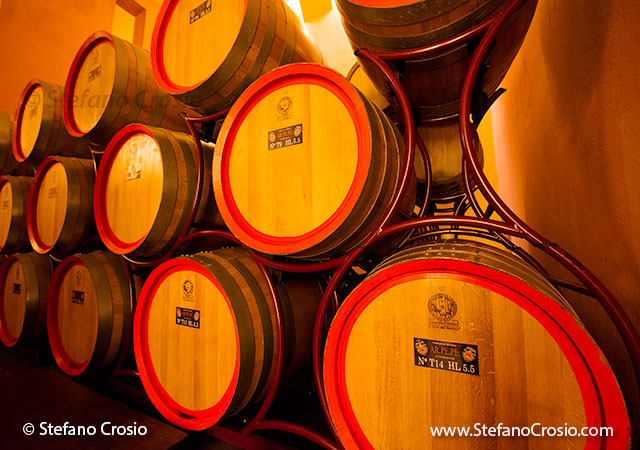
The name Nebbiolo comes from the Italian word “nebbia” (fog) – some say because of the fog that in late Fall generally enshrines Piemonte’s hills where Nebbiolo is grown. Nowadays, three main different Nebbiolo clones have been identified: (i) Nebbiolo Lampia; (ii) Nebbiolo Michet; and (iii) Nebbiolo Rose’. Interestingly enough, however, DNA profiling has shown that, while Lampia and Michet have identical DNA profiles, Rose’ does not share the same profile, which has recently led to consider Nebbiolo Rose’ a different grape variety altogether rather than a clone of Nebbiolo.

Villadoria, Barbaresco Riserva Speciale 1969 DOC

Nebbiolo is a late-ripening, very finicky variety in terms of the terroir it requires to produce quality wine, which means that Nebbiolo successfully grows only in very few places on the entire earth – Piemonte and Valtellina sure being two of them, along with certain of California’s AVA’s. Nebbiolo grapes generally have robust tannins and high acidity, which make it a variety that is very suitable for long-term aging. In Italy, Nebbiolo’s best expressions are in varietal wines such as Barolo and Barbaresco in Piemonte or Valtellina Superiore and Sforzato della Valtellina in Lombardia’s Valtellina district (all of them being DOCG appellations).

(Note: information on the grape variety taken from Wine Grapes, by Robinson-Harding-Vouillamoz, Allen Lane 2012)

Our Detailed Review

Now on to the wine we had last week: it was a Marchese Villadoria, Barbaresco Riserva Speciale 1969 DOC (13.5% ABV). Current vintages of this wine retail in the US for about $22.

If you have read the preceding notions about the Barbaresco appellation, it will not come as a surprise to you that our bottle was designated “DOC” instead of the current DOCG designation which, back in 1969, did not exist yet.

Two peculiar features of our bottle (that I had never observed in any other bottle before) were that it came completely wrapped in coarse cloth to which one end of a string had been affixed using sealing wax while the other end had been stapled to the cork! The two snapshots to the right should give you an idea of what I am talking about. While I can only offer conjectures as to why the producer went through the hassle of doing all that, I would imagine that the idea behind the cloth wrap was to protect the wine from light exposure (and therefore harmful UV rays) while the string connecting the cork to the cloth was maybe an anti-tampering device of sort?

I opened the bottle and decanted it about two and a half hours before the time we would likely taste it, following a proper handling and decanting procedure codified by the Italian Sommelier Association (I may write a post about it at some point). Fortunately, it looked like the cork had held up well throughout all those years, so that was a promising sign. Thanks to proper cellaring and handling, the wine poured clear into the decanter up to almost the end of the bottle, when unsurprisingly some sediment showed up.

Villadoria, Barbaresco Riserva Speciale 1969 DOCFast forward two and a half hours (during which we managed to keep ourselves busy with appetizers, a pasta course and plenty of other wine) and the time had come to pour the Barbaresco into our glasses and taste it!

As usual, I will use a simplified version of the ISA wine tasting protocol that we described in a previous post: should you have doubts as to any of the terms used below please refer to that post for a refresher.

In the glass, the wine was orange red in color, as expected after all those years of aging, and thick.

On the nose, it was intense, quite complex and fine, with aromas of spirited cherries, licorice, rose, vanilla and ethereal notes. The bouquet was not very broad, but it was elegant.

On the palate, our wine was dry, warm and smooth; quite fresh, quite tannic and quite tasty. If you are familiar with the ISA wine tasting protocol you might notice that our wine was a little shifted toward the “softness” side and therefore you might wonder whether it can still be classified as balanced. Well, considering that it is only natural that, after 44 years of aging, tannins and acidity recede a bit and that for a structured red wine being a little slanted toward the softness side is certainly not a “sin”, by all means I will go ahead and call it balanced. In terms of structure, our wine was between medium and full-bodied and its mouth-flavors were intense and fine, showing a pretty good correspondence with the wine bouquet: I picked up strawberries, cherries, vanilla and licorice. Finally, the finish of the wine was quite long and its evolutionary state was mature.

WiNews: Elena Walch’s Pinot Noir “Ludwig” 2010 Wins XII Italian Domestic Pinot Noir Competition

StefanoJust a quick flash to alert you about a piece of news that an Italian producer that I am fond of has been kind enough to share with me.

The 2010 vintage of the “Ludwig” Pinot Noir made by Elena Walch (the Alto Adige winery whose Riesling Castel Ringberg we have recently reviewed) is the fresh winner of the XII Italian Domestic Pinot Noir Competition, which is really exciting news as well as a tangible recognition for Walch’s commitment to quality production.

I hope I will be able to lay my hands on a bottle of the 2010 Ludwig soon so I can publish a full review!

European Wine Wars: after Tocai, it is the time of Prosek… and Teran

The international press, Dr Vino and several other sources all reported yesterday that, as a result of Croatia’s imminent accession to the European Union at the end of a 10-year long process, Croatian wineries will be required to stop using the name “Prosek” to identify a traditional local sweet raisin wine that has been made for centuries mainly in the Dalmatia region from local grape varieties such as Bogdanuša, Maraština, Plavac mali and Pošip.

The reason for the requirement is that, according to EU officials, the name of the Croatian wine is too similar to Italy’s Prosecco and therefore it might be confusing to consumers. And this in spite of Prosek and Prosecco being two very different wines, made out of different grapes (Glera for Prosecco and the Croatian grape varieties mentioned above for Prosek) and in different styles (Prosecco is mostly sparkling and is not a sweet wine, while Prosek is a still, sweet raisin wine).

Unsurprisingly, the EU requirement has caused considerable commotion in the Croatian wine world and some producers indicated that the Croatian authorities are even considering initiating a legal dispute to challenge the EU requirement.

However, the chances that Croatia be allowed to retain its right to use the name “Prosek” for their wine after joining the EU are very slim, as the case is virtually identical to the one that a few years ago prevented Italian winemakers (mostly in Veneto and Friuli) from using the word “Tocai” to identify a local dry wine that had been made for centuries from the homonymous grape variety because the name was too similar to Hungary’s Tokaji, a famous local sweet raisin wine made from Furmint grapes (for more information about the Tokaji/Tocai dispute, please refer to my previous post over at Flora’s Table that dealt with it).

But, as the saying goes, bad news never comes alone, at least for Croatia, that is. Beside the Prosek debacle, Croatia has to face a claim made by neighboring Slovenia that Croatia should also be prevented from using the word “Teran” to identify a red wine that is made in Italy’s region of Friuli, in Slovenia and in Croatia from the grape variety known as Terrano or Teran in Croatia. Slovenia’s claim is based on the fact that the EU granted Slovenia a protected designation of origin for Terrano grapes grown in the Slovenian region of Kras. The European Commission very recently decided the Teran dispute in favor of Slovenia, with a decision that will likely also negatively affect Italian Terrano producers.

Even in this case, the decision gives rise to many doubts, as Terrano is a very ancient variety (the oldest references date back to 1340 in Slovenia) which originated from the Karst plateau, an area that is shared among Italy (Friuli), Slovenia and Croatia (Istria). DNA profiling has also proved that Terrano is identical to Refosco d’Istria (a Croatian variety) and Refosk in Slovenia (information on the Terrano grape variety, cit. Wine Grapes, by Robinson-Harding-Vouillamoz, HarperCollins 2012).

Given the above, which side of the fray are you on?

Wine Review: Coppo, Barbera d’Asti “Pomorosso” 2006 DOCG

Coppo, Barbera d'Asti "Pomorosso" DOCG

Today we are going to talk about Barbera, and more specifically about a bottle of Barbera that I recently had the opportunity to taste and that has definitely impressed me.

The Bottom Line

Overall, I found Coppo, Barbera d’Asti “Pomorosso” 2006 DOCG ($55) to be one of the best Barbera’s that I have had so far, a wine that is a pleasure to drink and savor sip after sip – a perfect companion for a red meat dinner.

Rating: Outstanding and definitely Recommended Outstanding – $$$

(Explanation of our Rating and Pricing Systems)

About the Grape and the Appellations

As you may know, Barbera is a grape variety that is indigenous to the Monferrato district in the north Italian region of Piemonte. The first written references to Barbera date back to the end of the XVIII century. Nowadays it is the most widespread grape variety in Piemonte, from which wines are made that display lively acidity and a deep ruby color. (Note: information on the grape variety taken from Wine Grapes, by Robinson-Harding-Vouillamoz, Allen Lane 2012)

In Piemonte, Barbera is the main grape of four different appellations:

  • Barbera d’Asti DOCG (encompassing an area surrounding the towns of Asti and Alessandria, and requiring the use of 90% or more of Barbera grapes and a minimum aging of 4 months for the base version or 14 months, of which at least 6 months in wood barrels for the “Superiore” version);
  • Barbera del Monferrato Superiore DOCG (encompassing the Monferrato district near Alessandria and an area near the town of Asti, requiring the use of 85% or more of Barbera grapes and a minimum aging of 14 months, of which at least 6 months in wood barrels)
  • Barbera d’Alba DOC (encompassing an area in the vicinities of the town of Cuneo and requiring the use of 85% or more of Barbera grapes)
  • Barbera del Monferrato DOC (encompassing the Monferrato district near Alessandria and an area near the town of Asti, requiring the use of 85% or more of Barbera grapes)

Given its wide distribution, Barbera is produced in a variety of styles, ranging from simpler, “younger” versions that are only aged in steel vats to more structured and evolved versions that are aged in oak barrels, including sometimes barrique casks.

Our Detailed Review

The wine that we are going to review today is Coppo, Barbera d’Asti “Pomorosso” 2006 DOCG.

It falls within the category of the more complex Barbera’s: it is made out of 100% Barbera grapes grown in the 56 HA Coppo estate near the town of Canelli, near Asti (Piemonte). It has 13.5% ABV and is aged for 14 months in barrique casks. In the U.S., it retails for about $55.

Let me say outright that the Pomorosso is a great, structured red wine, that is suitable for several years of aging (the 2006 vintage that I had was a symphony of aromas, flavors and balance).

But let’s go more in the specifics through a technical wine tasting. As usual, I will use a simplified version of the ISA wine tasting protocol that we described in a previous post: should you have doubts as to any of the terms used below please refer to that post for a refresher.

In the glass, the 2006 Pomorosso poured ruby red and thick.

On the nose, its bouquet was intense, complex and fine with a sequence of aromas of violet, plums, blueberries, cherries, tobacco and chocolate.

In the mouth, the Pomorosso was dry, warm, smooth; fresh, tannic and tasty. It was a full-bodied, perfectly balanced wine and its mouth flavors were intense and fine, showing good correspondence with its bouquet as well as a perfect integration of the oaky notes released by its barrique aging. Its tannins, although very discernible, were also equally gentle and supple, with their delicate astringency counterbalancing the wine’s lively acidity. The Pomorosso had a long finish, with its flavors pleasantly lingering in the mouth for a very long time. Its evolutionary state in my view was mature, meaning that, with 7 years of aging under its belt, it was at or approaching its peak in terms of quality, making me think that additional aging, while certainly possible, would not likely improve its quality any further.

As usual, if you have tasted Pomorosso before, let me know how you liked it!

Wine Review: Donnafugat​a, Contessa Entellina Bianco “Chiarandà” 2009 DOC

Donnafugata, Contessa Entellina Bianco "Chiarandà" 2009 DOCOn a previous post over at Flora’s Table, we have talked about how Chardonnay is successfully grown in various regions throughout Italy, literally from Valle d’Aosta in the north to Sicily in the south, and how several Italian wineries make some excellent wines from such a widely cultivated international variety.

Very broadly speaking, I have to say I rather review and promote wines made out of Italian indigenous grape varieties, essentially because they differentiate themselves from the ubiquitous international varieties, because there are many excellent ones and because, by so doing, I think I am giving my small contribution to preserve biodiversity also in the vineyard (a wine world populated only by Chardonnays, Sauvignons, Pinots and Merlots would be a pretty boring one, if you ask me!) and to make certain Italian wines better known outside of Italy.

However, it is undeniable that certain international varieties have been successfully grown in Italy and that excellent, elegant wines are made out of such grapes which oftentimes are not very well known to the general public.

So today’s review is of a Sicilian Chardonnay that I very much like and that illustrates the point that Chardonnay is an extremely versatile variety that can give excellent results even in warmer climates like Sicily’s.

The wine I am talking about is Donnafugata‘s Contessa Entellina Bianco “Chiarandà” DOC 2009 ($35).

The Bottom Line

Overall, I very much enjoyed the Chiarandà, which I found to be a very elegant and “clean” Chardonnay, in which its oaky notes are not dominant but rather very well integrated such that they add to (instead of overwhelm) its pleasantly fruity and mineral flavor palette.

Rating: Very Good and definitely Recommended Very Good – $$

(Explanation of our Rating and Pricing Systems)

About the Producer and the Wine

Founded in 1983, Donnafugata is one of the top Sicilian wineries that contributed to the “Sicilian wine revolution” by contributing passion, investments and professionalism to raise the profile of Sicilian winemaking and produce top quality wines.

Their Chiarandà is a 100% Chardonnay wine made from the grapes grown in Donnafugata’s vineyards in a hilly region of the Contessa Entellina DOC appellation near the homonymous town (about halfway between Marsala and Palermo), in the western part of Sicily, at an altitude between 200 and 600 mt (650 to 1,950 ft) above sea level. The vineyards from which Chiarandà is made achieve an excellent density of 4,500 to 6,000 vines/HA and the vine training system used is spurred cordon.

The wine has 13% ABV and is fermented in stainless steel vats and then undergoes 6 months of aging on its lees in a mix of concrete and oak vessels of various sizes plus 24 additional months of in-bottle fining. Given its lively acidity (see, tasting notes below) it is a wine with great aging potential, in the 10 year range. In the US, the Chiarandà retails for about $35.

Our Detailed Review

Let’s now get down to the actual review of the 2009 Chiarandà that I had. As usual, I will use a simplified version of the ISA wine tasting protocol that we described in a previous post: should you have doubts as to any of the terms used below please refer to that post for a refresher.

In the glass, it is a beautiful golden yellow in color, and thick when swirled.

On the nose, its bouquet is intense, fine and definitely complex, with an array of enticing aromas of peach, tangerine, butter, vanilla, herbs (sage), mineral and iodine notes.

In the mouth, the wine is dry, warm, smooth; with lively acidity and pronounced minerality. It is medium to full-bodied with good structure and very balanced, with intense and fine mouth flavors reminiscent of its aromatic palette and a long finish, with those flavors pleasantly lingering in the mouth long after gulping down a sip. Its evolutionary state was ready (meaning, fine to drink now, but can take two or three more years of aging without compromising its qualities).

As usual, if you have tasted Chiarandà before, let me know how you liked it.

Wine Review: Two Italian Dry Rieslings Made by Elena Walch and Abbazia di Novacella

I am writing this review with some trepidation as I know that most likely it will be read by fellow wine blogger and friend Oliver who authors the very enjoyable and educational blog The Winegetter (if you do not follow him already, I sure think you should!) and, most importantly, is definitely an authority when it comes to Rieslings! I think I know that his preference goes to German sweeter Rieslings, while the two wines that I am going to review today are both Italian dry Rieslings from the Alto Adige area of the Trentino Alto Adige region.

And now on to the reviews of the two wines that I tried. As usual, I will use a simplified version of the ISA wine tasting protocol that we described in a previous post: should you have doubts as to any of the terms used below please refer to that post for a refresher.

1. Elena Walch, Alto Adige Riesling “Castel Ringberg” 2010 DOC (12.5% ABV; ab. €15 in Italy)

Elena Walch, Alto Adige Riesling "Castel Ringberg" 2010 DOCElena Walch is one of my favorite producers of white wines from Alto Adige and, let me say it upfront, her Castel Ringberg did not disappoint me!

This is a single vineyard wine made of 100% Riesling grapes grown in the Castel Ringberg vineyard near the town of Caldaro. It was fermented and rested on its lees exclusively in stainless steel tanks. Unfortunately, although other Elena Walch’s wines are available in the US, this wine does not appear to be, which is a shame.

In the glass, the wine was straw yellow and quite thick.

On the nose, its bouquet was intense, complex and fine, with pleasant aromas of petrol (very discernible), followed by grapefruit, citrus, pear, minerals and herbs.

In the mouth, it was dry, quite warm, smooth; fresh and tasty, with medium body. The wine was balanced, with intense and fine mouth flavors that trailed the wine’s bouquet. It had a long finish and it was ready in terms of its evolutionary state.

Overall, a very pleasant, fresh dry Riesling with a captivating bouquet.

Rating: Very Good Very Good – €

(Explanation of our Rating and Pricing Systems)

2. Abbazia di Novacella, Alto Adige Valle Isarco Riesling “Praepositus” 2009 DOC (13% ABV; ab. $35 in the US)

Abbazia di Novacella, Alto Adige Valle Isarco Riesling "Praepositus" 2009 DOCThis wine is part of Abbazia di Novacella’s premium line “Praepositus”. It is made of 100% Riesling grapes, grown in vineyards with an outstanding density of 6,000 vines/HA and harvested for 2/3 in October and 1/3 in December (late harvest). It was fermented in stainless steel vats and aged in bottle for 9 months before being released to the market.

In the glass, the wine was straw yellow with greenish hints, quite thick.

On the nose, its bouquet was intense, quite complex and fine, with aromas of petroleum, grapefruit, lime and Granny Smith apple.

In the mouth, it was dry, quite warm, quite smooth; fresh and tasty, medium-bodied. The wine was balanced, with intense and fine mouth flavors. It had a long finish and was ready as to its evolutionary state.

Overall, another very pleasant dry Riesling, although it personally impressed me a touch less than the Castel Ringberg, especially due to its narrower bouquet.

Rating: Good to Very Good Good to Very Good – $$

(Explanation of our Rating and Pricing Systems)

At any rate, two Italian dry Rieslings that I would certainly recommend and that I am pretty sure would not disappoint you.

That’s all for today! As always, if you have tasted either one (or both!) of these wines, make sure to share your thoughts by leaving a comment below!