Wine Review: Planeta, Syrah Sicilia Rosso IGT 2007

Planeta, Syrah Sicilia Rosso IGTToday’s review is of a Sicilian varietal Syrah made by excellent Sicilian winemakers Planeta.

As usual, let’s first provide a brief overview of the Syrah grape variety.

The Bottom Line

Overall, I loved this Sicilian take of an international grape variety! PlanetaSyrah Sicilia Rosso IGT 2007 ($35) was a luscious red, with an elegant bouquet, interestingly devoid of those animal fur notes that Syrah from other geographic regions may exhibit. Despite its muscular ABV, the wine was wonderfully balanced and offered supple tannins counterbalancing its silky smoothness. Its rich, pleasant mouth flavors completed the picture.

Rating: Very Good and definitely Recommended Very Good – $$

(Explanation of our Rating and Pricing Systems)

About the Grape

Syrah is a black-berried grape variety that is indigenous to the northern Rhone region of France, where it was first mentioned in a document dating back to 1781 under the name “Sira de l’Hermitage“.

DNA analysis proved that Syrah is a natural cross between Mondeuse Blanche (a Savoie variety) and Dureza (an Ardeche variety) that probably took place in the Rhone-Alps region.

Syrah has historically been mostly grown in the Rhone Valley in France and in Australia under the name Shiraz, although recently its planting has become more widespread (as in the case of the Sicilian Syrah that we are going to review) as a result of an increasing popularity of its wines.

(Information on the grape variety taken from Wine Grapes, by Robinson-Harding-Vouillamoz, Allen Lane 2012 – for more information about grape varieties, check out our Grape Variety Archive)

About the Estate

Planeta’s Syrah is made out of grapes coming from the 42 HA Maroccoli vineyard situated at 450 mt/1,475 ft above sea level within Planeta’s Ulmo estate, located near the town of Sambuca di Sicilia (Agrigento), on the western coast of Sicily. The Maroccoli vineyard density is 5,000 vines/HA.

Ulmo is the first and the oldest among Planeta’s current estates: it became operational in 1995, along with its winery, and it encompasses some 93 HA of vineyards (including Maroccoli) where Chardonnay, Merlot, Grecanico, Nero d’Avola and of course Syrah are grown in different crus.

Our Detailed Review

The PlanetaSyrah Sicilia Rosso IGT 2007 that I had was a red wine made from 100% Syrah grapes grown in the Maroccoli vineyard and had 14.5% ABV. It is available in the US where it retails for about $35.

The wine fermented in steel vats for 12 days at 25C/77F and aged 12 months in French oak barrique casks, 1/3 of which were new and the remaining 2/3 previously used ones. As you may know, the reason for using barrels that had already been used before is to limit the interference of the oak with the organoleptic profile of the wine, so that the tertiary aromas developed during the barrique aging period do not overwhelm but rather coherently complement the fruity secondary aromas developed by the wine in the fermentation phase.

As usual, for my review I will use a simplified version of the ISA wine tasting protocol that we described in a previous post: should you have doubts as to any of the terms used below please refer to that post for a refresher.

In the glass, the wine poured ruby red with purple hints and viscous when swirled.

On the nose, its bouquet was intense, moderately complex and fine, with aromas of black cherry, plum, tobacco, soil and leather.

In the mouth, the wine was dry, with high ABV and smooth; it was moderately acidictannic and tasty. It was full-bodied and perfectly balanced. Its mouth flavors were intense and fine, with notes of black cherry, dark chocolate, sweet tobacco and black pepper. Its tannins were supple and masterfully integrated. The wine had a long finish and its evolutionary state was in my view approaching its maturity, meaning the peak in terms of its potential (in other words, for best results enjoy it now or in the next year or so).

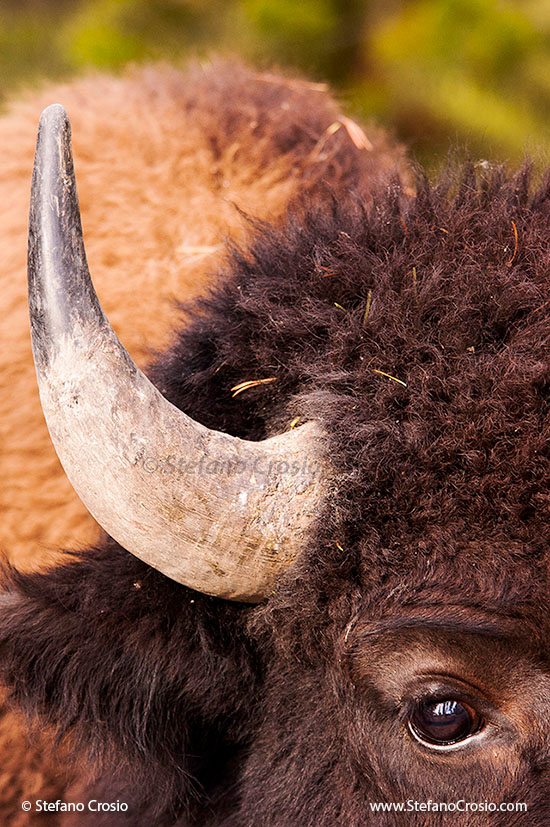
When Less Is More: Close-Up of a Bison

Bison (Bison bison) close-up

Sometimes – actually often times in photography, less is more.

By simplifying an image to its core elements, by eliminating distractions, by focusing on bare essentials such as color, lines, textures, contrast, the photographer may come up with a more powerful image, one that grabs the viewer’s attention, even if it portrays a well known subject.

Sometimes, even revealing only part of a well known subject may be an effective technique to resort to in order to engage the viewers by making them mentally process the partial information they see and linking it to the complete mental image they have of the subject.

In this photograph of a Bison (Bison bison) in Yellowstone National Park‘s Hayden Valley, I zeroed in on the bison’s face, isolating its most distinctive features – the horn and the expressive eye, by placing them in opposite power points in the frame. Using a telephoto lens added the extra benefit of compressing the scene, thus emphasizing the color contrast and blurring the background, which contributes to simplifying the image.

If you would like to see more images of mine, feel free to browse my Galleries.

As per my copyright notice, please respect my work and do not download, reproduce or use the image above without first seeking my consent. Thank you :-)

Chronicle of a French Wine Country Trip: Saint Emilion

Saint Emilion
: View of the town

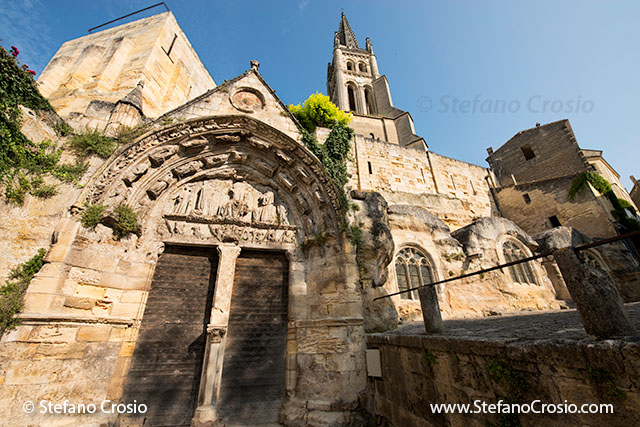
Saint Emilion: the bell tower of the Monolithic Church

Francesca and I have recently spent a few days in France, at Saint Emilion, in the heart of one of the most renowned among the Bordeaux wine districts and appellations. There we have enjoyed the courteous hospitality of a fellow blogger (more on that later, on a dedicated post), the culture and the beauty of those places, a lot of good food and wine and of course the magic of the Bordeaux wine country and its multitude of Chateaux.

This post is the first in a series that will take you with us, if only virtually, to visit Saint Emilion and its surroundings and discover some of the attractions that such area has to offer.

Saint Emilion: The Monolithic Church and its bell tower

Saint Emilion: 
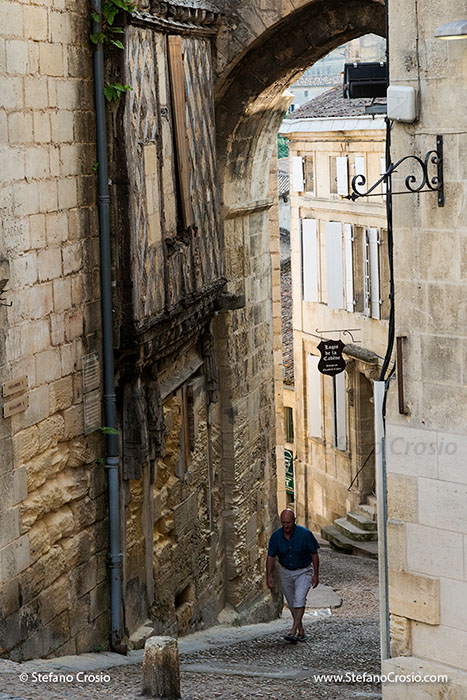
La Porte de la Cadene (the Door of the Chain)

We will start by showing you the town of Saint Emilion and telling you something about its rich history on this post, then on future posts we will show you one of its churches, we will talk about the wine country and the Saint Emilion wine classification system, we will take you to a beautiful nearby village and to a full-blown visit of our gracious host’s residence, we will make you visit a lively food market, we will take you food and wine shopping in Saint Emilion, and of course we will visit a few Chateaux and talk about their wines… Yes, it will be a fairly extensive trip, but don’t worry, we will take a break here and there with posts on different subjects, but we think it will be worth your time! 😉

Saint Emilion: 
La Maison du Vin and the bell tower of the Monolithic Church

Saint Emilion: The bell tower of the Monolithic Church

Now, without further ado let’s talk a bit about the town of Saint Emilion.

Saint Emilion is a beautiful, elegant small town located in the Libournais area, on the right bank of the Dordogne River, not far from Bordeaux. Saint Emilion’s long history goes back to the Roman times, and precisely to the IV century when the Roman ruler Decimus Magnus Ausonius (after whom the famous Chateau Ausone, one of the four Premier Grand Cru Classé “A” wineries, was named) erected a property there, where he eventually retired. Incidentally, it was the Romans who got the long-standing Saint Emilion wine tradition started by introducing viticulture to the region.

The beauty of the Saint Emilion landscape and its wine-making history have won the area UNESCO status of World Heritage Site for its being an “outstanding example of an historic vineyard landscape that has survived intact and in activity to the present day”.

Saint Emilion: Les Grandes Murailles (the Big Wall) and the vineyards of Chateau Les Grandes Murailles

Saint Emilion: 
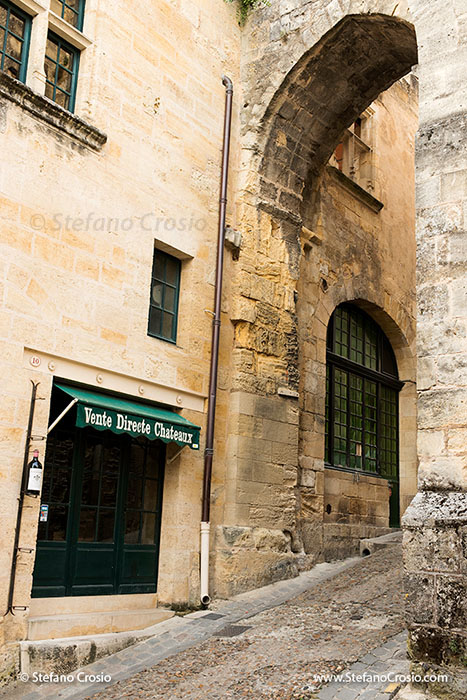
a "tertre" (steep alley) and a pastry shop

Saint Emilion is a town of steep alleys known as “tertres, winding narrow streets, pleasant squares dotted by bistros as well as several food and wine stores, beautiful Medieval buildings and ancient churches built in the yellowish local limestone, and hectares and hectares of lush vineyards.

Probably the focal point of the town revolves around the central Place de l’Eglise Monolithe: this square borrows its name from the homonymous Monolithic Church, the largest underground church in Europe, that was dug out of Saint Emilion’s limestone rock walls by Benedictine monks between the IX and the XII century. The Monolithic Church’s finely sculpted portal dates back to the XIV century and presents scenes inspired by the Last Judgment and the resurrection.

Saint Emilion: 
ancient buildings in town

Saint Emilion: detail of the Place de l'Eglise Monolithe and portal of the Monolithic ChurchUnderneath the Monolithic Church lie the Benedictine catacombs and the Hermitage, an underground cave where Saint Emilion himself (an VIII century Benidctine monk called Emilian, who became the town’s patron saint) is believed to have spent the last years of his life, from 750 to 767. There visitors can see an underground spring that was used for baptismal water, a bed and meditation seat both carved in rock, and graffiti reportedly dating back to the French Revolution. Above the Monolithic Church stands an imposing 53 mt/174 ft tall bell tower that was built between the XII and the XV century, while to the side of the church is the XIII century Chapelle de la Trinité (Trinity Chapel) hosting well preserved frescoes on the walls of its apse.

Saint Emilion: The Eglise Collegiale and the bell tower of the Monolithic Church

Saint Emilion: La Maison de la Cadene (House of the Chain) and la Porte de la Cadene (Door of the Chain)The inside of the Monolithic Church and the complex comprising the catacombs, the Hermitage and the Trinity Chapel can only be accessed and visited through a guided tour operated by the tourist office and, unfortunately, photography is not permitted anywhere within the complex – so here you will only be able to see images of the outside of the complex.

Other notable monuments in Saint Emilion are the Romanesque Eglise Collegiale (Collegiate Church) and its XIV century cloister (this will be the subject of another post), the complex of the Maison de la Cadene and the Porte de la Cadene (House of the Chain and Door of the Chain) located at the top of a steep tertre and dating back to the XVI century, and Les Grandes Murailles (the Big Wall) which are the last remains of what used to be a XIII century Benedictine monastery that collapsed for the most part and are now immersed in the vineyards of the homonymous Chateau Les Grandes Murailles, one of the 63 Grand Cru Classé wineries in the Saint Emilion wine classification.

Saint Emilion: 
elegant building in Rue des Ecoles

Saint Emilion: the bell tower of the Monolithic ChurchTypical of Saint Emilion are also several pastry shops selling two local specialties: the Macarons (delicious almond-based cookies) and the Canelé (small, chewy sweets with a caramelized sugar outside and a core of rum-infused custard).

Enough for today: I hope you enjoyed this first stop in our Saint Emilion trip and our general overview of the town – stay tuned for the next chapters of our chronicle! 🙂

Saint Emilion: Restaurant tables at Place de l'Eglise Monolithe

Nikon D800 & Action Photography: a Swiss Army Knife?

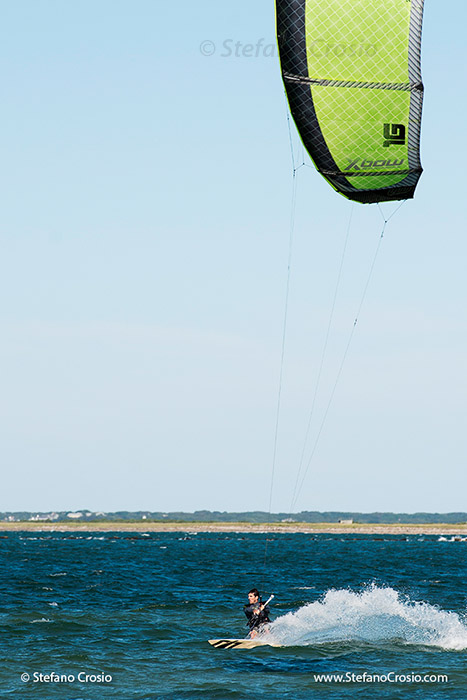
USA, Nantucket (MA)
 Kite surfer on a windy day

Nikon D800, Nikkor AF-S 70-200 f/2.8G VR II; 1/1600 sec @ f/5.6, ISO 250

After my previous post about how to effectively customize a Nikon D800 so as to make it work the way you want/need, a question from a reader prompted me to write again about the D800 and explain why I think that, if properly configured, the D800 is a dream camera (at least in the Nikon camp) and a star performer not only for photographing still subjects but also action.

Let’s start from a few basic facts: the D800 has a so-called “FX” format full-frame CMOS sensor, capable of recording images at the stunning resolution of 36MP in the traditional 35mm format of 24×36. At this resolution, the D800 resolves much more detail than any “legacy” 35mm film-based camera and approaches medium-format territory. The flip side of such phenomenal resolution is that, given the huge amount of data that the camera needs to move from the sensor to the flash card, at maximum resolution the D800 achieves a relatively slow continuous shooting speed of 4 FPS (frames per second). In addition, if you are shooting NEF (i.e., RAW files – which I think you should for the reasons explained on a previous post), even with a fast CF card the buffer would fill after about 17 consecutive shots (using the “14-bit lossless compressed” NEF setting).

While of course the above limitations are not a concern if/when you shoot stationary subjects, they will most likely get in the way if you plan to also use your D800 to shoot action.

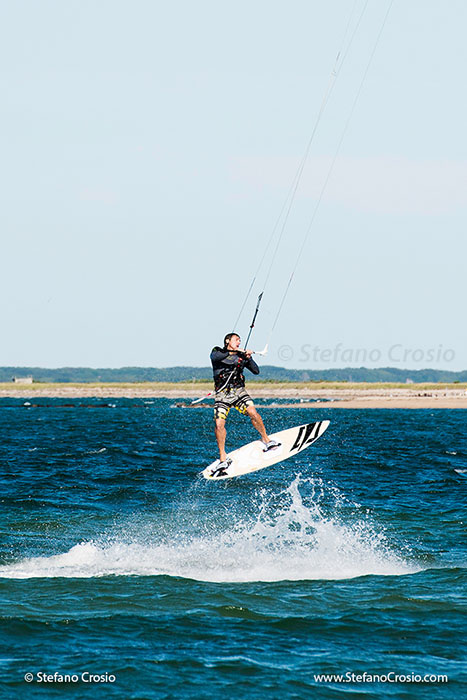
USA, Nantucket (MA) 
Kite surfer on a windy day

Nikon D800, Nikkor AF-S 70-200 f/2.8G VR II; 1/1600 sec @ f/5.6, ISO 250

So, is all hope lost and do you need to resign yourself (as many have lamented on the World Wide Web) to choose the D800 if you shoot landscapes/portraiture/architecture OR the D4 if you shoot sports or active wildlife?…

The short answer is: not really.

Let me explain why. Your D800 could be compared to a Swiss Army knife: if you have the corkscrew tool out, your versatile knife will let you pop a bottle nice and easy, but will it be as effective a tool to, say, cut an unplugged electrical wire? Of course not: to do that you will have to switch to the appropriate tool for the job, a blade.

Much the same way, Nikon engineers did not pack all that unbelievable technology in the D800 for no reason: you need to configure your camera so as to maximize its capabilities of shooting action.

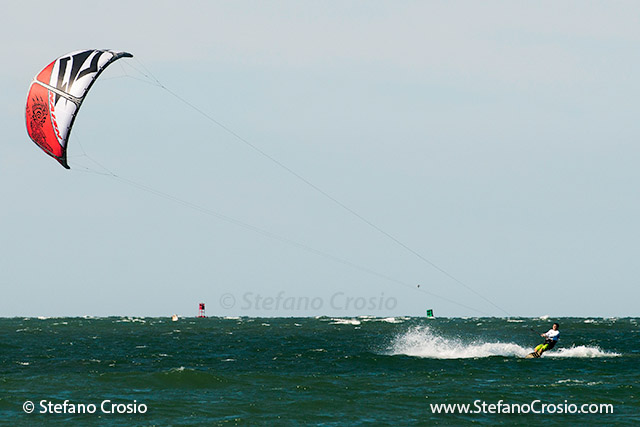
USA, Nantucket (MA) 
Windsurfer on a windy day

Nikon D800, Nikkor AF-S 70-200 f/2.8G VR II; 1/1600 sec @ f/5.6, ISO 200

Let’s see what I think you should do:

  1. Set the AF Mode to AF-C (Continuous Servo AF) and the Release Mode to CH (Continuous Shooting – High Speed)
    *
  2. If you shoot NEF (as you should), set your compression to “14-bit Lossless Compressed”
    *
  3. Set the Image Area function to the DX (24×16) format
    *
  4. Use a fast CF (or SD) Card! For best results, get an UDMA 7 card, such as Lexar Professional 1000x or SanDisk Extreme Pro UDMA 7
    *
  5. Purchase the optional MB-D12 external battery grip (note that the street price for it in the US is almost 50% less than what Nikon USA charges) and a D4 battery (EN-EL18) and connect them to your D800

USA, Nantucket (MA)
 Kite surfer on a windy day

Nikon D800, Nikkor AF-S 70-200 f/2.8G VR II; 1/1600 sec @ f/5.6, ISO 250

That’s it! By configuring your camera as above, you achieve the following benefits for action photography:

  • You maximize the D800 “base” 4 FPS rate, by increasing it by 50% to 6 FPS, which is adequate for most action shooting scenarios, barring only those involving extremely fast moving subjects (such as if you professionally shoot F1/NASCAR/MotoGP)
    *
  • You increase the number of images that can be saved to the buffer before this fills up by 70%, from 17 to 29, depending on how fast your memory card is
    *
  • Although by switching to the DX image format you reduce the file size from 36MP to 15MP, your image size is still going to be plenty enough to print even large photographs or to submit to agencies/magazines
    *
  • By switching to the DX image format, you get the “1.5x magnification” effect typical of such format, which effectively adds 50% to the focal length of your long lens, something desirable for most action shooters who, no matter how long a lens they are shooting with, often find themselves hoping it were even longer! (A technical note: technically speaking, it is incorrect to call such effect a “magnification” as by switching to DX there is no optical difference – what happens is that the file you get is just an in-camera crop of the center portion of your full-frame FX image. But in practical terms your image, at the reduced DX size, will be very similar to the image that you would get if you used a 50% longer lens at the larger FX size)

USA, Nantucket (MA)
 Kite surfer on a windy day

Nikon D800, Nikkor AF-S 70-200 f/2.8G VR II; 1/1600 sec @ f/5.6, ISO 250

Also, the accuracy of the D800’s Multi-CAM 3500FX autofocus sensor module and 15 cross-type AF sensors is phenomenal – it really nails down the focus on almost all images, so much so that you will soon come to realize that, if you have occasional out of focus shots, in most cases it is due to operator error, not inaccurate technology!

One final note: for your convenience, you may decide to assign one of the four customizable Shooting Menu Banks available on the D800 to your action shooting settings, so that you may recall them at any time with just one click. See page 268 of the D800 User Manual for instructions how to set it up.

Now have fun and go shoot some action with your Swiss Army knife D800! 🙂

USA, Nantucket (MA)
 Kite surfer on a windy day

Nikon D800, Nikkor AF-S 70-200 f/2.8G VR II; 1/1600 sec @ f/5.6, ISO 200

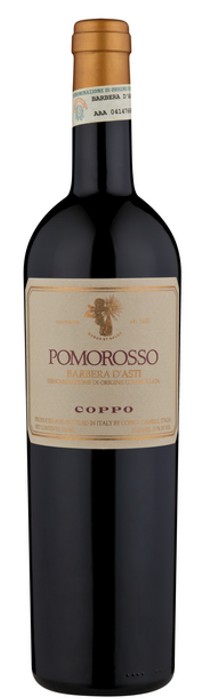
Wine Review: The Barbera Trilogy #3 – Coppo, Barbera d’Asti “Pomorosso” 2006 DOCG

Coppo, Barbera d'Asti "Pomorosso" DOCG For the epilogue of our “Barbera Trilogy” series, I am going to readapt here my review of the Pomorosso that I published a while ago.

The Bottom Line

Overall, I found CoppoBarbera d’Asti “Pomorosso” 2006 DOCG ($60) to be one of the best Barbera’s that I have had so far, a wine that is a pleasure to drink and savor sip after sip – a perfect companion for a red meat dinner.

Rating: Outstanding and definitely Recommended Outstanding – $$$

(Explanation of our Rating and Pricing Systems)

About the Grape and the Appellations

You may find all relevat information regarding Barbera as a grape variety and the four appellations in Piemonte where Barbera is the main grape variety on the “Barbera” entry of our Grape Variety Archive.

About the Producer and the Estate

You may find information regarding the producer, Coppo, and the estate in the first post of this series of reviews of the Coppo lineup.

Our Detailed Review

The wine that we are going to review today is Coppo, Barbera d’Asti “Pomorosso” 2006 DOCG.

The Pomorosso is the flagship varietal Barbera in the Coppo offering (which, as we have seen in previous posts, includes two less structured, less expensive alternatives: L’Avvocata and Camp du Rouss).

It is definitely a complex Barbera: it is made out of 100% Barbera grapes grown in selected vineyards of the 56 HA Coppo estate located in the surroundings of the town of Canelli, near Asti (Piemonte). The Pomorosso 2006 had 13.5% ABV, was fermented and macerated in stainless steel vats for 12 days at 28-30C/82-86F, went through full malolactic fermentation and aged for 14 months in all new French oak barrique casks. In the U.S. it has a suggested retail price of $70, but its street price is generally around $55-60.

Let me say outright that the Pomorosso is a great, structured red wine, that is suitable for several years of aging (the 2006 vintage that I had was a symphony of aromas, flavors and balance). But let’s now move on to the technical wine tasting.

As usual, I will use a simplified version of the ISA wine tasting protocol that we described in a previous post: should you have doubts as to any of the terms used below please refer to that post for a refresher.

In the glass, the 2006 Pomorosso poured ruby red and viscous.

On the nose, its bouquet was intense, complex and fine with a sequence of aromas of violet, plums, blueberries, cherries, tobacco and chocolate.

In the mouth, the Pomorosso was dry, with high ABV and smooth; it was acidic, tannic and tasty. It was a full-bodied, perfectly balanced wine and its mouth flavors were intense and fine, showing good correlation with its bouquet as well as a perfect integration of the oaky notes released by its barrique aging. Its tannins, although very discernible, were also equally gentle and supple, with their delicate astringency counterbalancing the wine’s lively acidity. The Pomorosso had a long finish, with its flavors pleasantly lingering in the mouth for a very long time. Its evolutionary state in my view was mature, meaning that, with 7 years of aging under its belt, it was at or approaching its peak in terms of quality, making me think that additional aging, while certainly possible, would not likely improve its quality any further.

Wine Review: The Barbera Trilogy #2 – Coppo, Barbera d’Asti “Camp du Rouss” 2009 DOCG

Disclaimer: this review is of a sample that I received from the producer’s US importer. My review has been conducted in compliance with my Samples Policy and the ISA wine tasting protocol and the opinions I am going to share on the wine are my own.

In this second post of the “Barbera Trilogy” we will review Coppo‘s mid-range Barbera, “Camp du Rouss”, a fancy name which, in the dialect of Piemonte, means “field of the red-headed”(!) – apparently, the reason for the name is that the previous owner of the vineyard where the grapes for this wine are grown was a red-headed man.

The Bottom Line

Overall, CoppoBarbera d’Asti “Camp du Rouss” 2009 DOCG ($23) was a good, muscular Barbera, with a nice balance between its secondary, fruity aromas and the tertiary, spicy ones as well as an appealing price. It makes a good complement for red meat dishes. As a matter of personal preference, while I liked the Camp du Rouss, I liked L’Avvocata a tad better, because of the slightly lower ABV and more delicate tannins. But again, this is just a question of personal taste and YMMV! 😉

Rating: Good and Recommended, considering its good QPR Good – $$

(Explanation of our Rating and Pricing Systems)

About the Grape and the Appellation

You may find all relevat information regarding Barbera as a grape variety and the four appellations in Piemonte where Barbera is the main grape variety on the “Barbera” entry of our Grape Variety Archive.

About the Producer and the Estate

You may find information regarding the producer, Coppo, and the estate in the first post of this series of reviews of the Coppo lineup.

Our Detailed Review

The wine that we are going to review today is CoppoBarbera d’Asti “Camp du Rouss” 2009 DOCG.

It has a muscular 14.5% ABV and is fermented for 14 days in stainless steel vats, before going through full malolactic fermentation. It then ages for 12 months in French oak barrique casks, 80% previously used ones and 20% new ones. The reason for utilizing used barriques is to limit the interference of the oak with the organoleptic profile of the wine, so that the tertiary aromas developed during the barrique aging period do not overwhelm but rather complement the fruity secondary aromas developed during the fermentation phase. The wine finally ages for an additional 12 months in-bottle before being released for sale. In the U.S., it retails for about $23.

As usual, for my review I will use a simplified version of the ISA wine tasting protocol that we described in a previous post: should you have doubts as to any of the terms used below please refer to that post for a refresher.

In the glass, the Camp du Rouss poured ruby red and unsurprisingly thick when swirled.

On the nose, its bouquet was intensequite complex and fine, with aromas of red cherries, raspberries, leather, and cigar box.

In the mouth, the wine was drywarm (you can distinctly feel the “heath” of its ABV on your palate!) and smoothfreshtannic (with firm but not harsh tannins) and tasty. It was full-bodied and balanced, with intense and fine mouth flavors of wild cherries and black pepper. The finish was quite long and the evolutionary state ready (i.e., fine to drink right away, but likely better if you let it rest 2/3 more years in your cellar).

Wine Review: The Barbera Trilogy #1 – Coppo, Barbera d’Asti “L’Avvocata” 2011 DOCG

Disclaimer: this review is of a sample that I received from the producer’s US importer. My review has been conducted in compliance with my Samples Policy and the ISA wine tasting protocol and the opinions I am going to share on the wine are my own.

In the next three posts we will review and discover the three Barbera’s in the Coppo range that are imported into the US: L’Avvocata, Camp du Rouss, and the flagship Pomorosso.

In this post, we will start from Coppo‘s entry-level Barbera, “L’Avvocata”, a fancy name which literally means “the female lawyer”(!)

The Bottom Line

Overall, CoppoBarbera d’Asti “L’Avvocata” 2011 DOCG ($15) was a solid, “clean” entry-level Barbera, with a great price point for the quality it delivers. Needless to say, and to state the obvious, the Pomorosso it is not, but L’Avvocata is still a very enjoyable wine to pair with pasta dishes with meat-based sauces or veal-based dishes.

Rating: Good to Very Good and Recommended, considering its great QPR Good to Very Good – $

(Explanation of our Rating and Pricing Systems)

About the Grape and the Appellation

Barbera is a grape variety that is indigenous to the Monferrato district in the north Italian region of Piemonte. The first written references to Barbera date back to the end of the XVIII century. Nowadays it is the most widespread grape variety in Piemonte, from which wines are made that display lively acidity and a deep ruby color.

In Piemonte, Barbera is the main grape of four different appellations:

  • Barbera d’Asti DOCG (encompassing an area surrounding the towns of Asti and Alessandria, and requiring the use of 90% or more of Barbera grapes and a minimum aging of 4 months for the base version or 14 months, of which at least 6 months in wood barrels, for the “Superiore” version);
  • Barbera del Monferrato Superiore DOCG (encompassing the Monferrato district near Alessandria and an area near the town of Asti, requiring the use of 85% or more of Barbera grapes and a minimum aging of 14 months, of which at least 6 months in wood barrels)
  • Barbera d’Alba DOC (encompassing an area in the vicinities of the town of Cuneo and requiring the use of 85% or more of Barbera grapes)
  • Barbera del Monferrato DOC (encompassing the Monferrato district near Alessandria and an area near the town of Asti, requiring the use of 85% or more of Barbera grapes)

Given its wide distribution, Barbera is produced in a variety of styles, ranging from simpler, “younger” versions that are only aged in steel vats to more structured and evolved versions that are aged in oak barrels, including sometimes barrique casks.

(Information on the grape variety taken from Wine Grapes, by Robinson-Harding-Vouillamoz, Allen Lane 2012 – for more information about grape varieties, check out our Grape Variety Archive)

About the Producer and the Estate

You may find information regarding the producer, Coppo, and the estate in the first post of this series of reviews of the Coppo lineup.

Our Detailed Review

As we said at the beginning of this post, the wine we are going to review today, Coppo, Barbera d’Asti “L’Avvocata” 2011 DOCG, is the entry-level Barbera in the Coppo lineup: it has 14% ABV and retails in the US for an attractive price of $15.

L’Avvocata is made from 100% Barbera grapes grown in the estate vineyards around the town of Canelli, in Piemonte’s Monferrato district. The wine is fermented in stainless steel vats, goes through malolactic fermentation and is aged in large French oak barrels (therefore, not barriques) for 6 to 8 months. L’Avvocata is a Barbera that is not meant for aging (although some cellaring will certainly not hurt!): it is released ready to be enjoyed.

As usual, for my review I will use a simplified version of the ISA wine tasting protocol that we described in a previous post: should you have doubts as to any of the terms used below please refer to that post for a refresher.

In the glass, L’Avvocata poured ruby red with purple hints and thick when swirled.

On the nose, its bouquet was intense, quite complex and fine, with pleasant aromas of wild cherries, redcurrant, ground coffee, wet soil and hints of tobacco.

In the mouth, the wine was dry, warm and smooth; fresh, tannic (with present but pleasantly supple, well integrated tannins despite the young age) and tasty. It was medium-bodied and balanced, with intense and fine mouth flavors that nicely matched its bouquet. The finish was quite long and the evolutionary state ready (i.e., absolutely fine to drink right away, probably even better if you let it rest a couple more years in your cellar).

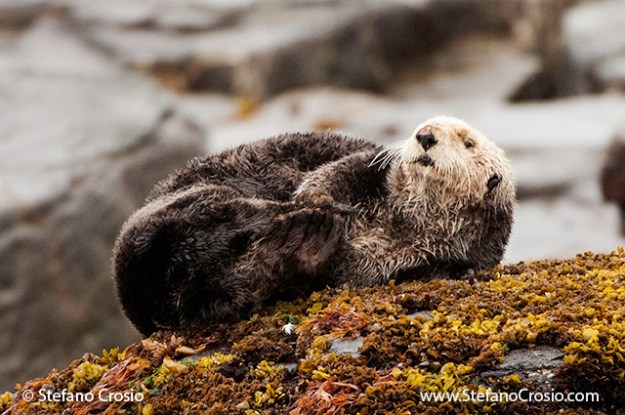
Sea Otter Resting on a Rock

USA, Afognak Island, Kodiak Archipelago (AK) Sea otter (Enhydra lutris)

Not long ago I have uploaded a new gallery to my Website showcasing images of certain Mustelids (Mustelidae), which is a family comprising some 54 species of carnivorous mammals such as otters, badgers, martens, wolverines and weasels. If you are interested, feel free to check it out.

The image on this post is of a sea otter (Enhydra lutris) in the Kodiak Archipelago, in Alaska.

Sea otters are members of the weasel family. They spend most of their time in the water (they even give birth in it!) but, in some instances such as the one recorded in the image above, they come ashore to sleep or rest.

Sea otters often float at the water’s surface, lying on their backs, often with a clam and a rock. Otters will place the rock on their chests, and repeatedly smash the shellfish against it until it breaks open so they can feed on the mussel. Otters sometimes float in forests of kelp in which they entangle themselves to provide anchorage in the swirling sea. Given all the time they spend in the water, sea otters have thick underfur that traps air to form an insulating layer against the chilly waters: this is particularly important as sea otters have no insulating fat (source: National Geographic).

If you would like to see more images of mine, feel free to browse my Galleries.

As per my copyright notice, please respect my work and do not download, reproduce or use the image above without first seeking my consent. Thank you :-)

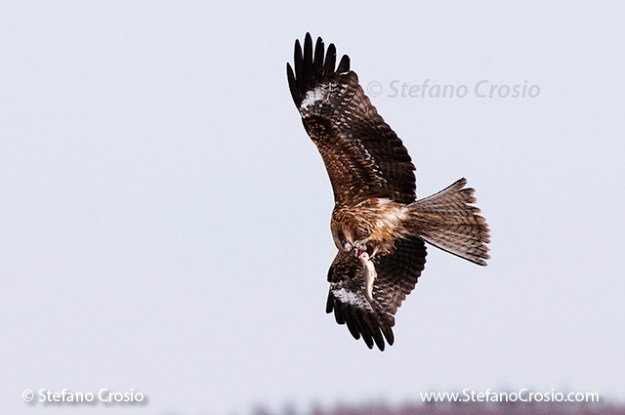
A Snack on the Fly – Black-eared Kite

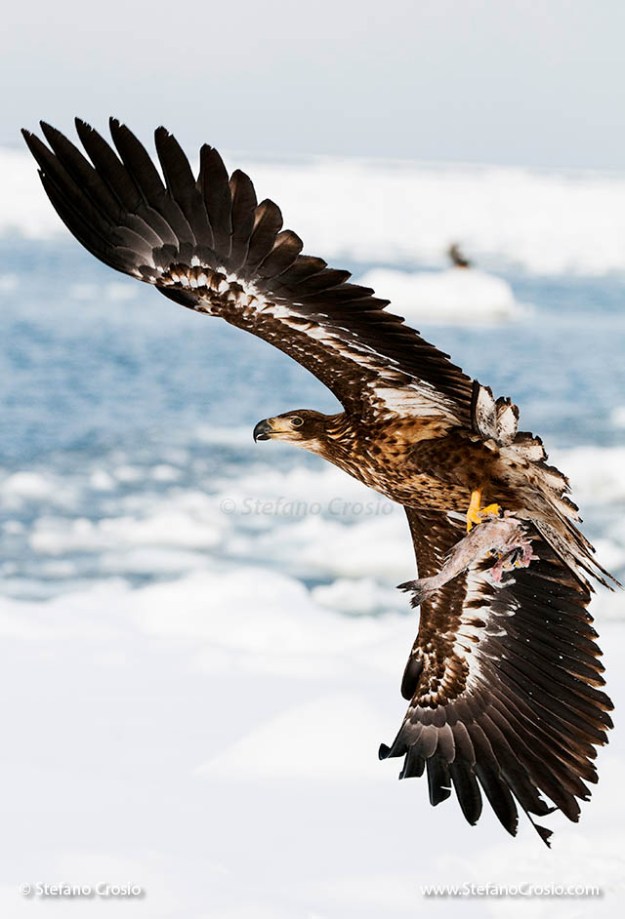
Black-eared kite (Milvus migrans lineatus) eating fish in flight

This image is of a Black-eared kite (Milvus migrans lineatus) eating a fish in flight: it is a shot that I particularly like because it shows an interesting behavior of the bird.

Black-eared kites are large birds of prey with dark brown plumage and black feathers over the ears. They have large wings (with a wingspan of about 50 to 60″/130 to 150 cm) and spend much of the time soaring and circling in the sky. Viewed from beneath, kites have prominent broad white patches under their wings, just before their dark wingtips. The end feathers often splay into “fingers” when they’re flying (source: Japan Times and Silly Reflections).

If you would like to see more images of mine, feel free to browse my Galleries.

As per my copyright notice, please respect my work and do not download, reproduce or use the image above without first seeking my consent. Thank you :-)

Coppo: The Winery that Reinvented Barbera

The US importer of the well-known Italian winery Coppo has been kind enough to send me samples of most wines in the Coppo lineup (those that are currently imported into the US) for me to taste and review: thank you, Rebecca, Brittany and Mari!

So, let’s start from the beginning, with some information about the producer, the estate, and the Coppo lineup.

About the Producer and the Estate

Coppo‘s 56 HA estate is located in Italy’s Piemonte region, in the Monferrato district, near the town of Canelli (Asti), an area where traditionally Moscato grapes had mostly been grown, especially for making sweet Asti Spumante using the Charmat-Martinotti Method (for more information, check out our previous post about Charmat-Martinotti sparkling wines).

The Coppo family has been making wines at the estate since the early XX century, but the turning point took place in the mid Eighties, when the family extended their product range to encompass, beside Moscato, Barbera and certain international varieties such as Chardonnay and Cabernet Sauvignon and modernized their production line.

Specifically, 1984 marked the first vintage of Coppo’s probably most famous, revolutionary wine: the Pomorosso, the successful result of efforts and investments aimed at coming up with a high-quality Barbera that would be meant for aging and be a tribute to such variety and its territory.

About the Wines

Coppo has been recognized as one of Piedmontese winemakers that have focused on high-quality production and preservation of the local traditions. Nowadays, the full Coppo lineup encompasses 16 wines:

  • 4 Barbera‘s
  • 1 Barbera-Cabernet Sauvignon blend
  • 1 Barolo (from Nebbiolo grapes grown in a vineyard outside the geographical boundaries of the appellation, but grandfathered so as to still let them use the Barolo DOCG appellation because production predated the creation of the appellation)
  • 1 Freisa
  • 1 Gavi (from Cortese grapes grown in a separate vineyard within the Gavi DOCG appellation territory)
  • 3 Chardonnay‘s
  • 4 Classic Method sparkling wines
  • 1 sweet Moscato

Out of those 16 wines, Coppo’s US importer was kind enough to send me 9 to taste and review, namely those 9 that are currently imported into the U.S.

Considering the number of wines to review, in an effort not to just focus on one producer for an extended period of time, I will review them over time, so in the next months you will see posts coming up devoted to each of such 9 wines, mixed up with posts on different wines, so please stay tuned!

The Coppo Wines We Are Going to Review

The 9 wines in the Coppo lineup that I am going to review are the following:

  1. Barbera d’Asti “Pomorosso” DOCG
  2. Barbera d’Asti “Camp du Rouss” DOCG
  3. Barbera d’Asti “L’Avvocata” DOCG
  4. Barolo DOCG
  5. “Alterego” Monferrato DOC (a Cabernet Sauvignon/Barbera blend)
  6. Chardonnay “Monteriolo” Piemonte DOC
  7. Chardonnay “Costebianche” Piemonte DOC
  8. Gavi “La Rocca” DOCG
  9. Moscato d’Asti “Moncalvina” DOCG

To get the series started, I am going to launch “the Barbera Trilogy” 🙂 that is I will review the three Barbera’s in the Coppo range, starting from the entry-level “L’Avvocata” and culminating with the flagship “Pomorosso”, which I had already reviewed on a previous post. The other wines will follow later on.

As always, let me know if you happened to try any of the wines in the Coppo range and, if you did, how you liked them!

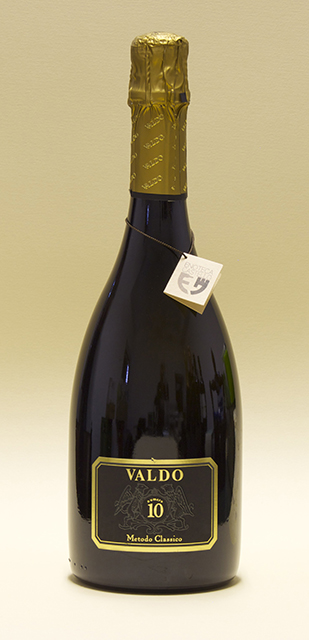
Wine Review: Valdo, Prosecco Brut Metodo Classico “Numero 10” 2009 DOC

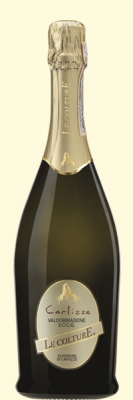
Valdo, Prosecco Brut Metodo Classico "Numero 10" DOCAs you may already know if you have been reading this blog for a while, I am not a big fan of Prosecco: with very few exceptions (as in the case of Le Colture), I prefer the greater structure, complexity and finer perlage of a good Classic Method sparkling wine over most Charmat-Martinotti Method Prosecco’s.

However… drum roll… enter Valdo, Prosecco Brut Metodo Classico “Numero 10” DOC (€18), the game changer, the ideal bridge connecting Prosecco with Classic Method.

The Bottom Line

Overall, as I think you will be able to tell from my tasting notes, I really quite liked this Prosecco: personally, I applaud the producer who departed from the traditional way to make Prosecco (according to the Charmat-Martinotti Method) and instead went the Classic Method way. I think this gave to the Numero 10 that extra complexity and structure that I have almost regularly found lacking in the vast majority of the Prosecco’s that I have had so far. The choice of a relatively short period of aging on the lees also ensured that the secondary aromas would not become too pronounced at the expense of the fresh and fruity primary aromas of the Glera variety. All in all, a really solid sparkling wine for a reasonable price (at least in Italy): I seriously hope that the Numero 10 will become available in the US soon, maybe in time for next spring?… 😉

Rating: Good to Very Good and Recommended given its good QPR Good to Very Good – €

(Explanation of our Rating and Pricing Systems)

Classic Method vs. Charmat-Martinotti Method

Let’s start from the beginning: the world of sparkling wines (in Italian, “spumante“) is essentially divided into two camps: Classic Method sparklers (the archetype of which is Champagne) and Charmat-Martinotti Method sparklers (such as most Prosecco and Asti Spumante). We have discussed at length the differences between the two methods and the relevant production processes on previous posts, one regarding the Classic Method and the other one the Charmat-Martinotti Method, so you can refer to them in case of doubts.

The point here is that the wine we are going to review today is one of the very few Prosecco’s that are made according to the Classic Method, and therefore through in-bottle refermentation. Let’s dig deeper into it.

About the Grape and the Appellation

The main grape variety that is used in the production of the wine Prosecco was called Prosecco Tondo (now Glera) which DNA profiling has shown to be identical to a rare variety that is indigenous to the Istria region of Croatia named Teran Bijeli. This evidence supports the theory of an Istrian origin for the Prosecco/Glera grape variety. Glera is a partly-aromatic white-berried grape variety (grape variety information taken from Wine Grapes, by Robinson-Harding-Vouillamoz, Allen Lane 2012).

Prosecco wine is made in two Italian DOCG appellations and in one more loosely regulated inter-regional DOC appellation, as follows:

  • Prosecco di Conegliano Valdobbiadene (or simply Prosecco di ValdobbiadeneDOCG in the Veneto region, near the town of Treviso;
  • Prosecco dei Colli Asolani DOCG in the Veneto region, near and including the town of Asolo;
  • Prosecco Spumante DOC, an appellation which covers a vast territory stretching between the regions of Veneto and Friuli.

The regulations of the two DOCG appellations require that their Prosecco wines be made for 85% or more from Glera grapes, to which up to 15% of Verdiso, Bianchetta Trevigiana, Perera or Glera Lunga white-berried grapes may be blended. The regulations of the DOC appellation are similar but permit that a few additional grape varieties be blended to the Glera base grapes, as follows: Chardonnay, Pinot Bianco, Pinot Grigio or Pinot Noir.

For more detailed information about Prosecco and the Glera grape variety, please refer to our post on the Charmat-Martinotti Method and to the “Glera” entry in our Grape Variety Archive.

About the Producer

Valdo is one of the historical producers of Prosecco in the premium hilly Valdobbiadene area, near the town of Treviso, in Italy’s Veneto region: they have been in the sparkling wine business since 1926.

With its main offices smack in the center of the town of Valdobbiadene, Valdo nowadays is a big player, with an annual production of 5 million bottles, one third of which are exported.

The Valdo wine range is divided into four lines:

Our Detailed Review

Moving on to the actual review of Valdo, Prosecco Brut Metodo Classico “Numero 10” 2009 DOC, I need to preliminarily point out that unfortunately at this time this wine is not among those in the Valdo range that are imported to the U.S.

I have reached out to Valdo’s U.S. importer to find out if they were planning on making it available in the largest wine market of the world any time soon and they told me that, while no decision has been made yet, it is something they are considering. So… not all hope is lost! 🙂

Be as it may, the bottle of Valdo “Numero 10” I had was a typical 12.5% ABV – in Italy, it retails for about €18.

The Numero 10 was made from 100% Glera white-berried grapes grown in Valdo’s vineyards in the premium Valdobbiadene area, which makes the Numero 10 a Blanc de Blancs. After the soft pressing of the grapes, the must goes through a first fermentation phase at 15C/59F. As a result of the subsequent in-bottle refermentation, the wine rests in bottle on its lees for 10 months, plus an additional 6 months following degorgement.

As usual, for my review I will use a simplified version of the ISA wine tasting protocol that we described in a previous post: should you have doubts as to any of the terms used below please refer to that post for a refresher.

In the flute, the Numero 10’s color was an intense straw yellow with golden hints; the bubbles in its perlage were numerousaverage in size and long-lasting.

On the nose, the bouquet of the Numero 10 was intense, moderately complex and fine, and especially it was immediately captivating as it seemed to merge the fresh and fruity primary aromas that are typical of the semi-aromatic Glera grapes with the more complex, secondary aromas deriving from the double fermentation process and aging on the lees that are instead typical of a Classic Method sparkling wine. So, its kaleidoscopic bouquet offered aromas of Granny Smith apples, herbs (mint), apricot, and hints of minerals (graphite, chalk) and yeast.

In the mouth, the Numero 10 was dry, with medium ABV and moderately smooth; it was acidic and tasty. It was medium-bodied and balanced, with intense and fine mouth flavors of minerals, brine, lime, Granny Smith apples and mint. It had a medium finish and its evolutionary state was mature (i.e., ready to be enjoyed now).

Nikon D800: How To Customize It Effectively

If you have been following the photography part of this blog for a while, you will have noticed that I do not talk about equipment, let alone brands, because I think what matters most are the principles of photography and, ultimately, the photographer who is behind the camera. A photographer may have the best gear in the world, but if he/she does not master the technique to make the best of it or lacks creativity or artistic sensitivity, then the resulting photographs will be either technically inadequate or incapable of expressing an artistic message.

However, a dear reader who knows I have (and love) a Nikon D800 and who has recently bought one herself asked whether I would post some advice as to how to effectively set it up, so here I am talking about equipment! 😉

Saint Emilion Restaurant

In my view, the D800 is a wonderfully capable and powerful camera, that offers the photographer a myriad of options for customizing it just the way that specific photographer needs to suit his/her photography style. In this post I will focus on pointing out some of those that *FOR ME* are the most useful options that I take advantage of to make my D800 work the way I want based on how I shoot. Of course, other photographers may have different needs, so what follows may work for me but not for you – your mileage may vary 🙂

(A) Shooting Menu: These are the main options for which I have changed the defaults:

1. Primary Slot Selection: I changed it so the primary memory card to which images get saved on my D800 is the CF card, while the SD card only kicks in when the CF card is full (“overflow” option). This is because the latest CF cards are still faster than SD cards and trust me, with the unbelievable amount of data that the D800 moves to a memory card, you do need a fast UDMA 7 card if you do not want to fill the buffer too soon!

2. Image Quality: As you may have guessed already if you read my previous post about why one should consider shooting RAW instead of Jpeg, I set this to RAW. 😉

3. Jpeg Compression: For those rare instances when I shoot Jpeg, I set this option to “Optimal Quality.”

4. NEF (RAW) Recording: I set the compression option of NEF files to “Lossless Compressed” and bit depth to “14 bit”.

5. Color Space: I changed this to Adobe RGB as it provides a broader gamut than sRGB, which is a color space that is best assigned to an image at the time it is ready to be published on the Web. Bear in mind that the “color space” setting only affects images taken by the D800 as Jpegs, while it does not have an effect on NEF/RAW images for which the photographer can decide which color space to assign to them at the time of processing.

6. Auto ISO: Auto ISO is a feature that may come in handy on certain occasions, such as when shooting sports indoors (when light levels are generally dim) or wildlife on the move at the fringes of the day. The one setting of Auto ISO that I changed upfront is “Maximum Sensitivity”: this basically allows the photographer to instruct the D800 not to go higher than a certain ISO setting when Auto ISO is turned on. This is useful as it lets you set the highest ISO setting that you feel comfortable will return images with noise levels that are acceptable for their intended use. Personally, I set the limit on my D800 to 3200 ISO.

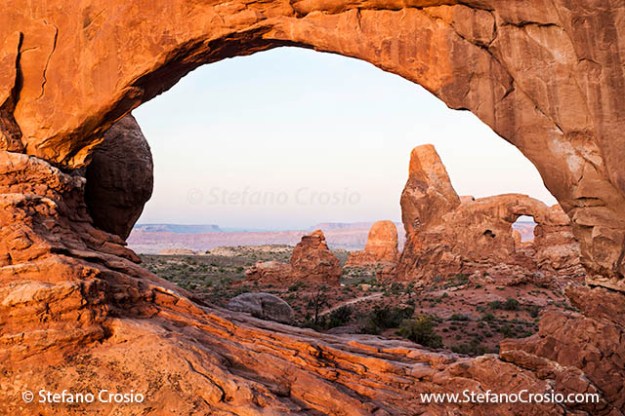
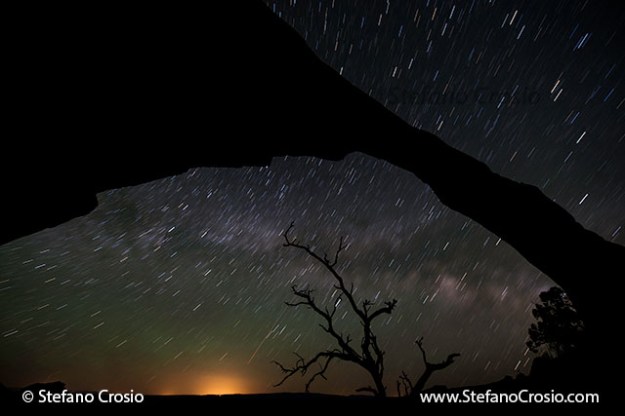
USA, Arches National Park (UT) Windows Arch at twilight

(B) Custom Settings Menu: The D800 has 54 custom settings that let you customize it just the way you want: use them! Below is a list of the custom settings that are the most useful to me:

a4AF activation: I prefer that my camera AF only activates when I want it to, so I changed a4 to make sure that the shutter release only takes the shot when tripped, without activating the AF. To do that, I assigned AF activation to the AF-ON button only, by selecting the option “AF-ON Only”. This way I have the utmost flexibility and I can activate my camera AF only when I want to.

d6Viewfinder Grid Display: I set this to “ON” so grid lines will show at all times in the viewfinder: this is helpful both not to tilt horizons when you handhold and to quickly identify strong compositional points in the frame according to the rule of thirds.

f4Assign Fn Button: There is a host of options here, so you should choose the one you think you are going to use the most. In my D800 I assigned it to spot metering mode, by choosing the “Spot Metering” option, so whenever I want to take a spot meter reading off a subject I just press the Fn button and there we go.

f6Assign AE-L/AF-L Button: This is one of my favorite customizations in the D800 – I assigned the button in combination with the subcommand dial (the one in the front of the camera) to “Select Image Area”. This way, whenever I want to change the active area of the sensor and therefore the size of the end image (which is something I do fairly often) I can do so in a breeze by just pressing the AE-L/AF-L button while rotating the subcommand dial: this toggles among the four available image sizes (FX – 36×24; 1.2x – 30×20; DX – 24×16; 5:4 – 30×24).

f11Slot Empty Release Lock: I set this to “Lock” – why would I want to trip the shutter when there is no memory card in the camera???

f12Reverse Indicators: In this option I chose “Reverse” so that the exposure indicator that appears in the viewfinder and in the top screen of my D800 has the + sign on the left and the – sign on the right. This is because I mostly shoot in Manual Exposure mode and I find it easier that the exposure indicator mimics the rotation of the camera dials. So for instance, if I rotate the main dial to the left to set a slower shutter speed (therefore increasing my exposure) the mark on the exposure indicator in the viewfinder will also move to the left toward the + sign, showing that my exposure is increasing (i.e., the image is getting lighter).

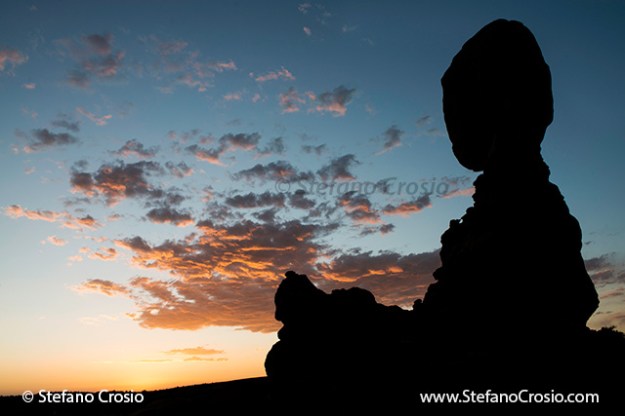
USA, Arches National Park (UT) Balanced Rock at twilight

(C) My Menu: This is a fully user customizable menu that I find incredibly helpful and I definitely suggest you set up and use. Essentially, you can add to it those of the options/custom settings of your D800 that you use the most so they can be all grouped in, and accessible from, one and the same spot as opposed to scattered across the various menus they belong to. To give you an idea, these are the options that I have assigned to mine: (i) Choose Image Area; (ii) Auto ISO; (iii) Long Exposure NR; (iv) Virtual Horizon; (v) d4-Exposure Delay Mode; (vi) Multiple Exposure Mode.

That’s all for now: I hope the above tips may be helpful to some D800 users who may have preferences/needs similar to mine.

In a future post I will discuss why I think the D800 (particularly if used in combination with the optional MB-D12 battery grip and a D4 battery) is a wonderfully flexible camera that fits many different shooting styles and subjects.

Happy shooting! 🙂

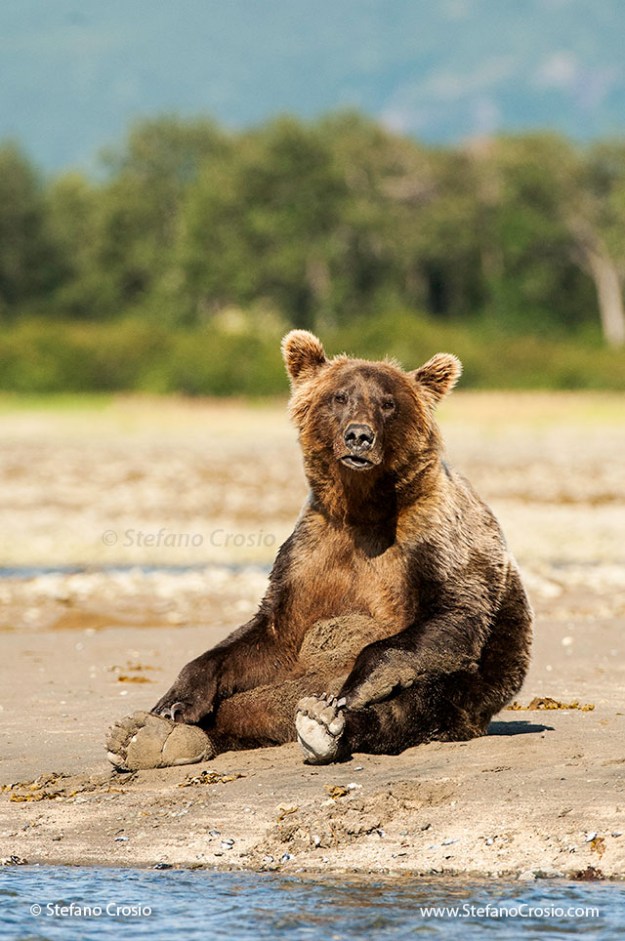
Alaskan Teddy Bear

Coastal brown bear (Ursus arctos) sitting up

In the summer, Alaskan coastal brown bears (Ursus arctos) congregate near the shores of the sea and other bodies of water waiting for wild salmon to come back to the very streams they were born in and swim upstream to reach the headwater gravel beds of their birth and lay their eggs. Clearly, this offers the bears a wonderful opportunity to hunt salmon and feed off of their flesh and especially their eggs, of which they are particularly fond.

The salmon run is particularly important to the bears because the hibernation period is fast approaching and brown bears enter a phase known as hyperphagia where they maximize their food intake (they can eat up to 90 pounds of food per day!) to build up sufficient fat reserves to survive the hibernation months.

However, sometimes the salmon are a little late on their spawning schedule… or the bears are a little early for the party, which means that the bears have some time to kill while they wait for their favorite prey to arrive. So bears go into “energy saving” mode and they just lazily hang out near the water waiting for their lunch to be served.

The coastal brown bear in the image above was just sitting in the sun near a river in Alaska’s Katmai National Park, probably daydreaming of the hordes of sockeye salmon it will soon start chasing all over the place…

To me, it looked just like a teddy bear neatly arranged in a sitting position by a toy store salesperson! 😉

If you would like to see more images of mine, feel free to browse my Galleries.

As per my copyright notice, please respect my work and do not download, reproduce or use the image above without first seeking my consent. Thank you :-)

Wine Review: Muri-Gries, Alto Adige Lagrein “Abtei Muri” Riserva 2007 DOC

Today’s review is about a northern Italian red wine that I particularly love (Muri-GriesAlto Adige Lagrein “Abtei Muri” Riserva DOC 2007 – $38) which is made from an Italian indigenous grape variety that in my view undeservedly gets too little attention in the wine world: Lagrein.

Muri-Gries, Alto Adige Lagrein "Abtei Muri" Riserva DOC

The Bottom Line

Overall, the Abtei Muri was an extremely good, marvelously smooth, fruit-forward wine with supple tannins and good structure, an ideal companion to a red meat dinner. I think that with a couple more years of evolution under its belt, this wine may become truly spectacular: I will have to look for one more bottle from the 2007 vintage, if I can find one!

Rating: Outstanding and definitely Recommended, given its great QPR Outstanding – $$

(Explanation of our Rating and Pricing Systems)

About the Grape

The earliest mention of Lagrein is contained in a 1318 document found (of all places!) in Gries, near Bolzano, and surprisingly it refers to a white wine, that researchers have not been able to identify yet. Instead, the first reference to the red Lagrein that we know dates back to 1526.

Recent DNA analysis proved that Lagrein is a variety that is indigenous to the Alto Adige region of Italy, that it originated as a natural cross between Teroldego and an unknown variety and that, among other cool facts, it is a sibling of Marzemino and a cousin of Syrah!

In Italy, Lagrein is mostly grown in the northern regions of Alto Adige and Trentino. Outside of Italy, Lagrein can be found in California (Paso Robles) and Australia.

(Information on the grape variety taken from Wine Grapes, by Robinson-Harding-Vouillamoz, Allen Lane 2012 – for more information about grape varieties, check out our Grape Variety Archive)

About the Appellation

A few words about the appellation. Alto Adige is a portion of the northern, mountainous region of Italy known as Trentino Alto Adige that is close to Austria and produces several wines of excellent quality, including indigenous Lagrein and very good Schiava and Pinot Noir among the reds and excellent whites ranging from Riesling and Sylvaner to Chardonnay and Sauvignon Blanc.

Given the great quality of the wines from this area of Italy, it is somewhat sad to notice that they all come from one single appellation that encompasses the entire Alto Adige area, known as Alto Adige DOC. It is true that this macro-appellation includes a few subzones (among which St. Magdalener, Terlaner and Valle Isarco) but still, one appellation with over 20 permitted grape varieties??? Talk about the importance of terroir… 😦  So, as of today one can mostly rely on the seriousness and commitment to quality of many Alto Adige producers. Personally, I hope that at some point at least certain of those subzones may be upgraded to self-standing appellations, focusing only on the grapes that are best suited for that specific subregion.

About the Estate

Muri-Gries is currently a Benedictine monastery in the village known as Gries near the town of Bolzano (Bozen), in the northeastern Italian region of Alto Adige. The original building was erected in the XI century as a fortress and kept that purpose until 1407, when it was gifted to Augustinian canons who had lost their monastery due to a flood and it was converted into a monastery. Grapevine growing and winemaking started in 1845, when the monastery passed on to Benedictine friars, who had been ousted from their monastery in Muri, Switzerland, and who eventually settled in the Gries monastery, which changed its name to the current Muri-Gries. As of today, the Benedectine friars still take care of the monastery and its vineyards.

The monastery owns nearly 30 HA (75 acres) of vineyards (80% of which are Lagrein) and 52 HA (131 acres) of orchards, beside some 45 cattle, which make the monastery essentially self-sufficient. Even part of the wine made in the monastery is earmarked for the friars’ own consumption.

Our Detailed Review

Let’s now move on to the actual review of the Muri-Gries, Alto Adige Lagrein “Abtei Muri” Riserva 2007 DOC that I recently tasted.

For starters, “Abtei Muri” is the flagship line of the monastery wine production. This premium lineup comprises four wines: the Lagrein that we are about to review, a Pinot Noir, a white blend of Pinot Blanc and Pinot Grigio, and a sweet Moscato Rosa.

Our Abtei Muri Lagrein was made from 100% Lagrein grapes and was fermented in steel vats and then aged for 16 months in barrique oak casks. It is 13.5% ABV and it retails in the US for about $38, which (as you will soon find out if you keep reading) is great value for this wine.

As usual, for my review I will use a simplified version of the ISA wine tasting protocol that we described in a previous post: should you have doubts as to any of the terms used below please refer to that post for a refresher.

In the glass, the wine poured ruby red with purple hints and thick when swirled

On the nose, its bouquet was intense, complex and fine, with aromas of blueberry, blackberry, black pepper, tobacco and licorice.

In the mouth, it was dry, warm, smooth; quite fresh, with deliciously supple tannins, and tasty. The wine was full-bodied and perfectly balanced. The mouth flavors were intense and fine, with nice correspondence to the aromatic palette and hints of blueberry, blackberry and black pepper. It had a quite long finish and its evolutionary state was ready (that is, perfectly good to enjoy now, but will probably evolve even more with two or three years of additional aging).

Wine Review: Cloudy Bay, Sauvignon Blanc Marlborough 2012

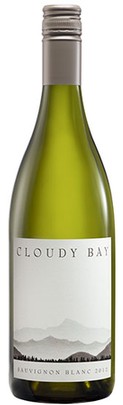
Cloudy Bay, Sauvignon Blanc MarlboroughEver since fellow wine blogger and friend Oliver was kind enough to ask me to contribute a guest post to his excellent blog, The Winegetter, I have been really excited about the idea. Since the theme was “Somewhere Beyond the Sea” and the post was going to be published in the summertime, I thought reviewing one of my favorite New Zealand Sauvignon Blancs (Cloudy BaySauvignon Blanc Marlborough 2012 – $30) would just be the way to go: definitely “somewhere beyond the sea” pretty much from anywhere you look at it (unless of course you are a Kiwi!) and a refreshing summer wine. So there we go – and of course: (i) you may find this post also in Oliver’s blog and (ii) thank you so much, Oliver, for including me in your list of distinguished guest contributors – I feel honored and it has been a lot of fun!

The Bottom Line

Overall, I think that Cloudy Bay is a very pleasant Sauvignon Blanc in the “Down Under” style: intense, concentrated fruit and herb aromas, lively acidity and citrus-centric flavors. So very refreshing and summery that I would keep drinking it all Summer long… if budget permitted!  😉

Rating: Very Good and Recommended Very Good – $$

(Explanation of our Rating and Pricing Systems)

About the Grape

A few interesting notions about the origins of Sauvignon Blanc: recent DNA analysis has identified a parent-offspring relationship between Savagnin (an old white-berried variety that is common in the Jura region of France) and Sauvignon Blanc and, there being much earlier documents mentioning Savagnin than Sauvignon Blanc, the former is believed to be the parent of the latter. DNA results also support the thesis that, contrary to common belief, Sauvignon Blanc did not originate from the Bordeaux area, but rather from the Loire Valley in France, where documental evidence dates back to 1534 (compared to 1710 in Bordeaux). However, it is interesting to note that, when Sauvignon Blanc was grown in the Bordeaux area, it spontaneously crossed with Cabernet Franc to create Cabernet Sauvignon.

In New Zealand, Sauvignon Blanc was first planted in the 1970s and soon became the most widely grown variety in the country, especially in the Marlborough region.

(Information on the grape varieties taken from Wine Grapes, by Robinson-Harding-Vouillamoz, Allen Lane 2012  – for more information about grape varieties, check out our Grape Variety Archive)

About the Estate

Cloudy Bay‘s vineyards are located in different subzones of the premium wine region of Marlborough at the northern end of New Zealand’s South Island, alongside the Wairau River. Cloudy Bay also sources part of the grapes used for making their wines from a few independent Wairau Valley growers with whom they have established a long-term business relationship.

Our Detailed Review

Let’s now get to the actual review of Cloudy Bay, Sauvignon Blanc Marlborough 2012, which in the US retails for about $30.

The wine has 13.5% ABV and was made from 100% Sauvignon Blanc grapes sourced from estate and grower vineyards located in the Rapaura, Fairhall, Renwick and Brancott subzones of the Wairau Valley. Fermentation was primarily carried out in stainless steel, except for a small percentage that was fermented in old French oak barriques.

As usual, for my review I will use a simplified version of the ISA wine tasting protocol that we described in a previous post: should you have doubts as to any of the terms used below please refer to that post for a refresher.

In the glass, the wine poured crystal clear, a beautiful straw yellow in color, and thick with narrow arches and slow dripping tears

On the nose, its bouquet was intense, complex and fine, with pleasant, Summer-y aromas of lime, grapefruit, citrus, green apple and herbs (nettle, mint)

In the mouth, it was dry, quite warm, quite smooth; fresh, quite tasty. The wine was medium-bodied and balanced, despite its freshness (i.e., acidity) being the dominating component – but that is in most cases a desirable feature in a dry white wine and in our case it also helped make the quite muscular ABV of the wine not so evident in the mouth, which is a good thing, so it did not change our assessment that the wine was balanced. Its mouth flavors were intense and fine, with pleasant, refreshing notes of lime, grapefruit, citrus and herbs. The wine’s finish was quite long and its evolutionary state was mature, meaning ready to be enjoyed now, with additional cellaring not likely to benefit the wine.

Yoga Meditation (or Balanced Rock at Twilight)

Balanced Rock at twilight

Shooting famous, over-photographed landmarks such as balanced rock in Utah’s Arches National Park challenges the photographer to come up with images that are not cliche, that portray such landmarks in a different light, from a different perspective or in a fresher way.

Silhouetting your subject may be a way to reinterpret such well-known scenes. Silhouetting essentially transposes your 3D subject into a 2D world, so shape becomes key for a successful silhouette. Thus, moving around your subject, changing your angle of view may radically  alter your final image, the 2D rendition of your subject.

When I saw a sunset with potential (because of some lingering clouds) behind me, I quickly hiked to the other side of balanced rock and moved around until that impressive rock formation took on the shape (at least in my eyes) of a person sitting before a beautiful sunset in a yoga meditation position. Click, click, and there we go: a symbolic rendition of balanced rock! 😉

If you would like to see more images of mine, feel free to browse my Galleries.

As per my copyright notice, please respect my work and do not download, reproduce or use the image above without first seeking my consent. Thank you :-)

Raw Moves: Three Reasons for Shooting RAW Instead of Jpeg

Polar bears (Ursus maritimus) play-fightingCaption: Canada, Hudson Bay – Polar bears (Ursus maritimus) play-fighting

A while ago, the exquisite Fairy of the North, Dina (who so elegantly authors the blog The World According to Dina, masterfully combining her beautiful images with perfectly selected quotes to complement them) asked me if I would write a post about why I think anyone who shoots digital and takes his or her photography seriously should shoot RAW as opposed to straight off the camera Jpegs.

By the way, before we even get to the point, what is a RAW file, just in case you were wondering? A RAW file is essentially the equivalent of a film negative in the digital age. Every camera manufacturer has their own proprietary formats of files containing the raw (hence the name), unprocessed input captured by the sensor. In fact, RAW files are called in several different ways and have different extensions, depending on the various camera makers: for instance, Nikon’s are called NEF and Canon’s are called either CRW or CR2, depending on the models.

Unlike straight out of the camera Jpegs (which are the result of the camera’s computer processing the sensor data, making arbitrary choices that you as the photographer cannot control and producing a file format that is immediately viewable by anyone), RAW files need to be processed through specialized software such as the camera manufacturer’s proprietary processing software or third-party software such as Adobe PhotoShop or Lightroom or Apple Aperture and then converted to a usable file format, such as TIFF, PSD or Jpeg.

In essence, processing a RAW file requires more of the photographer’s time because he or she has choices to make (in terms of optimizing white balance, exposure, contrast, color balance/saturation, etc.) but puts the photographer back in control of his or her creative decisions and what’s best, in a totally non-destructive, reversible way (more on this later).

Having said that, here are the three main reasons why I think you should set your camera to shoot RAW instead of Jpeg:

1. Unlimited White Balance Adjustments: This is one of the most powerful reasons for choosing a RAW file over an in-camera Jpeg. In short: if for any reason you shoot an image using a white balance setting that is not optimal for the scene you are shooting and you have your camera set to produce a Jpeg file, then you are stuck with that suboptimal white balance and changing it (or at least improving it) will be a difficult and time-consuming task to be performed in your image processing software. If instead you shoot RAW, you can easily correct your white balance with just one click in your processing software. Done!

2. Lossless Process: Jpegs are image files that are considerably smaller than other formats. This is because they utilize a compression algorithm that is lossy, meaning that it discards a bunch of color information from the image to make the file smaller. The more you compress, the more subtle color transitions and image sharpness you lose. In addition, image data loss is cumulative, meaning that every time you save or re-save a Jpeg file, you lose information that cannot be recovered later on. If you shoot RAW instead, you retain all of the information captured by your camera’s sensor, forever. This means not only that, should you need to perform some intensive editing of your image you will have more information to work on, but also and more importantly that you will forever retain full access to all the information that the sensor originally captured.

3. Non-Destructive, Reversible Editing: If you shoot Jpeg and then edit your file in post processing you can then either keep it as a Jpeg when you save it (in which case, all your edits will become permanent AND you will experience image data loss when you save your processed Jpeg) or work using layers (if available in your processing software). The latter is definitely the way to go, because layers can always be discarded later on, should you wish to process your image differently. However, Jpegs do not support layers, so if you use them and want to retain them, you will have to save your processed file in a format that supports layers, such as TIFF or PSD which are both lossless formats but end up in bigger file sizes. Instead, if you shoot RAW and process your RAW file, all your edits will be stored in a so-called “sidecar file”, meaning a small text file that goes hand in hand with your RAW file and contains all the information about the edits that you performed. This means that your RAW file will never be altered and you will always be able to change any of your edits at any time in the future with no damage to your image file or information loss. Pretty cool, huh?

As a final note, even if after reading these compelling reasons for shooting RAW 😉 you were to choose to continue shooting in-camera Jpegs, at the very least make sure that as soon as you download them to your computer you immediately save them to a lossless image format: as we said earlier on, not only will this let you retain your adjustment layers if you so choose, but it will avoid image degradation every time you re-save that Jpeg.

Wine App Review: Winery Passport

Winery Passport App IconLast week, Scott, the developer of a brand new wine-related app, reached out to me to let me know about the roll out and to ask me whether I would download it and give it a spin and, if I liked it, whether I would write a review.

So, as you are reading this, you may already guess that I did download it and I did like it 😉

But let’s start from the beginning: the app is called Winery Passport (WP).

Screenshot5

Before we get more into it, note that you may have an interest in this app provided that you (i) are into wine (of course!), (ii) live in or plan a wine-focused trip to the USA, and (iii) at least for now, are iOS based.

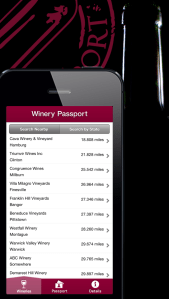
Now, what exactly does WP do? Essentially, WP is (or will soon be) a database of all the wineries in the US coupled with a cool GPS feature that shows the wineries that are closest to wherever you are, ordering them from closest to farthest away and showing you how far you are from each of them. Alternatively, you can also browse or search the entire winery archive, that is broken down by State.

Either way, whenever you select a winery, WP shows you its address and gives you a few options, including taking you to the winery’s Web site, connecting to Google Maps so you can get driving directions from wherever you are to the winery with one click, or even call the winery directly from within the app.

Screenshot1Thanks to these two different modes, WP’s features come in handy whether you have a sudden urge to discover and visit a winery near you, regardless of where in the US you are, or you are planning a trip to a US wine region and want to chart your route based on where the various wineries of the area are located or their average rating. Pretty cool, and all at your fingertip.

But there’s more. WP also a “passport” part that keeps track of the wineries that you visit, lets you rate them and take notes and even syncs with Facebook and Twitter so you can share your experience with other WP users. Neat idea.

And in case you are wondering how much downloading WP is going to set you back, well no sweat and click that download button as it is a free app!

Screenshot3Now, although WP is fully functioning and sleek looking, here are a few things to bear in mind:

1. The winery database is still a work in progress: to date, there’s almost 1000 wineries in 17 States, all on the East Coast so far (so, no California yet), that have been uploaded already, but they are quite obviously not all. Scott is working to add more and eventually map all 50 States out, but it is a huge task and it is going to take a while. Scott anticipates getting to 25 States by August.

2. So far, WP is only for the iPhone or iPod Touch. I asked Scott whether he planned to also develop a version for the iPad and he said that it would be rolled out later on, as right now completing the winery census is understandably his priority.

Screenshot4

3. Regarding Android: I asked and Scott said once the iOS version is completed, with all the wineries uploaded, he would look into making an Android version, so Android users sit tight and hold on as no hope is lost! 🙂

Wrapping things up: I really like the idea behind WP and its implementation: the app is sleek, simple and yet very effective… and it’s free! I can’t wait for the full-screen version for the iPad to be released!

Rating: Very Good and recommended

Thank you, Scott, for developing such a cool app, making it available for free and giving me heads up about it!

For more information about WP, visit the developer’s Web site. You can download WP from Apple’s App Store or by clicking here.

Wine Review P2: Marchesi de’ Frescobaldi, “Tenuta dell’Ammiraglia” Range

Disclaimer: this review is of samples that I received from the producer’s US importer. My review of the wines has been conducted in compliance with my Samples Policy and the ISA wine tasting protocol and the opinions I am going to share on the wines are my own.

After learning about the producer, Marchesi de’ Frescobaldi, the estate “Tenuta dell’Ammiraglia and the “Ammiraglia” wine range in general on our previous post (should you have missed it, please refer to it before reading this one), let’s now focus on the actual contents of the three bottles that I got to taste and move forward with my tasting notes.

In an effort not to make this post too lengthy, if you are interested in some very cool facts about the various grape varieties from which the wines in the Ammiraglia lineup are made (i.e., Vermentino, Cabernet Sauvignon, Cabernet Franc, Merlot, Syrah, Sangiovese and Ciliegiolo), by all means check them out on our Grape Variety Archive page. As always, such information is taken from the excellent guide Wine Grapes, by Robinson-Harding-Vouillamoz, Allen Lane 2012,

As usual, for my review I will use a simplified version of the ISA wine tasting protocol that we described in a previous post: should you have doubts as to any of the terms used below please refer to that post for a refresher.

1.  Marchesi de’ Frescobaldi, Vermentino “Ammiraglia” Toscana IGT 2012 ($18)

The 2012 Vermentino Ammiraglia was 12.5% ABV and was made out of 100% Vermentino grapes harvested from just 5 HA of vineyards in the Tenuta dell’Ammiraglia estate, which achieve a good 5,500 vines/HA density.

After the grapes underwent a partial cryomaceration phase, the must fermented for 10 days at 68F/20C in stainless steel vessels, with no malolactic fermentation. After that, the wine rested for 4 months in steel vats, plus one additional month in bottle before becoming available for sale.

The fact that part of the grapes did cryomaceration and that the wine did not do any oak are both indications that the wine was made in such a way as to emphasize primary and secondary aromas and that it is intended for immediate consumption, not for cellaring. The Vermentino Ammiraglia retails in the US for about $18.

In the glass, the wine poured a light straw yellow and moderately thick when swirled.

On the nose, the bouquet was quite intense, quite complex and fine, with aromas of grapefruit, citrus, honey, orange blossoms, with herbs and almond hints. One important factor to keep in mind to fully appreciate its aromas is service temperature: if you serve this wine too chilled, its bouquet will be restrained and will not do it justice. I noticed that a temperature of about 53-55F/12-13C is where the wine’s aromas peak, so bear that in mind if you buy a bottle.

In the mouth, the wine was dry, quite warm, smooth; fresh and tasty. It was balanced and medium-bodied, with intense and fine mouth flavors of citrus, almond, minerals and evident iodine notes. The finish was quite long (to reinforce the wine’s mineral and iodine flavors, the aftertaste leaves you a slight feeling almost of saltwater in your mouth!) and the evolutionary state was mature (meaning, drink it now, it will not benefit from cellaring).

Overall, I really enjoyed this Vermentino: ideally, I wish its aromas were a touch more intense, but its aromatic palette is quite complex (if tasted at the right temperature) and very enjoyable, as are its balance and tasty mouth flavors. And at a retail price of about $18, I think this wine delivers plenty of bang for the buck.

Rating: Good to Very Good and Recommended, given its great QPR Good to Very Good – $

(Explanation of our Rating and Pricing Systems)

2. Marchesi de’ Frescobaldi, “Terre More dell’Ammiraglia” Maremma Toscana DOC 2011 ($18)

The 2011 Terre More was a whopping 14.5% ABV Bordeaux-style blend of 70% Cabernet Sauvignon, 15% Cabernet Franc, 10% Merlot and 5% Syrah grown in 55 HA of vineyards in the estate with a good density of 5,500 vines/HA, on par with the Vermentino.

The must fermented for 10 days in stainless steel vats at 82F/28C and underwent 12 days of maceration as well as full malolactic fermentation. The wine finally aged for 12 months in second or third time used French oak barrique casks before becoming available for sale. The Terre More retails in the US for about $18.

In the glass, the wine poured ruby red with purple hints and unsurprisingly (given its ABV) thick when swirled.

On the nose, the bouquet was quite intense, complex and fine, with aromas of wild cherry, plum, blackberry, leather, coffee, tobacco and black pepper, with the tertiary, spicy aromas given by the oak aging being a little dominant over the secondary, fruity aromas (despite the wise choice of second/third time used barriques).

In the mouth, the Terre More was dry, definitely warm, quite smooth; fresh, tannic, quite tasty. I have to say that the wine’s muscular ABV was very evident, and tended to tip the wine mouthfeel a little bit off balance. The tannins were firm but quite integrated, despite the wine’s young age. The wine was full-bodied and had intense and fine mouth flavors of plum, blackberry, coffee (quite evident) and black pepper. The finish was quite long and the evolutionary state ready, meaning you can drink it now but it will most likely benefit from a few years of additional in-bottle aging.

Overall, I ended up having mixed feelings about the Terre More: I quite liked its bouquet (despite the slight prevalence of oaky, tertiary aromas and it being not as intense as I would have hoped), but was not entirely convinced by its mouthfeel: despite its pleasant flavor profile, the heat of the wine’s ABV was in my view a little too evident. Truth be told, it is still a very young wine and a few years of cellaring would likely be beneficial. Having said that, with a retail price of $18, I think this wine is still a pretty good deal to pair with a juicy steak just off the grill.

Rating: Fairly Good Fairly Good – $

(Explanation of our Rating and Pricing Systems)

3. Marchesi de’ Frescobaldi, “Pietraregia dell’Ammiraglia” Morellino di Scansano Riserva DOCG 2010 ($25)

As mentioned on our previous post, the 2010 Pietraregia started off on the right foot by having a nice cork closure. 😉 Beside that, the wine was 14% ABV and was a blend of 85% Sangiovese, 10% Ciliegiolo and 5% Syrah.

The must fermented in stainless steel vats for 10 days at 86F/30C, underwent 20 days of maceration on the skins and did full malolactic fermentation, The wine aged for 24 months in French oak barrique casks and 2 additional months in bottle before becoming available for sale. The Pietraregia retails in the US for about $25.

In the glass, it poured dark ruby red and thick when swirled.

On the nose, its bouquet was quite intense and a bit narrow, with aromas of plum, blackberry, violet and black pepper, but certainly fine. It is interesting to note how few spicy tertiary aromas the wine picked up after spending 24 months in French oak barrique casks. Honestly, I would have hoped that the nose of this wine delivered a bit more than it did.

In the mouth, the Pietraregia was dry, warm, smooth; fresh, tannic, tasty. It was a full-bodied wine with intense and fine mouth flavors of plum and dark chocolate. The finish was quite long and its evolutionary state was ready (you know what that means: fine to drink now, but if you cellar it for a few years it will likely improve over time).

Overall, I liked the Pietraregia: while I wish it had more to give in its bouquet, in my view the pleasant mouthfeel of this wine definitely made up for whatever it lacked in its aromatic palette. Once you sip this wine, it will make you happy, especially if you still remember that you paid some 25 bucks for it, which I think is more than adequate for what you get.

Rating: Good and Recommended Good – $$ 

(Explanation of our Rating and Pricing Systems)

So, to sum things up real quick:

1. I am generally pleased by the quality that the three wines of the Ammiraglia range that I got to taste delivered, of course given their price points.

2. Personally, I would definitely buy the Vermentino and the Pietraregia, which in my view are good value for money, while (once again, personally speaking) I think I would pass on the Terre More as, while it certainly is not a bad wine, it does not quite meet my own tastes.

And of course, many thanks to Marchesi de’ Frescobaldi’s US importer for providing the samples.

As always, if you get to taste any of these wines, please share your experience in the comment section!
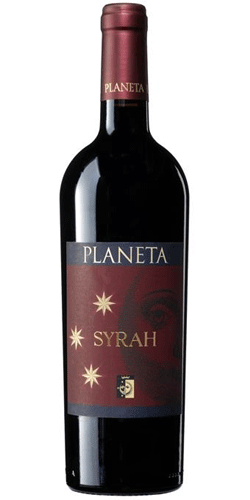
Wine Review P1: Marchesi de’ Frescobaldi, “Tenuta dell’Ammiraglia” Range

Disclaimer: this review is of samples that I received from the producer’s US importer. My review of the wines has been conducted in compliance with my Samples Policy and the ISA wine tasting protocol and the opinions I am going to share on the wines are my own.

The US importer of the Italian winery Marchesi de’ Frescobaldi has been so nice as to mail me samples of a range of wines that are literally just being launched in the US market as we publish this post so I could try them out and see how I liked them… which I gladly did! Needless to say, the opinions in my review are my own and are untainted by the fact that the wines I reviewed were free samples (which is something that, however, I greatly appreciated as it gave me the opportunity to preview a range of wines that I was not familiar with!)

The wines that I am going to review are made by well-known Tuscan producer Marchesi de’ Frescobaldi and they are part of a line called “Ammiraglia”, after the name of the estate (Tenuta dell’Ammiraglia) where the grapes from which the wines are made come from.

In order not to make this post unbearably long, I am going to break it down into two parts: (i) this post will provide information about the producer, the estate and the Ammiraglia range in general, and (ii) the next post is going to focus on my tasting notes of the three wines in the Ammiraglia lineup that I had the opportunity to taste.

About the Producer

The Frescobaldi’s are an Italian (florentine) family of noble descent that, among other endeavors, have been in the wine business for quite a while. More specifically, the oldest documented reference to their wine production activities dates back to… the year 1300 (!) at the historic estate of Tenuta di Castiglioni in Val di Pesa, southwest of Florence.

According to the Frescobaldi’s records, their wine business took off pretty well pretty soon, as by the beginning of the 1400’s great Italian Renaissance artists such as Donatello and Michelozzo Michelozzi had become loyal clients. One century later, the Frescobaldi wines were served at the tables of the Papal Court and the Court of Henry the Eighth of England.

According to the Frescobaldi’s Web site, in the second half of the XIX century they were also at the forefront of wine making innovation in Italy, as in 1855, at their estates of Nipozzano and Pomino, they were the first in Tuscany to plant Cabernet Sauvignon, Merlot, Pinot Noir and Chardonnay, while in 1894 at Pomino they built the first Italian gravity-fed cellars.

About the Estate

Tenuta dell’Ammiraglia is the Frescobaldi’s latest project. This estate is situated in Magliano, near the town of Grosseto, in that beautiful, sunny and wild part of coastal Tuscany that is known as Maremma. Commercial production of the Ammiraglia wine range started recently, with the first vintage of two of the wines in the lineup being 2006, while the remaining two wines were introduced in 2009 and 2012 (see below for details). Even the state-of-the-art, environmentally conscious Ammiraglia estate winery was completed and became operational only in 2011.

About the Ammiraglia Range

The Ammiraglia lineup comprises four wines:

1. Vermentino Ammiraglia: the only white wine in the range and its newest addition (first vintage: 2012)
2. Terre More: a Bordeux-style blend (first vintage: 2009)
3. Pietraregia: a Sangiovese-based Morellino di Scansano Riserva (first vintage: 2006)
4. Ammiraglia: a varietal Syrah (first vintage: 2006)

However, currently only the first three wines in the Ammiraglia range have been imported into the US and therefore will be covered by my review. Word has it, though, that it will not be long before even the missing Syrah joins the other three wines on US wine store racks (probably, as early as next year).

Before we wrap this post up, here are three general observations on the wines that I have tasted – two good and one… not so good.  😉

– The good ones:

(A) The price: if these wines deliver in terms of quality (I don’t want to spoil the outcome of my reviews here, so stay tuned for the next post!) I think they are going to sell really well: two of the three have a suggested retail price of $18 and the third one (the Pietraregia) of $25: certainly appealing.

(B) The capsule: the three wines come with a nice tin capsule, which I like so much better than cheap feeling and cheap looking plastic capsules. Besides, tin foil is much easier to take off in the context of a proper wine opening procedure (yes, at some point I will write a post about what this entails exactly!)

– The not so good one (at least to me): only one of the three wines that I tasted (the more expensive Pietraregia) utilizes cork as a closure. The other two resort to a synthetic closure in a color that vaguely resembles cork.

Now, I realize that retailing at some $18 these two wines are not premium segment wines and using synthetic instead of cork helps keep the retail price down; I understand that they are not meant for long-term aging and this takes care of the question marks about the long-term effectiveness of synthetic closures; and I also appreciate that using synthetic avoids the dreaded TCA taint problem (AKA, the occasional corked bottle) altogether. I get all that, of course. Still, my personal reaction to a synthetic closure in a bottle of wine is not one of excitement: I don’t know, I may be old school and everything, but to me, it just makes the bottle feel cheap.

By the way, if you are interested in the whole wine closure debate, I have come across a pretty interesting article published by the American Society for Enology and Viticulture summarizing the outcome of research conducted in 2007 at Oregon State University’s Food Innovation Center regarding the “Effects of Wine Bottle Closure Type on Consumer Purchase Intent and Price Expectation” that essentially shows how consumer appreciation and price expectations of a bottle of wine (a Chardonnay and a Merlot) were affected by the use of a screw cap, a synthetic closure or a real cork (the article also cites the outcome of previous studies on this topic).

Anyway, forget about my prejudice about synthetic closures: this is the end of part 1 of this review. On the next post, we will get to my actual tasting notes of the three wines that I got to taste, so stay tuned for more! 🙂

Standing Tall

Brown bear (Ursus arctos) and fireweed

I took this image of a standing European brown bear (Ursus arctos) with a backdrop of colorful fireweed in the summer in Finland, near the Russian border.  That area is known to have a fairly high concentration of bears and the very long summer days contribute to keep you shooting. This particular bear stood momentarily to watch out for a big male that was in the vicinities and I managed to take a couple of shots before the action was over.

You all have a great weekend!

If you would like to see more images of mine, feel free to browse my Galleries.

As per my copyright notice, please respect my work and do not download, reproduce or use the image above without first seeking my consent. Thank you :-)

New Resource: The Grape Variety Archive

Wine Grapes, by Robinson-Harding-Vouillamoz, Allen Lane 2012

I would like to share with you all a pretty cool new wine-related resource that just recently went live on this blog and on Flora’s Table: I am talking about a new page called Grape Variety Archive that combines alphabetically, in one centralized spot, all the information about the grape varieties of the wines that I have reviewed, so that such information may be easily referred to by readers.

What’s even better is that all of the grape variety information on the Grape Variety Archive has been taken from the wonderfully educational, gorgeously illustrated and scientifically researched volume “Wine Grapesauthored by Jancis Robinson, Julia Harding and Jose Vouillamoz, Allen Lane 2012. Wine Grapes is an impressive 1,242 page long collection of detailed and up to date information about 1,368 vine varieties from all over the world. Quoting directly from the Web site dedicated to the book:

Where do wine grapes come from and how are vine varieties related to each other? What is the historical background of each grape variety? Where are they grown? What sort of wines do they make? Using the most cutting-edge DNA analysis and detailing almost 1,400 distinct grape varieties, as well as myriad correct (and incorrect) synonyms, this particularly beautiful book examines viticulture, grapes and wine as never before. Here is a complete, alphabetically presented profile of all grape varieties relevant to today’s wine lover.

I don’t think I need to say much about the authors, as if you are into wine they are all very well known, but just in case: Jancis Robinson has been a wine writer since 1975 and the Financial Times’s wine correspondent since 1989. Her principal occupation now is taking care of her own Web site, JancisRobinson.com, which gets updated daily. Julia Harding is a linguist, an editor and a qualified Master of Wine. She is Jancis Robinson’s full-time assistant and “associate palate”. Dr José Vouillamoz is a Swiss botanist and grape geneticist of international repute. He was trained in grape DNA profiling and parentage analyses in the world-famous laboratory of Professor Carole Meredith at the University of California at Davis.

And speaking of the authors, I wish to take the opportunity to sincerely thank them for being so kind and generous as to grant me permission to pull together and publish the Grape Variety Archive page, which I think can become over time a great resource for gaining a quick snapshot of the various varieties that make up the wines that I review on this blog, beside giving readers an idea of the amazing wealth of information that can be found in Wine Grapes.

Wine Grapes, by Robinson-Harding-Vouillamoz, Allen Lane 2012

If you read this and are seriously into wine, I think you should definitely consider acquiring Wine Grapes as it will provide a ton of invaluable information about everything that you may want to know about grape varieties. Besides, let me tell you: Dr Vouillamoz’s DNA profiling work about all the grape varieties in the book is nothing short of unbelievable and well worth the price of the book in and of itself!

Please check our new page out and let me know what you think!

Oh, one final note: congratulations to fellow wine blogger and friend Oliver AKA The Winegetter who has been the first one to like the new page, even before its official roll out! Thank you, Oliver!  🙂

Wine Review: Le Colture, Prosecco di Valdobbiadene Superiore di Cartizze Dry DOCG

LeColture, Prosecco di Valdobbiadene Superiore di Cartizze DOCGSummer has finally made its way to us, with some delay. So, what is there more refreshing and satisfying than a chilled bottled of foamy bubbles?

Before we even continue, though, I feel I have a confession to make. While I love a glass of good sparkling wine, I am definitely partial to Champagne or anyway to quality Classic Method sparklers, such as a nice Franciacorta or Trento DOC. Instead, I am not a big fan of Prosecco, I have to admit, or more in general of sparkling wines made with the Charmat-Martinotti Method. I just prefer the greater structure, the more complex aromatic and flavor palette of the former over the latter. There, I said it.

This, however, is a question of personal taste and is not meant to say that there are no good Prosecco’s out there (although you definitely need to know which ones are the quality producers if you want to avoid disappointments) or that there is no place for a good bottle of a Charmat-Martinotti Method sparkler on your table! To prove this, today I am going to tell you about the one Charmat-Martinotti Method Prosecco that, to date, I like best among those that I have had an opportunity to taste so far: Le ColtureProsecco di Valdobbiadene Superiore di Cartizze Dry DOCG ($30).

The Bottom Line

Overall, I really liked this premium Prosecco and all that it offers. My only gripe is about the price: 30 bucks is in my view in the high end of the range, even for a quality Prosecco. Personally, I think it should be in the $20 to 25 price band. Other than that, in my view, the perfect interplay between its off-dry taste (due to its higher residual sugars) and its refreshing acidity and minerality is what really makes this Prosecco. Certainly, Champagne (or even a Classic Method spumante) it ain’t, but nor does it claim to be. There is definitely a place for this Prosecco in my fridge (and I would think it would not be wasted in yours either!) to enjoy chilled with friends on one of those warm Summer nights!

Rating: Good to Very Good Good to Very Good – $$

(Explanation of our Rating and Pricing Systems)

About the Appellations

Prosecco wine is made prevalently or exclusively from partly-aromatic Glera (also known as Prosecco – see more about this below) white-berried grapes in two Italian DOCG appellations and in one more loosely regulated inter-regional DOC appellation, as follows:

  • Prosecco di Conegliano Valdobbiadene (or simply Prosecco di Valdobbiadene) DOCG in the Veneto region, near the town of Treviso;
  • Prosecco dei Colli Asolani DOCG in the Veneto region, near and including the town of Asolo;
  • Prosecco Spumante DOC, an appellation which covers a vast territory stretching between the regions of Veneto and Friuli.

The regulations of the two DOCG appellations require that their Prosecco wines be made 85% or more from Glera grapes, to which up to 15% of Verdiso, Bianchetta Trevigiana, Perera or Glera Lunga white-berried grapes may be blended. The regulations of the DOC appellation are similar but permit that a few additional grape varieties be blended to the Glera base grapes, as follows: Chardonnay, Pinot Bianco, Pinot Grigio or Pinot Noir.

Prosecco is one of the main examples of a sparkling wine made according to the so-called Charmat-Martinotti Method, although there are a few producers who also make some very good Classic Method Prosecco’s. Compared to the Classic Method, the Charmat-Martinotti Method is a quicker and cheaper production process for sparkling wine, which is known to maximize primary (or varietal) aromas although it generally sacrifices the wine structure and the finest perlage. For more detailed information, please refer to our post on the Charmat-Martinotti Method.

With regard to residual sugar levels, according to applicable regulations, Prosecco spumante wines may be produced in any of the following styles, and therefore except only in the Extra Brut (less than 6 gr/lt of residual sugar) or Sweet (more than 50 gr/lt of residual sugar) versions:

  • Brut (less than 15 gr/lt of residual sugar)
  • Extra Dry (12 to 20 gr/lt of residual sugar)
  • Dry (17 to 35 gr/lt of residual sugar – as in the case of the bottle that we are reviewing)
  • Demi-Sec (33 to 50 gr/lt of residual sugar, which would make it taste quite sweet).

About the Grape

Here things for Prosecco tend to complicate a bit…

Up until recently, Prosecco was the name for three things: the wine, its main grape variety and the homonymous village near the town of Trieste (in the Italian region of Friuli) that probably gave the wine and the grape their name. Relatively easy so far.

Then in 2009, with Prosecco’s popularity and sales soaring (in 2011 the overall production of Prosecco was about 265 million bottles, 55% of which were exported), the consortium of Prosecco producers obtained an official change in the name of the grape variety, from Prosecco to Glera, so that Prosecco would only be the name of the wine (and not of the grape variety too) and could therefore be reserved for its designation of origin, thus preventing other producers from other Italian regions or other countries from calling their sparkling wines Prosecco (in this regard, see our recent post about the dispute with Croatia to require that they rename their own Prosek wine).

At any rate, the main grape variety that is used in the production of the wine Prosecco was called Prosecco Tondo (now Glera) which DNA profiling has shown to be identical to a rare variety that is indigenous to the Istria region of Croatia named Teran Bijeli. This evidence supports the theory of an Istrian origin for the Prosecco/Glera grape variety.

Other grapes that may be used in the production of the wine Prosecco and that used to be considered clonal variations of Prosecco Tondo, but DNA analysis has proved to be distinct varieties, are Prosecco Lungo and Prosecco Nostrano (the latter, by the way, has been proven to be identical to Malvasia Bianca Lunga).

(Information on the grape varieties taken from Wine Grapes, by Robinson-Harding-Vouillamoz, Allen Lane 2012)

About the Estate

Le Colture estate is located in proximity to Santo Stefano di Valdobbiadene, in the heart of Veneto’s Prosecco district, and encompasses about 45 HA of vineyards. The bottle that we are about to review is made from 100% Glera grapes grown in Le Colture’s vineyards in the high quality, hilly subzone known as Superiore di Cartizze and located near the village of San Pietro di Barbozza (in the surroundings of the town of Valdobbiadene) within the broader territory of the Prosecco di Valdobbiadene DOCG appellation. The grapes are harvested between mid September and mid October and the wine is made, as is traditionally the case for Prosecco’s, through the refermentation of the must in pressurized autoclaves according to the Charmat-Martinotti Method. Please refer to our previous post about it for more information about this method, the main steps it entails and how it differs from the Classic Method that is utilized for making (among others) Champagne, Franciacorta and Trento DOC sparkling wines.

Our Detailed Review

Let’s now get to the actual review of Le Colture, Prosecco di Valdobbiadene Superiore di Cartizze Dry DOCG, which retails in the US for about $30.

The wine is made from 100% Glera grapes, has 11% ABV and comes in the “Dry” variety, which means that it has fairly high residual sugar, in the amount of 23 gr/l. At 4.5 ATM, the pressure in the bottle is also gentler than that which you would generally expect in a Classic Method wine (about 6 ATM), except in a Franciacorta Saten variety.

As usual, for my review I will use a simplified version of the ISA wine tasting protocol that we described in a previous post: should you have doubts as to any of the terms used below please refer to that post for a refresher.

In the glass, the wine was brilliant with a pleasant straw yellow color. As to the all-important perlage, its bubbles were numerousaverage in size (not the finest, but certainly not coarse either) and the chains of bubbles were definitely long-lasting.

On the nose, its bouquet was moderately intense, moderately complex and fine, with Spring-y aromas of jasmine flowers, peach, citrus and apple: something capable in and of itself to put you in a good mood. 🙂

In the mouth, this Prosecco was off-dry, with low ABV and moderately smooth; it was acidic and tasty. It was light-bodied and pleasantly balanced, with its lively acidity and tasty minerals nicely counterbalancing its higher residual sugars any preventing any flatly sweet feeling. Its mouth flavors were intense and fine, showing a nice match with its aromatic palette, with refreshing notes of peach, citrus and apple. It had a medium finish and its evolutionary state was mature, meaning: do not cellar, drink it now and enjoy its freshness.

Juvenile White-Tailed Sea Eagle in Flight… and The World According to Dina!

Juvenile white-tailed sea eagle (Haliaeetus albicilla) in flight

A new gallery with a selection of my bird images is now available on my Web site (feel free to go check it out, if you feel like it!): among other bird shots, it includes several images from my trip to Hokkaido, the northernmost of Japan’s largest island, where in the winter numerous white-tailed sea eagles, Steller’s sea eagles and red-crowned cranes congregate to hunt for fish.

This image of a juvenile white-tailed sea eagle (Haliaeetus albicilla) in flight is one of those rare moments that make the day of a wildlife photographer, when everything comes together just the way you wanted/hoped for! The sea eagle is tack sharp, it has got the fish in its claws, the entire wingspan (which, at over 2 mt/6.5 ft, makes them the fourth largest eagles in the world!) fits just perfectly within the vertical shot with no clipped feathers, and the eagle looked back at just the perfect time: man, what do you want more? 🙂

Also, a selection of Arctic and Subarctic images of mine has been published in the wonderful, inspirational, educational blog The World According to Dina, that revolves around pretty much everything having to do with the North of the world and her beautiful home country, Norway: please do yourselves a favor and pay my gracious hostess Dina (whom I wholeheartedly thank for inviting me as a guest author!) a visit and check out for yourselves how magical a place her blog is and how masterfully she juxtaposes her beautiful photographs with just the perfect quotes to go with them!

If you would like to see more images of mine, feel free to browse my Galleries.

As per my copyright notice, please respect my work and do not download, reproduce or use the image above without first seeking my consent. Thank you :-)

Landscape Arch at Night and a Few Night Photography Tips

Landscape Arch at night

I took this image of Landscape Arch at Arches National Park at night (which you actually can see much better on my Web site), with the lights of the town of Moab in the background. With certain over photographed subjects, sometimes you need to be creative to come up with images that are not cliché and that still represent those towering creations of nature in their beauty and wildness. Night photography can be an option to resort to, if you are prepared to adjust your meal schedule around it and if you master the technique to get the shot.

A few tips on night photography:

1. Scout your spot earlier in the day to previsualize your shot and identify where precisely you will want to set up later in the day

2. Get to your spot before sunset so, if suitable, you can squeeze in some bonus sunset shots but most importantly you can set up your gear, frame your shot and focus when you can still see something!

3. If you shoot digital, (i) make sure the long exposure noise reduction function of your camera and, if it has one, its mirror lock up feature are activated; (ii) secure your camera to a sturdy tripod; (iii) with your camera in M exposure mode, set your aperture to a low f/stop (say anywhere between f/2.8 and f/4.0 or thereabouts) and set your shutter speed and ISO to a base exposure (of course, you will have to slow down your shutter speed as the night progresses); (iv) if you have a cable release (which you definitely should), connect it to your camera

4. Shoot a series of images, starting from twilight (when the sky will still be tinged with delicate orange, pink, magenta and violet hues) going forward to when the sky will turn pitch black, adjusting your exposure accordingly

5. Decide whether you want the stars to record as dots or streaks of light (star trails) and set your shutter speed/ISO accordingly (for best results, try to keep your ISO as low as possible, but you may have to compromise a bit): as a rule of thumb, bear in mind that anything slower than say 15/20 sec will cause at least some of the stars to streak noticeably – for pleasing star trails you will need exposures north of 30 seconds up to several minutes or even hours (the longer the exposure, the longer the trails – remember, every time you double the time the shutter stays open, with the others parameters staying the same, you add one extra stop of light to your exposure): this means that on your camera your shutter speed dial shall be set to Bulb and you will have to use a cable release and to experiment timing your exposure yourself (an illuminated digital watch may come in handy)

6. Be aware that the longer your exposure, the greater the chances that orbiting satellites and commercial airplanes will ruin your shot leaving all sorts of dotted luminous trails across it…

And by the way, today in the US is Nature Photography Day, a day that in the last 8 years has been designated by NANPA (the North American Nature Photography Association) “to promote the enjoyment of nature photography, and to explain how images have been used to advance the cause of conservation and protect plants, wildlife, and landscapes locally and worldwide”. So, if you are game, you might as well be inspired by the night photography tips on this post and go out with your camera and tripod tonight to give it a shot!  🙂

If you would like to see more images of mine, feel free to browse my Galleries.

As per my copyright notice, please respect my work and do not download, reproduce or use the image above without first seeking my consent. Thank you :-)