Tag Archives: wine

Coppo: The Winery that Reinvented Barbera

The US importer of the well-known Italian winery Coppo has been kind enough to send me samples of most wines in the Coppo lineup (those that are currently imported into the US) for me to taste and review: thank you, Rebecca, Brittany and Mari!

So, let’s start from the beginning, with some information about the producer, the estate, and the Coppo lineup.

About the Producer and the Estate

Coppo‘s 56 HA estate is located in Italy’s Piemonte region, in the Monferrato district, near the town of Canelli (Asti), an area where traditionally Moscato grapes had mostly been grown, especially for making sweet Asti Spumante using the Charmat-Martinotti Method (for more information, check out our previous post about Charmat-Martinotti sparkling wines).

The Coppo family has been making wines at the estate since the early XX century, but the turning point took place in the mid Eighties, when the family extended their product range to encompass, beside Moscato, Barbera and certain international varieties such as Chardonnay and Cabernet Sauvignon and modernized their production line.

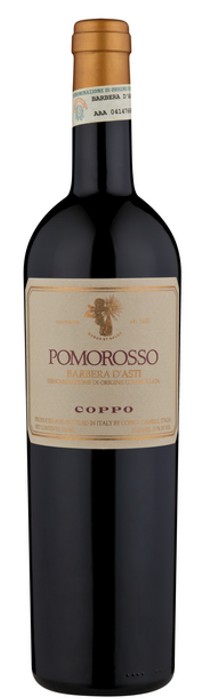
Specifically, 1984 marked the first vintage of Coppo’s probably most famous, revolutionary wine: the Pomorosso, the successful result of efforts and investments aimed at coming up with a high-quality Barbera that would be meant for aging and be a tribute to such variety and its territory.

About the Wines

Coppo has been recognized as one of Piedmontese winemakers that have focused on high-quality production and preservation of the local traditions. Nowadays, the full Coppo lineup encompasses 16 wines:

  • 4 Barbera‘s
  • 1 Barbera-Cabernet Sauvignon blend
  • 1 Barolo (from Nebbiolo grapes grown in a vineyard outside the geographical boundaries of the appellation, but grandfathered so as to still let them use the Barolo DOCG appellation because production predated the creation of the appellation)
  • 1 Freisa
  • 1 Gavi (from Cortese grapes grown in a separate vineyard within the Gavi DOCG appellation territory)
  • 3 Chardonnay‘s
  • 4 Classic Method sparkling wines
  • 1 sweet Moscato

Out of those 16 wines, Coppo’s US importer was kind enough to send me 9 to taste and review, namely those 9 that are currently imported into the U.S.

Considering the number of wines to review, in an effort not to just focus on one producer for an extended period of time, I will review them over time, so in the next months you will see posts coming up devoted to each of such 9 wines, mixed up with posts on different wines, so please stay tuned!

The Coppo Wines We Are Going to Review

The 9 wines in the Coppo lineup that I am going to review are the following:

  1. Barbera d’Asti “Pomorosso” DOCG
  2. Barbera d’Asti “Camp du Rouss” DOCG
  3. Barbera d’Asti “L’Avvocata” DOCG
  4. Barolo DOCG
  5. “Alterego” Monferrato DOC (a Cabernet Sauvignon/Barbera blend)
  6. Chardonnay “Monteriolo” Piemonte DOC
  7. Chardonnay “Costebianche” Piemonte DOC
  8. Gavi “La Rocca” DOCG
  9. Moscato d’Asti “Moncalvina” DOCG

To get the series started, I am going to launch “the Barbera Trilogy” 🙂 that is I will review the three Barbera’s in the Coppo range, starting from the entry-level “L’Avvocata” and culminating with the flagship “Pomorosso”, which I had already reviewed on a previous post. The other wines will follow later on.

As always, let me know if you happened to try any of the wines in the Coppo range and, if you did, how you liked them!

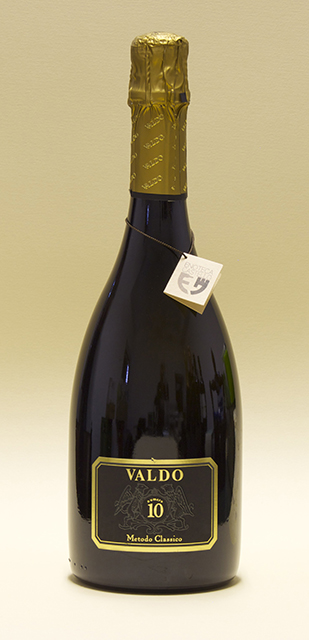
Wine Review: Valdo, Prosecco Brut Metodo Classico “Numero 10” 2009 DOC

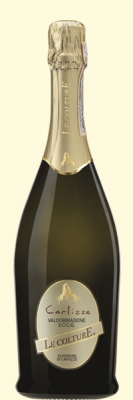
Valdo, Prosecco Brut Metodo Classico "Numero 10" DOCAs you may already know if you have been reading this blog for a while, I am not a big fan of Prosecco: with very few exceptions (as in the case of Le Colture), I prefer the greater structure, complexity and finer perlage of a good Classic Method sparkling wine over most Charmat-Martinotti Method Prosecco’s.

However… drum roll… enter Valdo, Prosecco Brut Metodo Classico “Numero 10” DOC (€18), the game changer, the ideal bridge connecting Prosecco with Classic Method.

The Bottom Line

Overall, as I think you will be able to tell from my tasting notes, I really quite liked this Prosecco: personally, I applaud the producer who departed from the traditional way to make Prosecco (according to the Charmat-Martinotti Method) and instead went the Classic Method way. I think this gave to the Numero 10 that extra complexity and structure that I have almost regularly found lacking in the vast majority of the Prosecco’s that I have had so far. The choice of a relatively short period of aging on the lees also ensured that the secondary aromas would not become too pronounced at the expense of the fresh and fruity primary aromas of the Glera variety. All in all, a really solid sparkling wine for a reasonable price (at least in Italy): I seriously hope that the Numero 10 will become available in the US soon, maybe in time for next spring?… 😉

Rating: Good to Very Good and Recommended given its good QPR Good to Very Good – €

(Explanation of our Rating and Pricing Systems)

Classic Method vs. Charmat-Martinotti Method

Let’s start from the beginning: the world of sparkling wines (in Italian, “spumante“) is essentially divided into two camps: Classic Method sparklers (the archetype of which is Champagne) and Charmat-Martinotti Method sparklers (such as most Prosecco and Asti Spumante). We have discussed at length the differences between the two methods and the relevant production processes on previous posts, one regarding the Classic Method and the other one the Charmat-Martinotti Method, so you can refer to them in case of doubts.

The point here is that the wine we are going to review today is one of the very few Prosecco’s that are made according to the Classic Method, and therefore through in-bottle refermentation. Let’s dig deeper into it.

About the Grape and the Appellation

The main grape variety that is used in the production of the wine Prosecco was called Prosecco Tondo (now Glera) which DNA profiling has shown to be identical to a rare variety that is indigenous to the Istria region of Croatia named Teran Bijeli. This evidence supports the theory of an Istrian origin for the Prosecco/Glera grape variety. Glera is a partly-aromatic white-berried grape variety (grape variety information taken from Wine Grapes, by Robinson-Harding-Vouillamoz, Allen Lane 2012).

Prosecco wine is made in two Italian DOCG appellations and in one more loosely regulated inter-regional DOC appellation, as follows:

  • Prosecco di Conegliano Valdobbiadene (or simply Prosecco di ValdobbiadeneDOCG in the Veneto region, near the town of Treviso;
  • Prosecco dei Colli Asolani DOCG in the Veneto region, near and including the town of Asolo;
  • Prosecco Spumante DOC, an appellation which covers a vast territory stretching between the regions of Veneto and Friuli.

The regulations of the two DOCG appellations require that their Prosecco wines be made for 85% or more from Glera grapes, to which up to 15% of Verdiso, Bianchetta Trevigiana, Perera or Glera Lunga white-berried grapes may be blended. The regulations of the DOC appellation are similar but permit that a few additional grape varieties be blended to the Glera base grapes, as follows: Chardonnay, Pinot Bianco, Pinot Grigio or Pinot Noir.

For more detailed information about Prosecco and the Glera grape variety, please refer to our post on the Charmat-Martinotti Method and to the “Glera” entry in our Grape Variety Archive.

About the Producer

Valdo is one of the historical producers of Prosecco in the premium hilly Valdobbiadene area, near the town of Treviso, in Italy’s Veneto region: they have been in the sparkling wine business since 1926.

With its main offices smack in the center of the town of Valdobbiadene, Valdo nowadays is a big player, with an annual production of 5 million bottles, one third of which are exported.

The Valdo wine range is divided into four lines:

Our Detailed Review

Moving on to the actual review of Valdo, Prosecco Brut Metodo Classico “Numero 10” 2009 DOC, I need to preliminarily point out that unfortunately at this time this wine is not among those in the Valdo range that are imported to the U.S.

I have reached out to Valdo’s U.S. importer to find out if they were planning on making it available in the largest wine market of the world any time soon and they told me that, while no decision has been made yet, it is something they are considering. So… not all hope is lost! 🙂

Be as it may, the bottle of Valdo “Numero 10” I had was a typical 12.5% ABV – in Italy, it retails for about €18.

The Numero 10 was made from 100% Glera white-berried grapes grown in Valdo’s vineyards in the premium Valdobbiadene area, which makes the Numero 10 a Blanc de Blancs. After the soft pressing of the grapes, the must goes through a first fermentation phase at 15C/59F. As a result of the subsequent in-bottle refermentation, the wine rests in bottle on its lees for 10 months, plus an additional 6 months following degorgement.

As usual, for my review I will use a simplified version of the ISA wine tasting protocol that we described in a previous post: should you have doubts as to any of the terms used below please refer to that post for a refresher.

In the flute, the Numero 10’s color was an intense straw yellow with golden hints; the bubbles in its perlage were numerousaverage in size and long-lasting.

On the nose, the bouquet of the Numero 10 was intense, moderately complex and fine, and especially it was immediately captivating as it seemed to merge the fresh and fruity primary aromas that are typical of the semi-aromatic Glera grapes with the more complex, secondary aromas deriving from the double fermentation process and aging on the lees that are instead typical of a Classic Method sparkling wine. So, its kaleidoscopic bouquet offered aromas of Granny Smith apples, herbs (mint), apricot, and hints of minerals (graphite, chalk) and yeast.

In the mouth, the Numero 10 was dry, with medium ABV and moderately smooth; it was acidic and tasty. It was medium-bodied and balanced, with intense and fine mouth flavors of minerals, brine, lime, Granny Smith apples and mint. It had a medium finish and its evolutionary state was mature (i.e., ready to be enjoyed now).

Wine Review: Muri-Gries, Alto Adige Lagrein “Abtei Muri” Riserva 2007 DOC

Today’s review is about a northern Italian red wine that I particularly love (Muri-GriesAlto Adige Lagrein “Abtei Muri” Riserva DOC 2007 – $38) which is made from an Italian indigenous grape variety that in my view undeservedly gets too little attention in the wine world: Lagrein.

Muri-Gries, Alto Adige Lagrein "Abtei Muri" Riserva DOC

The Bottom Line

Overall, the Abtei Muri was an extremely good, marvelously smooth, fruit-forward wine with supple tannins and good structure, an ideal companion to a red meat dinner. I think that with a couple more years of evolution under its belt, this wine may become truly spectacular: I will have to look for one more bottle from the 2007 vintage, if I can find one!

Rating: Outstanding and definitely Recommended, given its great QPR Outstanding – $$

(Explanation of our Rating and Pricing Systems)

About the Grape

The earliest mention of Lagrein is contained in a 1318 document found (of all places!) in Gries, near Bolzano, and surprisingly it refers to a white wine, that researchers have not been able to identify yet. Instead, the first reference to the red Lagrein that we know dates back to 1526.

Recent DNA analysis proved that Lagrein is a variety that is indigenous to the Alto Adige region of Italy, that it originated as a natural cross between Teroldego and an unknown variety and that, among other cool facts, it is a sibling of Marzemino and a cousin of Syrah!

In Italy, Lagrein is mostly grown in the northern regions of Alto Adige and Trentino. Outside of Italy, Lagrein can be found in California (Paso Robles) and Australia.

(Information on the grape variety taken from Wine Grapes, by Robinson-Harding-Vouillamoz, Allen Lane 2012 – for more information about grape varieties, check out our Grape Variety Archive)

About the Appellation

A few words about the appellation. Alto Adige is a portion of the northern, mountainous region of Italy known as Trentino Alto Adige that is close to Austria and produces several wines of excellent quality, including indigenous Lagrein and very good Schiava and Pinot Noir among the reds and excellent whites ranging from Riesling and Sylvaner to Chardonnay and Sauvignon Blanc.

Given the great quality of the wines from this area of Italy, it is somewhat sad to notice that they all come from one single appellation that encompasses the entire Alto Adige area, known as Alto Adige DOC. It is true that this macro-appellation includes a few subzones (among which St. Magdalener, Terlaner and Valle Isarco) but still, one appellation with over 20 permitted grape varieties??? Talk about the importance of terroir… 😦  So, as of today one can mostly rely on the seriousness and commitment to quality of many Alto Adige producers. Personally, I hope that at some point at least certain of those subzones may be upgraded to self-standing appellations, focusing only on the grapes that are best suited for that specific subregion.

About the Estate

Muri-Gries is currently a Benedictine monastery in the village known as Gries near the town of Bolzano (Bozen), in the northeastern Italian region of Alto Adige. The original building was erected in the XI century as a fortress and kept that purpose until 1407, when it was gifted to Augustinian canons who had lost their monastery due to a flood and it was converted into a monastery. Grapevine growing and winemaking started in 1845, when the monastery passed on to Benedictine friars, who had been ousted from their monastery in Muri, Switzerland, and who eventually settled in the Gries monastery, which changed its name to the current Muri-Gries. As of today, the Benedectine friars still take care of the monastery and its vineyards.

The monastery owns nearly 30 HA (75 acres) of vineyards (80% of which are Lagrein) and 52 HA (131 acres) of orchards, beside some 45 cattle, which make the monastery essentially self-sufficient. Even part of the wine made in the monastery is earmarked for the friars’ own consumption.

Our Detailed Review

Let’s now move on to the actual review of the Muri-Gries, Alto Adige Lagrein “Abtei Muri” Riserva 2007 DOC that I recently tasted.

For starters, “Abtei Muri” is the flagship line of the monastery wine production. This premium lineup comprises four wines: the Lagrein that we are about to review, a Pinot Noir, a white blend of Pinot Blanc and Pinot Grigio, and a sweet Moscato Rosa.

Our Abtei Muri Lagrein was made from 100% Lagrein grapes and was fermented in steel vats and then aged for 16 months in barrique oak casks. It is 13.5% ABV and it retails in the US for about $38, which (as you will soon find out if you keep reading) is great value for this wine.

As usual, for my review I will use a simplified version of the ISA wine tasting protocol that we described in a previous post: should you have doubts as to any of the terms used below please refer to that post for a refresher.

In the glass, the wine poured ruby red with purple hints and thick when swirled

On the nose, its bouquet was intense, complex and fine, with aromas of blueberry, blackberry, black pepper, tobacco and licorice.

In the mouth, it was dry, warm, smooth; quite fresh, with deliciously supple tannins, and tasty. The wine was full-bodied and perfectly balanced. The mouth flavors were intense and fine, with nice correspondence to the aromatic palette and hints of blueberry, blackberry and black pepper. It had a quite long finish and its evolutionary state was ready (that is, perfectly good to enjoy now, but will probably evolve even more with two or three years of additional aging).

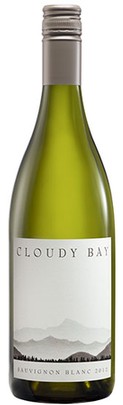
Wine Review: Cloudy Bay, Sauvignon Blanc Marlborough 2012

Cloudy Bay, Sauvignon Blanc MarlboroughEver since fellow wine blogger and friend Oliver was kind enough to ask me to contribute a guest post to his excellent blog, The Winegetter, I have been really excited about the idea. Since the theme was “Somewhere Beyond the Sea” and the post was going to be published in the summertime, I thought reviewing one of my favorite New Zealand Sauvignon Blancs (Cloudy BaySauvignon Blanc Marlborough 2012 – $30) would just be the way to go: definitely “somewhere beyond the sea” pretty much from anywhere you look at it (unless of course you are a Kiwi!) and a refreshing summer wine. So there we go – and of course: (i) you may find this post also in Oliver’s blog and (ii) thank you so much, Oliver, for including me in your list of distinguished guest contributors – I feel honored and it has been a lot of fun!

The Bottom Line

Overall, I think that Cloudy Bay is a very pleasant Sauvignon Blanc in the “Down Under” style: intense, concentrated fruit and herb aromas, lively acidity and citrus-centric flavors. So very refreshing and summery that I would keep drinking it all Summer long… if budget permitted!  😉

Rating: Very Good and Recommended Very Good – $$

(Explanation of our Rating and Pricing Systems)

About the Grape

A few interesting notions about the origins of Sauvignon Blanc: recent DNA analysis has identified a parent-offspring relationship between Savagnin (an old white-berried variety that is common in the Jura region of France) and Sauvignon Blanc and, there being much earlier documents mentioning Savagnin than Sauvignon Blanc, the former is believed to be the parent of the latter. DNA results also support the thesis that, contrary to common belief, Sauvignon Blanc did not originate from the Bordeaux area, but rather from the Loire Valley in France, where documental evidence dates back to 1534 (compared to 1710 in Bordeaux). However, it is interesting to note that, when Sauvignon Blanc was grown in the Bordeaux area, it spontaneously crossed with Cabernet Franc to create Cabernet Sauvignon.

In New Zealand, Sauvignon Blanc was first planted in the 1970s and soon became the most widely grown variety in the country, especially in the Marlborough region.

(Information on the grape varieties taken from Wine Grapes, by Robinson-Harding-Vouillamoz, Allen Lane 2012  – for more information about grape varieties, check out our Grape Variety Archive)

About the Estate

Cloudy Bay‘s vineyards are located in different subzones of the premium wine region of Marlborough at the northern end of New Zealand’s South Island, alongside the Wairau River. Cloudy Bay also sources part of the grapes used for making their wines from a few independent Wairau Valley growers with whom they have established a long-term business relationship.

Our Detailed Review

Let’s now get to the actual review of Cloudy Bay, Sauvignon Blanc Marlborough 2012, which in the US retails for about $30.

The wine has 13.5% ABV and was made from 100% Sauvignon Blanc grapes sourced from estate and grower vineyards located in the Rapaura, Fairhall, Renwick and Brancott subzones of the Wairau Valley. Fermentation was primarily carried out in stainless steel, except for a small percentage that was fermented in old French oak barriques.

As usual, for my review I will use a simplified version of the ISA wine tasting protocol that we described in a previous post: should you have doubts as to any of the terms used below please refer to that post for a refresher.

In the glass, the wine poured crystal clear, a beautiful straw yellow in color, and thick with narrow arches and slow dripping tears

On the nose, its bouquet was intense, complex and fine, with pleasant, Summer-y aromas of lime, grapefruit, citrus, green apple and herbs (nettle, mint)

In the mouth, it was dry, quite warm, quite smooth; fresh, quite tasty. The wine was medium-bodied and balanced, despite its freshness (i.e., acidity) being the dominating component – but that is in most cases a desirable feature in a dry white wine and in our case it also helped make the quite muscular ABV of the wine not so evident in the mouth, which is a good thing, so it did not change our assessment that the wine was balanced. Its mouth flavors were intense and fine, with pleasant, refreshing notes of lime, grapefruit, citrus and herbs. The wine’s finish was quite long and its evolutionary state was mature, meaning ready to be enjoyed now, with additional cellaring not likely to benefit the wine.

Wine App Review: Winery Passport

Winery Passport App IconLast week, Scott, the developer of a brand new wine-related app, reached out to me to let me know about the roll out and to ask me whether I would download it and give it a spin and, if I liked it, whether I would write a review.

So, as you are reading this, you may already guess that I did download it and I did like it 😉

But let’s start from the beginning: the app is called Winery Passport (WP).

Screenshot5

Before we get more into it, note that you may have an interest in this app provided that you (i) are into wine (of course!), (ii) live in or plan a wine-focused trip to the USA, and (iii) at least for now, are iOS based.

Now, what exactly does WP do? Essentially, WP is (or will soon be) a database of all the wineries in the US coupled with a cool GPS feature that shows the wineries that are closest to wherever you are, ordering them from closest to farthest away and showing you how far you are from each of them. Alternatively, you can also browse or search the entire winery archive, that is broken down by State.

Either way, whenever you select a winery, WP shows you its address and gives you a few options, including taking you to the winery’s Web site, connecting to Google Maps so you can get driving directions from wherever you are to the winery with one click, or even call the winery directly from within the app.

Screenshot1Thanks to these two different modes, WP’s features come in handy whether you have a sudden urge to discover and visit a winery near you, regardless of where in the US you are, or you are planning a trip to a US wine region and want to chart your route based on where the various wineries of the area are located or their average rating. Pretty cool, and all at your fingertip.

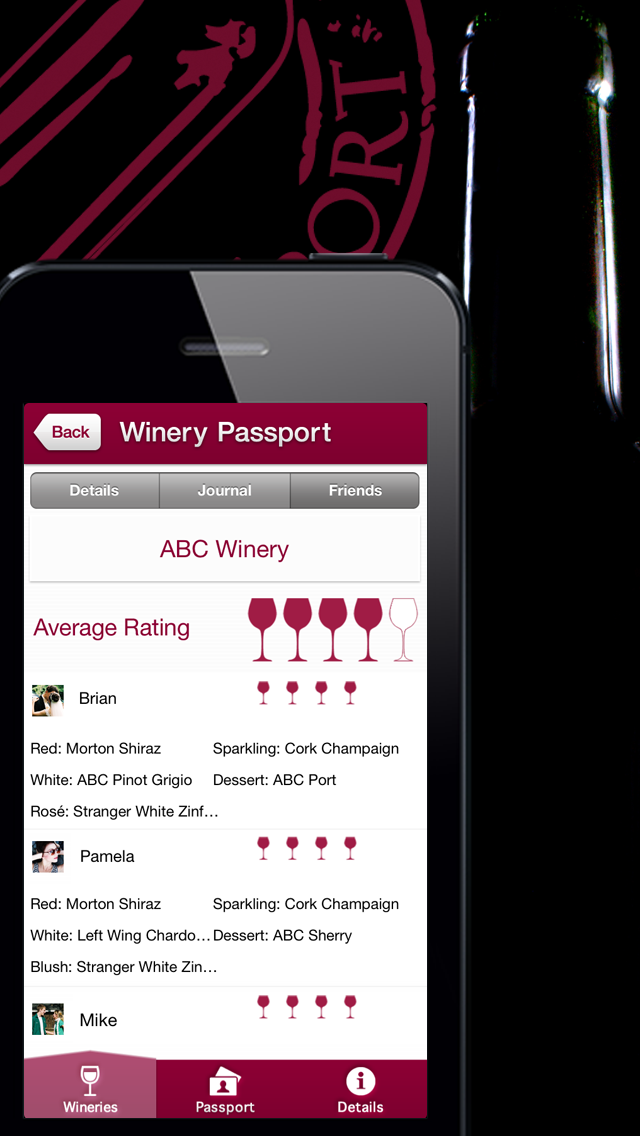
But there’s more. WP also a “passport” part that keeps track of the wineries that you visit, lets you rate them and take notes and even syncs with Facebook and Twitter so you can share your experience with other WP users. Neat idea.

And in case you are wondering how much downloading WP is going to set you back, well no sweat and click that download button as it is a free app!

Screenshot3Now, although WP is fully functioning and sleek looking, here are a few things to bear in mind:

1. The winery database is still a work in progress: to date, there’s almost 1000 wineries in 17 States, all on the East Coast so far (so, no California yet), that have been uploaded already, but they are quite obviously not all. Scott is working to add more and eventually map all 50 States out, but it is a huge task and it is going to take a while. Scott anticipates getting to 25 States by August.

2. So far, WP is only for the iPhone or iPod Touch. I asked Scott whether he planned to also develop a version for the iPad and he said that it would be rolled out later on, as right now completing the winery census is understandably his priority.

Screenshot4

3. Regarding Android: I asked and Scott said once the iOS version is completed, with all the wineries uploaded, he would look into making an Android version, so Android users sit tight and hold on as no hope is lost! 🙂

Wrapping things up: I really like the idea behind WP and its implementation: the app is sleek, simple and yet very effective… and it’s free! I can’t wait for the full-screen version for the iPad to be released!

Rating: Very Good and recommended

Thank you, Scott, for developing such a cool app, making it available for free and giving me heads up about it!

For more information about WP, visit the developer’s Web site. You can download WP from Apple’s App Store or by clicking here.

Wine Review P2: Marchesi de’ Frescobaldi, “Tenuta dell’Ammiraglia” Range

Disclaimer: this review is of samples that I received from the producer’s US importer. My review of the wines has been conducted in compliance with my Samples Policy and the ISA wine tasting protocol and the opinions I am going to share on the wines are my own.

After learning about the producer, Marchesi de’ Frescobaldi, the estate “Tenuta dell’Ammiraglia and the “Ammiraglia” wine range in general on our previous post (should you have missed it, please refer to it before reading this one), let’s now focus on the actual contents of the three bottles that I got to taste and move forward with my tasting notes.

In an effort not to make this post too lengthy, if you are interested in some very cool facts about the various grape varieties from which the wines in the Ammiraglia lineup are made (i.e., Vermentino, Cabernet Sauvignon, Cabernet Franc, Merlot, Syrah, Sangiovese and Ciliegiolo), by all means check them out on our Grape Variety Archive page. As always, such information is taken from the excellent guide Wine Grapes, by Robinson-Harding-Vouillamoz, Allen Lane 2012,

As usual, for my review I will use a simplified version of the ISA wine tasting protocol that we described in a previous post: should you have doubts as to any of the terms used below please refer to that post for a refresher.

1.  Marchesi de’ Frescobaldi, Vermentino “Ammiraglia” Toscana IGT 2012 ($18)

The 2012 Vermentino Ammiraglia was 12.5% ABV and was made out of 100% Vermentino grapes harvested from just 5 HA of vineyards in the Tenuta dell’Ammiraglia estate, which achieve a good 5,500 vines/HA density.

After the grapes underwent a partial cryomaceration phase, the must fermented for 10 days at 68F/20C in stainless steel vessels, with no malolactic fermentation. After that, the wine rested for 4 months in steel vats, plus one additional month in bottle before becoming available for sale.

The fact that part of the grapes did cryomaceration and that the wine did not do any oak are both indications that the wine was made in such a way as to emphasize primary and secondary aromas and that it is intended for immediate consumption, not for cellaring. The Vermentino Ammiraglia retails in the US for about $18.

In the glass, the wine poured a light straw yellow and moderately thick when swirled.

On the nose, the bouquet was quite intense, quite complex and fine, with aromas of grapefruit, citrus, honey, orange blossoms, with herbs and almond hints. One important factor to keep in mind to fully appreciate its aromas is service temperature: if you serve this wine too chilled, its bouquet will be restrained and will not do it justice. I noticed that a temperature of about 53-55F/12-13C is where the wine’s aromas peak, so bear that in mind if you buy a bottle.

In the mouth, the wine was dry, quite warm, smooth; fresh and tasty. It was balanced and medium-bodied, with intense and fine mouth flavors of citrus, almond, minerals and evident iodine notes. The finish was quite long (to reinforce the wine’s mineral and iodine flavors, the aftertaste leaves you a slight feeling almost of saltwater in your mouth!) and the evolutionary state was mature (meaning, drink it now, it will not benefit from cellaring).

Overall, I really enjoyed this Vermentino: ideally, I wish its aromas were a touch more intense, but its aromatic palette is quite complex (if tasted at the right temperature) and very enjoyable, as are its balance and tasty mouth flavors. And at a retail price of about $18, I think this wine delivers plenty of bang for the buck.

Rating: Good to Very Good and Recommended, given its great QPR Good to Very Good – $

(Explanation of our Rating and Pricing Systems)

2. Marchesi de’ Frescobaldi, “Terre More dell’Ammiraglia” Maremma Toscana DOC 2011 ($18)

The 2011 Terre More was a whopping 14.5% ABV Bordeaux-style blend of 70% Cabernet Sauvignon, 15% Cabernet Franc, 10% Merlot and 5% Syrah grown in 55 HA of vineyards in the estate with a good density of 5,500 vines/HA, on par with the Vermentino.

The must fermented for 10 days in stainless steel vats at 82F/28C and underwent 12 days of maceration as well as full malolactic fermentation. The wine finally aged for 12 months in second or third time used French oak barrique casks before becoming available for sale. The Terre More retails in the US for about $18.

In the glass, the wine poured ruby red with purple hints and unsurprisingly (given its ABV) thick when swirled.

On the nose, the bouquet was quite intense, complex and fine, with aromas of wild cherry, plum, blackberry, leather, coffee, tobacco and black pepper, with the tertiary, spicy aromas given by the oak aging being a little dominant over the secondary, fruity aromas (despite the wise choice of second/third time used barriques).

In the mouth, the Terre More was dry, definitely warm, quite smooth; fresh, tannic, quite tasty. I have to say that the wine’s muscular ABV was very evident, and tended to tip the wine mouthfeel a little bit off balance. The tannins were firm but quite integrated, despite the wine’s young age. The wine was full-bodied and had intense and fine mouth flavors of plum, blackberry, coffee (quite evident) and black pepper. The finish was quite long and the evolutionary state ready, meaning you can drink it now but it will most likely benefit from a few years of additional in-bottle aging.

Overall, I ended up having mixed feelings about the Terre More: I quite liked its bouquet (despite the slight prevalence of oaky, tertiary aromas and it being not as intense as I would have hoped), but was not entirely convinced by its mouthfeel: despite its pleasant flavor profile, the heat of the wine’s ABV was in my view a little too evident. Truth be told, it is still a very young wine and a few years of cellaring would likely be beneficial. Having said that, with a retail price of $18, I think this wine is still a pretty good deal to pair with a juicy steak just off the grill.

Rating: Fairly Good Fairly Good – $

(Explanation of our Rating and Pricing Systems)

3. Marchesi de’ Frescobaldi, “Pietraregia dell’Ammiraglia” Morellino di Scansano Riserva DOCG 2010 ($25)

As mentioned on our previous post, the 2010 Pietraregia started off on the right foot by having a nice cork closure. 😉 Beside that, the wine was 14% ABV and was a blend of 85% Sangiovese, 10% Ciliegiolo and 5% Syrah.

The must fermented in stainless steel vats for 10 days at 86F/30C, underwent 20 days of maceration on the skins and did full malolactic fermentation, The wine aged for 24 months in French oak barrique casks and 2 additional months in bottle before becoming available for sale. The Pietraregia retails in the US for about $25.

In the glass, it poured dark ruby red and thick when swirled.

On the nose, its bouquet was quite intense and a bit narrow, with aromas of plum, blackberry, violet and black pepper, but certainly fine. It is interesting to note how few spicy tertiary aromas the wine picked up after spending 24 months in French oak barrique casks. Honestly, I would have hoped that the nose of this wine delivered a bit more than it did.

In the mouth, the Pietraregia was dry, warm, smooth; fresh, tannic, tasty. It was a full-bodied wine with intense and fine mouth flavors of plum and dark chocolate. The finish was quite long and its evolutionary state was ready (you know what that means: fine to drink now, but if you cellar it for a few years it will likely improve over time).

Overall, I liked the Pietraregia: while I wish it had more to give in its bouquet, in my view the pleasant mouthfeel of this wine definitely made up for whatever it lacked in its aromatic palette. Once you sip this wine, it will make you happy, especially if you still remember that you paid some 25 bucks for it, which I think is more than adequate for what you get.

Rating: Good and Recommended Good – $$ 

(Explanation of our Rating and Pricing Systems)

So, to sum things up real quick:

1. I am generally pleased by the quality that the three wines of the Ammiraglia range that I got to taste delivered, of course given their price points.

2. Personally, I would definitely buy the Vermentino and the Pietraregia, which in my view are good value for money, while (once again, personally speaking) I think I would pass on the Terre More as, while it certainly is not a bad wine, it does not quite meet my own tastes.

And of course, many thanks to Marchesi de’ Frescobaldi’s US importer for providing the samples.

As always, if you get to taste any of these wines, please share your experience in the comment section!

Wine Review P1: Marchesi de’ Frescobaldi, “Tenuta dell’Ammiraglia” Range

Disclaimer: this review is of samples that I received from the producer’s US importer. My review of the wines has been conducted in compliance with my Samples Policy and the ISA wine tasting protocol and the opinions I am going to share on the wines are my own.

The US importer of the Italian winery Marchesi de’ Frescobaldi has been so nice as to mail me samples of a range of wines that are literally just being launched in the US market as we publish this post so I could try them out and see how I liked them… which I gladly did! Needless to say, the opinions in my review are my own and are untainted by the fact that the wines I reviewed were free samples (which is something that, however, I greatly appreciated as it gave me the opportunity to preview a range of wines that I was not familiar with!)

The wines that I am going to review are made by well-known Tuscan producer Marchesi de’ Frescobaldi and they are part of a line called “Ammiraglia”, after the name of the estate (Tenuta dell’Ammiraglia) where the grapes from which the wines are made come from.

In order not to make this post unbearably long, I am going to break it down into two parts: (i) this post will provide information about the producer, the estate and the Ammiraglia range in general, and (ii) the next post is going to focus on my tasting notes of the three wines in the Ammiraglia lineup that I had the opportunity to taste.

About the Producer

The Frescobaldi’s are an Italian (florentine) family of noble descent that, among other endeavors, have been in the wine business for quite a while. More specifically, the oldest documented reference to their wine production activities dates back to… the year 1300 (!) at the historic estate of Tenuta di Castiglioni in Val di Pesa, southwest of Florence.

According to the Frescobaldi’s records, their wine business took off pretty well pretty soon, as by the beginning of the 1400’s great Italian Renaissance artists such as Donatello and Michelozzo Michelozzi had become loyal clients. One century later, the Frescobaldi wines were served at the tables of the Papal Court and the Court of Henry the Eighth of England.

According to the Frescobaldi’s Web site, in the second half of the XIX century they were also at the forefront of wine making innovation in Italy, as in 1855, at their estates of Nipozzano and Pomino, they were the first in Tuscany to plant Cabernet Sauvignon, Merlot, Pinot Noir and Chardonnay, while in 1894 at Pomino they built the first Italian gravity-fed cellars.

About the Estate

Tenuta dell’Ammiraglia is the Frescobaldi’s latest project. This estate is situated in Magliano, near the town of Grosseto, in that beautiful, sunny and wild part of coastal Tuscany that is known as Maremma. Commercial production of the Ammiraglia wine range started recently, with the first vintage of two of the wines in the lineup being 2006, while the remaining two wines were introduced in 2009 and 2012 (see below for details). Even the state-of-the-art, environmentally conscious Ammiraglia estate winery was completed and became operational only in 2011.

About the Ammiraglia Range

The Ammiraglia lineup comprises four wines:

1. Vermentino Ammiraglia: the only white wine in the range and its newest addition (first vintage: 2012)
2. Terre More: a Bordeux-style blend (first vintage: 2009)
3. Pietraregia: a Sangiovese-based Morellino di Scansano Riserva (first vintage: 2006)
4. Ammiraglia: a varietal Syrah (first vintage: 2006)

However, currently only the first three wines in the Ammiraglia range have been imported into the US and therefore will be covered by my review. Word has it, though, that it will not be long before even the missing Syrah joins the other three wines on US wine store racks (probably, as early as next year).

Before we wrap this post up, here are three general observations on the wines that I have tasted – two good and one… not so good.  😉

– The good ones:

(A) The price: if these wines deliver in terms of quality (I don’t want to spoil the outcome of my reviews here, so stay tuned for the next post!) I think they are going to sell really well: two of the three have a suggested retail price of $18 and the third one (the Pietraregia) of $25: certainly appealing.

(B) The capsule: the three wines come with a nice tin capsule, which I like so much better than cheap feeling and cheap looking plastic capsules. Besides, tin foil is much easier to take off in the context of a proper wine opening procedure (yes, at some point I will write a post about what this entails exactly!)

– The not so good one (at least to me): only one of the three wines that I tasted (the more expensive Pietraregia) utilizes cork as a closure. The other two resort to a synthetic closure in a color that vaguely resembles cork.

Now, I realize that retailing at some $18 these two wines are not premium segment wines and using synthetic instead of cork helps keep the retail price down; I understand that they are not meant for long-term aging and this takes care of the question marks about the long-term effectiveness of synthetic closures; and I also appreciate that using synthetic avoids the dreaded TCA taint problem (AKA, the occasional corked bottle) altogether. I get all that, of course. Still, my personal reaction to a synthetic closure in a bottle of wine is not one of excitement: I don’t know, I may be old school and everything, but to me, it just makes the bottle feel cheap.

By the way, if you are interested in the whole wine closure debate, I have come across a pretty interesting article published by the American Society for Enology and Viticulture summarizing the outcome of research conducted in 2007 at Oregon State University’s Food Innovation Center regarding the “Effects of Wine Bottle Closure Type on Consumer Purchase Intent and Price Expectation” that essentially shows how consumer appreciation and price expectations of a bottle of wine (a Chardonnay and a Merlot) were affected by the use of a screw cap, a synthetic closure or a real cork (the article also cites the outcome of previous studies on this topic).

Anyway, forget about my prejudice about synthetic closures: this is the end of part 1 of this review. On the next post, we will get to my actual tasting notes of the three wines that I got to taste, so stay tuned for more! 🙂

New Resource: The Grape Variety Archive

Wine Grapes, by Robinson-Harding-Vouillamoz, Allen Lane 2012

I would like to share with you all a pretty cool new wine-related resource that just recently went live on this blog and on Flora’s Table: I am talking about a new page called Grape Variety Archive that combines alphabetically, in one centralized spot, all the information about the grape varieties of the wines that I have reviewed, so that such information may be easily referred to by readers.

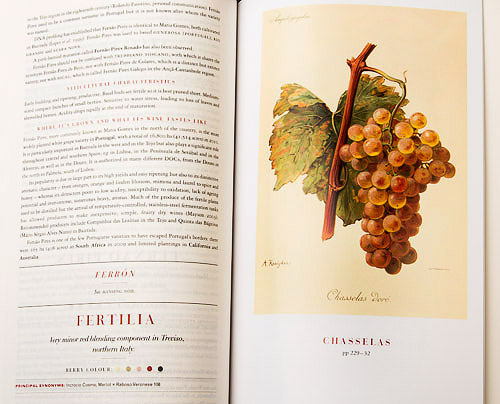
What’s even better is that all of the grape variety information on the Grape Variety Archive has been taken from the wonderfully educational, gorgeously illustrated and scientifically researched volume “Wine Grapesauthored by Jancis Robinson, Julia Harding and Jose Vouillamoz, Allen Lane 2012. Wine Grapes is an impressive 1,242 page long collection of detailed and up to date information about 1,368 vine varieties from all over the world. Quoting directly from the Web site dedicated to the book:

Where do wine grapes come from and how are vine varieties related to each other? What is the historical background of each grape variety? Where are they grown? What sort of wines do they make? Using the most cutting-edge DNA analysis and detailing almost 1,400 distinct grape varieties, as well as myriad correct (and incorrect) synonyms, this particularly beautiful book examines viticulture, grapes and wine as never before. Here is a complete, alphabetically presented profile of all grape varieties relevant to today’s wine lover.

I don’t think I need to say much about the authors, as if you are into wine they are all very well known, but just in case: Jancis Robinson has been a wine writer since 1975 and the Financial Times’s wine correspondent since 1989. Her principal occupation now is taking care of her own Web site, JancisRobinson.com, which gets updated daily. Julia Harding is a linguist, an editor and a qualified Master of Wine. She is Jancis Robinson’s full-time assistant and “associate palate”. Dr José Vouillamoz is a Swiss botanist and grape geneticist of international repute. He was trained in grape DNA profiling and parentage analyses in the world-famous laboratory of Professor Carole Meredith at the University of California at Davis.

And speaking of the authors, I wish to take the opportunity to sincerely thank them for being so kind and generous as to grant me permission to pull together and publish the Grape Variety Archive page, which I think can become over time a great resource for gaining a quick snapshot of the various varieties that make up the wines that I review on this blog, beside giving readers an idea of the amazing wealth of information that can be found in Wine Grapes.

Wine Grapes, by Robinson-Harding-Vouillamoz, Allen Lane 2012

If you read this and are seriously into wine, I think you should definitely consider acquiring Wine Grapes as it will provide a ton of invaluable information about everything that you may want to know about grape varieties. Besides, let me tell you: Dr Vouillamoz’s DNA profiling work about all the grape varieties in the book is nothing short of unbelievable and well worth the price of the book in and of itself!

Please check our new page out and let me know what you think!

Oh, one final note: congratulations to fellow wine blogger and friend Oliver AKA The Winegetter who has been the first one to like the new page, even before its official roll out! Thank you, Oliver!  🙂

Wine Review: Le Colture, Prosecco di Valdobbiadene Superiore di Cartizze Dry DOCG

LeColture, Prosecco di Valdobbiadene Superiore di Cartizze DOCGSummer has finally made its way to us, with some delay. So, what is there more refreshing and satisfying than a chilled bottled of foamy bubbles?

Before we even continue, though, I feel I have a confession to make. While I love a glass of good sparkling wine, I am definitely partial to Champagne or anyway to quality Classic Method sparklers, such as a nice Franciacorta or Trento DOC. Instead, I am not a big fan of Prosecco, I have to admit, or more in general of sparkling wines made with the Charmat-Martinotti Method. I just prefer the greater structure, the more complex aromatic and flavor palette of the former over the latter. There, I said it.

This, however, is a question of personal taste and is not meant to say that there are no good Prosecco’s out there (although you definitely need to know which ones are the quality producers if you want to avoid disappointments) or that there is no place for a good bottle of a Charmat-Martinotti Method sparkler on your table! To prove this, today I am going to tell you about the one Charmat-Martinotti Method Prosecco that, to date, I like best among those that I have had an opportunity to taste so far: Le ColtureProsecco di Valdobbiadene Superiore di Cartizze Dry DOCG ($30).

The Bottom Line

Overall, I really liked this premium Prosecco and all that it offers. My only gripe is about the price: 30 bucks is in my view in the high end of the range, even for a quality Prosecco. Personally, I think it should be in the $20 to 25 price band. Other than that, in my view, the perfect interplay between its off-dry taste (due to its higher residual sugars) and its refreshing acidity and minerality is what really makes this Prosecco. Certainly, Champagne (or even a Classic Method spumante) it ain’t, but nor does it claim to be. There is definitely a place for this Prosecco in my fridge (and I would think it would not be wasted in yours either!) to enjoy chilled with friends on one of those warm Summer nights!

Rating: Good to Very Good Good to Very Good – $$

(Explanation of our Rating and Pricing Systems)

About the Appellations

Prosecco wine is made prevalently or exclusively from partly-aromatic Glera (also known as Prosecco – see more about this below) white-berried grapes in two Italian DOCG appellations and in one more loosely regulated inter-regional DOC appellation, as follows:

  • Prosecco di Conegliano Valdobbiadene (or simply Prosecco di Valdobbiadene) DOCG in the Veneto region, near the town of Treviso;
  • Prosecco dei Colli Asolani DOCG in the Veneto region, near and including the town of Asolo;
  • Prosecco Spumante DOC, an appellation which covers a vast territory stretching between the regions of Veneto and Friuli.

The regulations of the two DOCG appellations require that their Prosecco wines be made 85% or more from Glera grapes, to which up to 15% of Verdiso, Bianchetta Trevigiana, Perera or Glera Lunga white-berried grapes may be blended. The regulations of the DOC appellation are similar but permit that a few additional grape varieties be blended to the Glera base grapes, as follows: Chardonnay, Pinot Bianco, Pinot Grigio or Pinot Noir.

Prosecco is one of the main examples of a sparkling wine made according to the so-called Charmat-Martinotti Method, although there are a few producers who also make some very good Classic Method Prosecco’s. Compared to the Classic Method, the Charmat-Martinotti Method is a quicker and cheaper production process for sparkling wine, which is known to maximize primary (or varietal) aromas although it generally sacrifices the wine structure and the finest perlage. For more detailed information, please refer to our post on the Charmat-Martinotti Method.

With regard to residual sugar levels, according to applicable regulations, Prosecco spumante wines may be produced in any of the following styles, and therefore except only in the Extra Brut (less than 6 gr/lt of residual sugar) or Sweet (more than 50 gr/lt of residual sugar) versions:

  • Brut (less than 15 gr/lt of residual sugar)
  • Extra Dry (12 to 20 gr/lt of residual sugar)
  • Dry (17 to 35 gr/lt of residual sugar – as in the case of the bottle that we are reviewing)
  • Demi-Sec (33 to 50 gr/lt of residual sugar, which would make it taste quite sweet).

About the Grape

Here things for Prosecco tend to complicate a bit…

Up until recently, Prosecco was the name for three things: the wine, its main grape variety and the homonymous village near the town of Trieste (in the Italian region of Friuli) that probably gave the wine and the grape their name. Relatively easy so far.

Then in 2009, with Prosecco’s popularity and sales soaring (in 2011 the overall production of Prosecco was about 265 million bottles, 55% of which were exported), the consortium of Prosecco producers obtained an official change in the name of the grape variety, from Prosecco to Glera, so that Prosecco would only be the name of the wine (and not of the grape variety too) and could therefore be reserved for its designation of origin, thus preventing other producers from other Italian regions or other countries from calling their sparkling wines Prosecco (in this regard, see our recent post about the dispute with Croatia to require that they rename their own Prosek wine).

At any rate, the main grape variety that is used in the production of the wine Prosecco was called Prosecco Tondo (now Glera) which DNA profiling has shown to be identical to a rare variety that is indigenous to the Istria region of Croatia named Teran Bijeli. This evidence supports the theory of an Istrian origin for the Prosecco/Glera grape variety.

Other grapes that may be used in the production of the wine Prosecco and that used to be considered clonal variations of Prosecco Tondo, but DNA analysis has proved to be distinct varieties, are Prosecco Lungo and Prosecco Nostrano (the latter, by the way, has been proven to be identical to Malvasia Bianca Lunga).

(Information on the grape varieties taken from Wine Grapes, by Robinson-Harding-Vouillamoz, Allen Lane 2012)

About the Estate

Le Colture estate is located in proximity to Santo Stefano di Valdobbiadene, in the heart of Veneto’s Prosecco district, and encompasses about 45 HA of vineyards. The bottle that we are about to review is made from 100% Glera grapes grown in Le Colture’s vineyards in the high quality, hilly subzone known as Superiore di Cartizze and located near the village of San Pietro di Barbozza (in the surroundings of the town of Valdobbiadene) within the broader territory of the Prosecco di Valdobbiadene DOCG appellation. The grapes are harvested between mid September and mid October and the wine is made, as is traditionally the case for Prosecco’s, through the refermentation of the must in pressurized autoclaves according to the Charmat-Martinotti Method. Please refer to our previous post about it for more information about this method, the main steps it entails and how it differs from the Classic Method that is utilized for making (among others) Champagne, Franciacorta and Trento DOC sparkling wines.

Our Detailed Review

Let’s now get to the actual review of Le Colture, Prosecco di Valdobbiadene Superiore di Cartizze Dry DOCG, which retails in the US for about $30.

The wine is made from 100% Glera grapes, has 11% ABV and comes in the “Dry” variety, which means that it has fairly high residual sugar, in the amount of 23 gr/l. At 4.5 ATM, the pressure in the bottle is also gentler than that which you would generally expect in a Classic Method wine (about 6 ATM), except in a Franciacorta Saten variety.

As usual, for my review I will use a simplified version of the ISA wine tasting protocol that we described in a previous post: should you have doubts as to any of the terms used below please refer to that post for a refresher.

In the glass, the wine was brilliant with a pleasant straw yellow color. As to the all-important perlage, its bubbles were numerousaverage in size (not the finest, but certainly not coarse either) and the chains of bubbles were definitely long-lasting.

On the nose, its bouquet was moderately intense, moderately complex and fine, with Spring-y aromas of jasmine flowers, peach, citrus and apple: something capable in and of itself to put you in a good mood. 🙂

In the mouth, this Prosecco was off-dry, with low ABV and moderately smooth; it was acidic and tasty. It was light-bodied and pleasantly balanced, with its lively acidity and tasty minerals nicely counterbalancing its higher residual sugars any preventing any flatly sweet feeling. Its mouth flavors were intense and fine, showing a nice match with its aromatic palette, with refreshing notes of peach, citrus and apple. It had a medium finish and its evolutionary state was mature, meaning: do not cellar, drink it now and enjoy its freshness.

In the Name of the Grandfather: Wine Origins in the USA

StefanoThis post finds its roots in a virtual conversation that I had a while ago with fellow blogger Suzanne from the cooking blog A Pug in the Kitchen in the comment section of my post on Flora’s Table about my participation in the 2011 Vintage Port Tour in NYC.

In that context Suzanne asked me about a bottle of “Port” that someone had gifted her, a Port that was made in the United States (California), from a grape variety that is not among the over 100 grape varieties that are recommended or permitted by Portuguese regulations for the production of Port and that (literally speaking, dulcis in fundo) had some chocolate syrup added to it (ugh). The ensuing discussion prompted me to promise her that I would publish a post about what is kosher and what is not in the US in regard to the use of certain notorious foreign geographical terms associated to wine, so here we go.

In a Nutshell

The short of it is that there is good news and bad news for the American wine consumer. The good news is that since 2006 the US has had a set of rules in place to prevent the appropriation of those famous foreign wine terms by wineries in the United States; the bad news is that those same rules contain a grandfather provision to the effect that those US wineries that already marketed their wines using those restricted foreign names before 2006 are authorized to legally continue to do so as an exception to the general rule. But let’s dig a little deeper into this.

The Sad State of Affairs Pre-2006

US regulations (namely, section 5388(c) of Title 26, Internal Revenue Code, of the US Code – in short, 26 USC 5388(c)) identify certain “name[s] of geographical significance, which [are] also the designation of a class or type of wine” that “shall be treated as semi-generic” designations. These semi-generic names include such world-famous European wine names as Burgundy, Chablis, Champagne, Chianti, Marsala, Madeira, Moselle, Port, Rhine Wine, Sauterne, Sherry, Tokay and others.

Until 2006, those US regulations permitted the appropriation of any of such names by any US winery provided that the winery disclosed on the label, next to the appropriated name, “the true place of origin of the wine” (for instance, “Russian River Valley Champagne”, such as the one that was unfortunately served on the occasion of the inauguration of President Obama’s second term in office and other US Presidents before him).

In essence, by so doing US wineries were legally authorized to exploit the notoriety of those wine names that were clearly associated with specific European territories, permitted grape varieties and strictly regulated enological practices (to have an idea of what I am talking about, you may want to refer to my previous post on Champagne and other Classic Method sparkling wines) by slapping those names on the bottles of their wines and just adding the State they were made in. This prompted the birth of not only Zinfandel-made “Chocolate Port” but also such other enological creations as “Almond Flavored California Champagne“, “California Chablis” coming in 5-liter cartons reportedly made from such varieties as Thompson Seedless, Chasselas, and Burger (instead of Chardonnay), and so on.

Which begs the question: what purpose were those rules serving? Were they in the interest of the education of the US consumers or perhaps were they just meant to increase the sales of domestic wine producers by allowing them to piggy back on world famous names that had gained notoriety through centuries of know how, hard work and quality regulations? One gets to wonder, because it looks like such rules were actually promoting confusion and misinformation among most of the vast US wine consumer base without educating them about the importance of concepts such as appellations, terroir, traceability, authenticity, specific enological practices, local traditions and ultimately quality.

2006: New Dawn or Unsatisfactory Compromise?

On March 10, 2006 the US Government and the European Union executed an agreement on trade in wine (the “US/EU Wine Agreement“) pursuant to which, among other things, (i) each party recognized the other’s current winemaking practices; (ii) the US agreed to restrict the use of such semi-generic wine names in the US market to wines originating in the EU; and (iii) each party recognized certain names of origin of the other party in its own market.

As a result of the US/EU Wine Agreement, legislation was passed in the US (in the context of the Tax Relief and Health Care Act) on December 20, 2006 to amend 26 USC 5388(c) so that it would be consistent with the principles set forth in the US/EU Wine Agreement.

So, everything seemed finally to go in the right direction, with a commitment by the US Government to prohibit potentially deceptive practices such as appropriating famous foreign wine names. However, things are rarely black and white and, as they say, for every rule there is an exception: enter the grandfather clause.

Beside agreeing on banning the appropriation of such famous foreign wine names going forward, the US/EU Wine Agreement “grandfathers” (i.e., exceptionally tolerates) those same prohibited practices as long as they had already been in place in the US and approved by means of the issue of a COLA (Certificate of Label Approval) before March 10, 2006.

This exception is the reason why certain US wineries still enjoy the privilege of legally calling wines made in the United States Champagne, Port, Chablis, Chianti, Sherry and so on.

Boycotting Grandpa

From a strictly legal standpoint, I can see the reasons why the US Government had a hard time stripping wineries that had until that time been authorized to legally use those names of the right to use them anymore.

However, in practical terms, I think that creating a division in the market between those wineries that are authorized to continue a potentially deceptive practice and those that are not just because the former happened to start such practices before (or instead of) the latter is wrong because:

(i) it keeps confusing the consumers and does nothing to educate them by introducing them to the originals of some of the world’s most famous wines; and

(ii) it sounds like an unjustified penalty to all those US wineries that had “done the right thing” by refraining from following such dubious practices and building customer recognition for their own products based on their merits alone, instead of taking the shortcut of “name dropping”.

Because of the reasons mentioned above, I have personally decided not to patronize or review wines made by those US wineries that have chosen to carry on those potentially deceptive practices, although permitted under the grandfather clause of the US/EU Wine Agreement.

Wine Origins

On a final note, in 2005 the regions of Champagne (France) and Porto (Portugal) joined forces to create an organization based in Washington DC that is called The Center for Wine Origins and that aims at educating and sensitizing the US consumers and lawmakers as to the importance of the place of origin of a wine and of affording greater protection to wine place names by keeping wine labels accurate so that consumers are given a chance to make informed choices when selecting their wines. You can learn more about this initiative through the organization’s Web site, www.WineOrigins.com.

As always, feel free to share your thoughts on this subject through the comment section below.

Wine Review: Planeta, “Santa Cecilia” Nero d’Avola Sicilia IGT 2006

Planeta, Santa Cecilia Nero d'Avola, Sicilia IGT 2006Today’s review will focus on one of my two favorite varietal Nero d’Avola wines, namely Planeta‘s “Santa Cecilia” Nero d’Avola Sicilia IGT 2006 ($35).

The Bottom Line

Overall, the Santa Cecilia was an outstanding varietal Nero d’Avola, which delivered plenty of structure coupled with an enticing bouquet and juicy, delicious flavors. The wine was silky smooth with tannins that were marvelously gentle and integrated, lacking any of the harshness or aggressiveness that can instead be found in other varietal Nero d’Avola wines. Its still discernible acidity ensures a few more years of aging potential. Also, for its price point, this wine delivers plenty of bang for your hard earned bucks. Like I said, it is definitely one of my two favorite 100% Nero d’Avola wines. If you are curious which one is my other favorite… well, stay tuned as it will be reviewed (and revealed) later this year!  😉

Rating: Outstanding and definitely Recommended given its great QPR Outstanding – $$

(Explanation of our Rating and Pricing Systems)

As usual, let’s now provide a brief overview of the Nero d’Avola grape variety.

About the Grape

Nero d’Avola is a black-berried grape variety that is widely grown in Sicily and that, apparently, was first brought there by Greek migrants during the Greek colonization of Southern Italy (so-called “Magna Graecia”) in the VI century BC. This makes Nero d’Avola essentially an indigenous grape variety to the region of Sicily, where it has been cultivated for centuries (the first official descriptions date back to the end of the XVII century) and where it is also known as “Calabrese” – however, this is not because it came from Calabria (which it did not), but because that name is thought to be a contraction of two words (“Calea” and “Aulisi”) which, in the Sicilian dialect, mean “grape from Avola” (Avola is the name of a Sicilian town).

Nero d’Avola makes wines that are generally deeply colored, full-bodied, distinctly tannic and with good aging potential. The use of Nero d’Avola grapes is permitted both in the only DOCG appellation in Sicily (Cerasuolo di Vittoria DOCG, a blend in which Nero d’Avola can be used between 50 and 70% in combination with Frappato grapes) and in several of the Sicilian DOC appellations (among which the Noto DOC appellation), where it can be used to make varietal wines or in the context of blends. However, many of the best Nero d’Avola wines around are marketed under the more loosely regulated Sicilia IGT appellation, which affords serious producers more flexibility in experimenting and creating excellent wines out of Nero d’Avola grapes, especially by blending them with international grape varieties such as Cabernet Sauvignon, Merlot or Syrah to tame certain aggressive traits that varietal Nero d’Avola wines sometimes exhibit.

(Information on the grape variety taken from Wine Grapes, by Robinson-Harding-Vouillamoz, Allen Lane 2012)

About the Estate and the Appellation

Getting back to the specifics of the Santa Cecilia, this wine was produced for the first time by top quality Sicilian producers Planeta in 1997 under the Sicilia IGT appellation from mostly Nero d’Avola grapes blended with a small percentage of Syrah grapes coming from their vineyards in Menfi and Sambuca. However, in 1998 the good guys at Planeta identified a plot of land (known as Buonivini) in the vicinity of the town of Noto (somewhere in between the towns of Avola and Pachino) that was ideal for growing Nero d’Avola grapes. Over time, they completely renewed the Buonivini vineyards and built from scratch an underground winery with a view to shifting the production of the Santa Cecilia from Menfi/Sambuca to Noto.

The Buonivini winery became operational in 2003, which was also the first vintage of the “new” Santa Cecilia which since then has become a 100% Nero d’Avola wine made exclusively from grapes grown in the Buonivini vineyards. The new Santa Cecilia was still made under the Sicilia IGT appellation up until the 2007 vintage. However, in 2008 the area where the Buonivini vineyards are located was awarded DOC status also for black-berried grapes under the name “Noto DOC and therefore, as of the 2008 vintage, the Santa Cecilia has been produced under the Noto DOC appellation (more information is available on Planeta’s Website and in the Noto DOC regulations).

More specifically, the Noto DOC had originally been created in 1974 under the name “Moscato di Noto DOC” and was restricted to the production of sweet white wines made from white-berried Moscato Bianco grapes. In 2008, the Moscato di Noto DOC appellation changed its name into “Noto DOC” and was extended to red wines based on Nero d’Avola grapes, because the area was recognized as a traditional one for growing such variety – to be precise, it is believed to be the area where the cultivation of Nero d’Avola grapes in Sicily originated from. Nowadays, the Noto DOC regulations require that the wines made under such appellation be produced from grapes grown in an area encompassing the towns of Noto, Rosolini, Pachino and Avola, in the Siracusa province, and that red wines branded as “Noto Nero d’Avola DOC” (such as the Santa Cecilia) be made from 85% or more Nero d’Avola grapes.

Our Detailed Review

The Planeta, “Santa Cecilia” Nero d’Avola Sicilia IGT 2006 that I recently tasted was a red wine made from 100% Nero d’Avola grapes grown in the Buonivini vineyard and had 14% ABV. It is available in the US where it retails for about $35.

The wine fermented in steel vats and aged 14 months in French oak barrique casks used once or twice before (i.e., not new casks). As you probably know, the reason for this practice is to limit the interference of the oak with the organoleptic profile of the wine, so that the tertiary aromas developed during the barrique aging period do not overwhelm but rather coherently complement the fruity secondary aromas developed by the wine in the fermentation phase.

As usual, for my review I will use a simplified version of the ISA wine tasting protocol that we described in a previous post: should you have doubts as to any of the terms used below please refer to that post for a refresher.

In the glass, the Santa Cecilia poured ruby red and thick.

On the nose, its bouquet was intense, complex and fine, with aromas of blackberry, plum, black cherry, tobacco and cocoa.

In the mouth, the Santa Cecilia was drywarmsmoothfreshtannic and tasty. It was a full-bodied, perfectly balanced wine and its mouth flavors were intense and fine, with notes of blackberry, wild cherry, cocoa, tobacco, black pepper and licorice. Its tannins were supple and wonderfully integrated, counterbalancing (along with its pleasant acidity) the silky smoothness of the wine. The Santa Cecilia had a long finish and its evolutionary state was ready, meaning absolutely enjoyable now (I sure loved mine!) but it may probably evolve even more and add additional layers of complexity to its already outstanding flavor palette with a couple more years of in-bottle aging.

Wine Review: Casa Sola, Chianti Classico Riserva 2007 DOCG

Disclaimer: this review is of a sample that I received from the producer, who also happens to be a friend of mine! My review of the wine has been conducted in compliance with my Samples Policy and the opinion I am going to share on the wine is my own.

Casa Sola, Chianti Classico Riserva DOCGToday I will review a bottle of Chianti Classico Riserva that I received as a sample from the producer, who happens to be a former schoolmate of mine and a friend. The wine that I am going to review is Casa SolaChianti Classico Riserva 2007 DOCG (\sim \!\,$35). As I said in my disclaimer, my review will not be tainted by my personal relationship with the producer and will be as objective as a wine review can be. 🙂

The Bottom Line

Overall, I found Casa Sola’s Chianti Classico Riserva to be a very pleasant Chianti, which could nicely complement a juicy steak or game dish.

Rating: Good to Very Good and Recommended Good to Very Good  – $$

(Explanation of our Rating and Pricing Systems)

Let’s now say a few words about Chianti in general.

About the Appellations

Chianti wine may be produced under two different Tuscan appellations: Chianti Classico DOCG or Chianti DOCG.

The Chianti Classico appellation encompasses that stretch of Tuscan territory where the grapes for making Chianti have traditionally been grown for centuries (the first document referring to Chianti dates back to 1398!): this means an area surrounding the cities of Florence and Siena, including such landmark towns as Greve in Chianti, Castellina in Chianti, Radda in Chianti and Gaiole in Chianti.

The Chianti Classico regulations require that the wine be made from 80% or more Sangiovese grapes, while the remaining maximum 20% may come from other permitted black-berried grapes (these include Canaiolo, Colorino or international varieties such as Cabernet Sauvignon or Merlot). The minimum aging required is (i) 12 months for the base version of “Chianti Classico” and (ii) 24 months, at least 3 of which must be in bottle, for “Chianti Classico Riserva“. Every bottle of Chianti Classico wine must bear the “black rooster”  logo on its neckband. Plenty of additional information may be found on the Website of the Chianti Classico Wine Consortium.

The Chianti appellation encompasses a significantly larger territory in the surroundings of the Tuscan towns of Arezzo, Firenze, Pistoia, Pisa, Prato and Siena. The Chianti regulations require that the wine be made from 70% or more Sangiovese grapes, while the remaining maximum 30% may come from other permitted grapes, provided that (a) the use of permitted white-berried grapes may not exceed 10% and (b) the use of Cabernet Sauvignon and/or Cabernet Franc grapes may not exceed 15%. The minimum aging required is (i) 6 months for the base version of “Chianti“; (ii) 12 months for the “Chianti Superiore” version, and (iii) 24 months for “Chianti Riserva“.

About the Grapes

Regarding Sangiovese, Chianti’s main grape variety, it is a variety that is indigenous to Central Italy and was first mentioned in writing in 1600 under the name Sangiogheto (which begs the question: if the first documented use of the word Chianti to identify the wine dates back to 1398, what did they call the wine’s main grape for those 200 and change years???).  In 2004, DNA parentage analysis showed that Sangiovese originated as a cross between Ciliegiolo (a Tuscan grape variety) and Calabrese di Montenuovo (a quite obscure variety from Calabria). Sangiovese is a vigorous and late ripening variety that is one of the most widely cultivated in Italy, especially in the regions of Toscana, Umbria and Emilia Romagna. Some is also grown in California and Washington State. (Note: information on the grape variety taken from Wine Grapes, by Robinson-Harding-Vouillamoz, Allen Lane 2012)

Sangiovese is one of the most renowned Italian grape varieties and is utilized for making several signature Italian wines, including (beside Chianti) Brunello di Montalcino, Vino Nobile di Montepulciano and Morellino di Scansano. Varietal wines made out of Sangiovese grapes tend to have fairly aggressive tannins when they are still “young” and are generally best enjoyed after a few years of aging, when time takes care of taming them. Given the massive quantities of Sangiovese that are produced, quality levels of the wines made out of such grape variety tend to be inconsistent and knowledge of the various appellations that allow its use and of the specific wineries is important to avoid unsatisfactory experiences.

Our Detailed Review

Now, on to the actual review of the wine I tasted, Casa Sola, Chianti Classico Riserva 2007 DOCG.

This Chianti Classico is a blend of 90% Sangiovese, 7% Cabernet Sauvignon and 3% Merlot grapes grown in the winery’s vineyards near the town of Barberino Val d’Elsa, in proximity to Florence. The wine has a muscular 14.5% ABV and was aged for 18 months in a mix of larger oak barrels and barrique casks plus 8 months of additional in-bottle aging. The Riserva retails in the US for about $35.

As usual, I will use a simplified version of the ISA wine tasting protocol that we described in a previous post: should you have doubts as to any of the terms used below please refer to that post for a refresher.

In the glass, the wine poured ruby red and thick.

On the nose, its bouquet was intense, quite complex and fine with aromas of cherry, strawberry, sweet tobacco, licorice and vanilla.

In the mouth, the wine was drywarmsmoothfreshtannic and quite tasty. It was a full-bodied, balanced wine and its mouth flavors were intense and fine, revolving mostly around fruity notes of cherry and strawberry. Its tannins were gentle and offered a pleasant counterpoint to the wine’s smoothness. It had a quite long finish and its evolutionary state was ready, meaning definitely enjoyable now but a few more years of in-bottle aging could make it evolve even more and add additional complexity.

Finally, beyond producing wine and olive oil, Casa Sola also offers guided tours of the vineyards and winery culminating in a wine tasting experience, cooking classes and in-house accommodation in 11 rustically-furnished apartments: for more information, please refer to Casa Sola’s Website.

A special wine tasting: Marchese Villadoria, Barbaresco Riserva Speciale 1969 DOC… and some cool facts about Nebbiolo

StefanoA few days ago we had a special night, with a few wine-aficionado friends coming over to our house for dinner, including fellow wine blogger Anatoli who authors the excellent blog Talk-A-Vino. Needless to say, several great bottles of wine were opened, some coming from our cellar and some that were graciously brought by our guests.

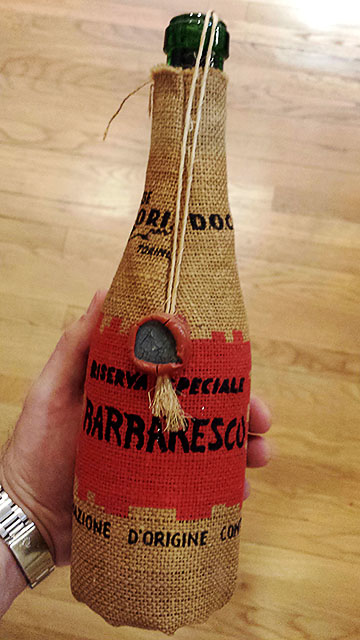
Today I would like to focus on a bottle that we opened that night and really was quite special: a 1969 Barbaresco! That’s right, as in 44 years old! More specifically, it was a bottle of Marchese VilladoriaBarbaresco Riserva Speciale 1969 DOC ($22 for current vintages).

The bottle had been given to me a while ago by my father, who had forgotten all about it and recently “re-discovered” it in his own cellar. Clearly, with all those years of aging, much could have gone wrong, like the cork could have gone bad (which would mean an oxidized wine) or simply it could have been corked. But still… worth a shot, right?

The Bottom Line

Overall, I very much enjoyed tasting such an evolved Barbaresco: it has been the longest-aged wine I have ever had and it has been a pleasure to the eye, the nose and the mouth. Regarding the quality of the wine itself, I cannot vouch for the contemporary vintages of Villadoria’s Barbaresco, as this was the first bottle I had from such producer, who is a little bit out of the limelight. But there is no doubt that that 1969 Barbaresco held his own: sure, the bouquet could ideally have been a little more complex, but hey – today you can buy a bottle for $22 (granted, I am not sure how much it went for back then): what more do you want for that kind of money? 😉

Rating: Very Good, considering the excellent QPR Very Good – $$

(Explanation of our Rating and Pricing Systems)

If you are interested, let’s now briefly talk about Barbaresco and the grape Barbaresco is made from, which is Nebbiolo.

About the Appellation

Barbaresco is a wine that is made in the northern Italian region of Piemonte in an appellation that earned DOC status in 1966 and was then “upgraded” to the top DOCG status in 1980. The appellation encompasses a small area in the vicinities of the town of Cuneo comprising three smaller towns (Barbaresco, Neive and Treiso) and a village named San Rocco Senodelvio. The regulations applicable to the  appellation require that Barbaresco be exclusively made from Nebbiolo grapes grown in that area and that the wine:

(i) be barrel-aged for a minimum of 26 months (at least 9 of which in wood barrels) plus an additional 10 months in bottle for “plain” Barbaresco wines; or

(ii) be barrel-aged for a minimum of 50 months (at least 9 of which in wood barrels) plus an additional 10 months in bottle for Barbaresco Riserva wines.

About the Grape

A few notions about Nebbiolo, without a doubt Piemonte’s most world-famous grape variety. Researchers have recently been able to trace back the origins of (or at least the first documented reference to) Nebbiolo to 1266, at which time the grape was called Nibiol. This makes Nebbiolo one of the oldest grape varieties in Piemonte. While Nebbiolo is definitely an Italian indigenous variety, doubts still remain as to whether it originated from Piemonte or Valtellina (a mountainous district in the neighboring region of Lombardia, where Nebbiolo is still grown nowadays and locally known as Chiavennasca).

The name Nebbiolo comes from the Italian word “nebbia” (fog) – some say because of the fog that in late Fall generally enshrines Piemonte’s hills where Nebbiolo is grown. Nowadays, three main different Nebbiolo clones have been identified: (i) Nebbiolo Lampia; (ii) Nebbiolo Michet; and (iii) Nebbiolo Rose’. Interestingly enough, however, DNA profiling has shown that, while Lampia and Michet have identical DNA profiles, Rose’ does not share the same profile, which has recently led to consider Nebbiolo Rose’ a different grape variety altogether rather than a clone of Nebbiolo.

Villadoria, Barbaresco Riserva Speciale 1969 DOC

Nebbiolo is a late-ripening, very finicky variety in terms of the terroir it requires to produce quality wine, which means that Nebbiolo successfully grows only in very few places on the entire earth – Piemonte and Valtellina sure being two of them, along with certain of California’s AVA’s. Nebbiolo grapes generally have robust tannins and high acidity, which make it a variety that is very suitable for long-term aging. In Italy, Nebbiolo’s best expressions are in varietal wines such as Barolo and Barbaresco in Piemonte or Valtellina Superiore and Sforzato della Valtellina in Lombardia’s Valtellina district (all of them being DOCG appellations).

(Note: information on the grape variety taken from Wine Grapes, by Robinson-Harding-Vouillamoz, Allen Lane 2012)

Our Detailed Review

Now on to the wine we had last week: it was a Marchese Villadoria, Barbaresco Riserva Speciale 1969 DOC (13.5% ABV). Current vintages of this wine retail in the US for about $22.

If you have read the preceding notions about the Barbaresco appellation, it will not come as a surprise to you that our bottle was designated “DOC” instead of the current DOCG designation which, back in 1969, did not exist yet.

Two peculiar features of our bottle (that I had never observed in any other bottle before) were that it came completely wrapped in coarse cloth to which one end of a string had been affixed using sealing wax while the other end had been stapled to the cork! The two snapshots to the right should give you an idea of what I am talking about. While I can only offer conjectures as to why the producer went through the hassle of doing all that, I would imagine that the idea behind the cloth wrap was to protect the wine from light exposure (and therefore harmful UV rays) while the string connecting the cork to the cloth was maybe an anti-tampering device of sort?

I opened the bottle and decanted it about two and a half hours before the time we would likely taste it, following a proper handling and decanting procedure codified by the Italian Sommelier Association (I may write a post about it at some point). Fortunately, it looked like the cork had held up well throughout all those years, so that was a promising sign. Thanks to proper cellaring and handling, the wine poured clear into the decanter up to almost the end of the bottle, when unsurprisingly some sediment showed up.

Villadoria, Barbaresco Riserva Speciale 1969 DOCFast forward two and a half hours (during which we managed to keep ourselves busy with appetizers, a pasta course and plenty of other wine) and the time had come to pour the Barbaresco into our glasses and taste it!

As usual, I will use a simplified version of the ISA wine tasting protocol that we described in a previous post: should you have doubts as to any of the terms used below please refer to that post for a refresher.

In the glass, the wine was orange red in color, as expected after all those years of aging, and thick.

On the nose, it was intense, quite complex and fine, with aromas of spirited cherries, licorice, rose, vanilla and ethereal notes. The bouquet was not very broad, but it was elegant.

On the palate, our wine was dry, warm and smooth; quite fresh, quite tannic and quite tasty. If you are familiar with the ISA wine tasting protocol you might notice that our wine was a little shifted toward the “softness” side and therefore you might wonder whether it can still be classified as balanced. Well, considering that it is only natural that, after 44 years of aging, tannins and acidity recede a bit and that for a structured red wine being a little slanted toward the softness side is certainly not a “sin”, by all means I will go ahead and call it balanced. In terms of structure, our wine was between medium and full-bodied and its mouth-flavors were intense and fine, showing a pretty good correspondence with the wine bouquet: I picked up strawberries, cherries, vanilla and licorice. Finally, the finish of the wine was quite long and its evolutionary state was mature.

WiNews: Elena Walch’s Pinot Noir “Ludwig” 2010 Wins XII Italian Domestic Pinot Noir Competition

StefanoJust a quick flash to alert you about a piece of news that an Italian producer that I am fond of has been kind enough to share with me.

The 2010 vintage of the “Ludwig” Pinot Noir made by Elena Walch (the Alto Adige winery whose Riesling Castel Ringberg we have recently reviewed) is the fresh winner of the XII Italian Domestic Pinot Noir Competition, which is really exciting news as well as a tangible recognition for Walch’s commitment to quality production.

I hope I will be able to lay my hands on a bottle of the 2010 Ludwig soon so I can publish a full review!

An Overview of the 2011 Vintage Port Tour, NYC, and the Basics About Port

Last week I felt inspired by reading Anatoli’s wonderful accounts of his recent trip to Portugal on his excellent wine blog, Talk-A-Vino. Beside telling us all about the restaurants he dined at, he of course shared plenty of information about the wines he tasted over there, including of course Portugal’s world-famous fortified wine, Porto. And finally, today by total coincidence, he published a wonderful, extremely thorough post on Port, with all you need to know about it – had I known in advance, I would have spared myself the work to research and write an overview of Port altogether (see below)! 🙂 However, since by the time Anatoli published his post my Port write-up was all done already, I am going to publish it nonetheless, and then if you want to dig deeper into Port, please refer to Anatoli’s post of today!

Anyway, in order to remotely taste my own share of Portugal, I enthusiastically accepted the invitation to participate in the 2011 Vintage Port Tour that was held in New York City last week to offer to the press and the trade a preview tasting of Vintage Port’s latest production from the prestigious collection of brands belonging to the Symington Family.

Quoting directly from the literature that was handed to participants at check in, “the Symingtons, of Scottish, English and Portuguese descent, have been Port producers for five generations since 1882”. The Symingtons own four historic Port brands: Graham’s, Cockburn’s, Dow’s and Warre’s, plus the other three brands Quinta do Vesuvio, Smith Woodhouse and Quinta de Roriz. All such seven brands were represented at the 2011 Vintage Port Tour.

According to the brochure we were provided, the brands controlled by the Symingtons account for over one third of all premium Port and, with 965 HA (2,385 acres) of vineyards, the family is the largest vineyard owner in the Douro Valley. Also, Dow’s 2007 Vintage Port is so far the only Port in the XXI century to have been awarded a perfect 100 point score by Wine Spectator.

Before getting to the chase and telling you which ones among the Ports that I tasted at the event impressed me most, let’s take a look at a few basic facts about Port.

As we said, Port is a fortified wine, which means a wine in which the regular alcoholic fermentation process gets interrupted about half way through the conversion of the grape sugars into alcohol, CO2 and heat by the addition of a neutral grape spirit (a grape brandy). Port is made from a blend of different grape varieties, that must be included in an official list of authorized grapes that was compiled by the Portuguese government in 1940.  The main grape varieties that are used in the making of red Port are: Touriga Nacional, Touriga Franca, Tinta Roriz, Tinta Barroca and Tinto Cão.

Although at some point I will publish a post that explains the wine production process more in detail, here suffice it to say that one of the inhibitors of the yeast fermenting action is the presence in the must of alcohol in excess of about 16/17% VOL, which is why adding a spirit to a fermenting must blocks the fermentation process. The result of this addition is two-fold: on the one hand, it quite obviously increases the ABV of the resulting wine (generally, to about 19% to 21% VOL; hence the name “fortified wine”); on the other hand, by interrupting the conversion of grape sugars into alcohol, it leaves a considerable amount of residual sugar in the wine, which therefore tastes sweeter.

After being fortified, Port is moved into steel vats and/or oak or other wood casks for aging: depending on the intended type of Port, the aging process can be relatively short or even extremely long, with some of the finest Ports aging up to a century! After aging in casks, the wine gets bottled for consumption or for more in-bottle aging.

There are many different styles of Port, including White Port that is made from different, white-berried varieties. However, speaking of “regular” Port made from black-berried grape varieties, there are three main styles that are worth mentioning:

(i) Ruby: this is the most basic, simple style – it is a blend of different vintages that have aged for a relatively short period of time (generally, 3 to 6 years) in steel vats and/or wood casks and are meant for immediate consumption;

(ii) Tawny: this is a more complex, developed style of Port – it gets to age in wood casks for a very long time (essentially, 4 years or longer, with some Tawnies called Age-Designated that bear on the label an indication of how long they aged, ranging from 10 to 40 years), thus acquiring complex tertiary aromas and turning tawny in color due to the oxidation process induced by the lengthy in-cask aging;

(iii) Vintage Port: this is the king of Ports, which is made exclusively from grapes from a single vintage and only in the best years. After a minimum aging of 2 years in steel vats and/or wood casks, they are bottled unfiltered (which means that they will likely develop sediment in the bottle) and are meant for decades of in-bottle aging before being enjoyed at their best.

With all of this said, let’s now talk about my experience at the 2011 Vintage Port Tour.

The event was compact and well organized, with one table for each brand and each brand (except only Quinta de Roriz, which only had the 2011 vintage) offering for tasting both their own 2011 Vintage Port and an older vintage for comparison. In the exclusive interest of adequately covering the event, I got to taste *all* of the exhibited Vintage Ports: I know, when the going gets tough, the tough get going! 😉 Broadly speaking, all the Ports that were showcased at the event were very good, although some of them had a different style than others, clearly also because of the different aging of the older vintages made available for tasting.

Here below I will point out those that were my own personal favorites (with their approximate retail prices in the US) among the 13 Vintage Ports that I tasted, along with my tasting notes for each of them:

(1) 2011 Vintage:

Quinta de Roriz (about $60): purple in color; intense and complex aromatic palette, with a bouquet of caramel, black cherry, rose, licorice, raspberry, black pepper and tobacco; sensuous in the mouth, with intense flavors of plum, raspberry, licorice, dark chocolate, fruit candy and vanilla; warm, smooth, well balanced and long. Rating: Spectacular, with Excellent QPR Spectacular

Graham’s (about $90): purple in color; fairly complex bouquet (it needs aging to develop) of blackberry, black cherry, licorice and tobacco; wonderful in the mouth: intense, with excellent flavor-scent correspondence, plus additional flavors of dark chocolate and vanilla; warm, smooth, well balanced and very long. Rating: Outstanding Outstanding

Dow’s (about $80): purple in color; fairly narrow aromatic palette (it needs aging to develop) with aromas of plum, blackberry and licorice; very good in the mouth, with flavors of licorice, dark chocolate and spirited black cherry; quite warm, super smooth, balanced and quite long. Rating: Good to Very Good Good to Very Good

Smith Woodhouse (about $55): purple in color; fairly narrow bouquet (it needs aging to develop) of fruit candy, licorice, ethereal notes; good corresponding mouth flavors; warm, smooth, balanced and long. Rating: Good Good

(2) Older Vintages:

Quinta do Vesuvio 1994 (about $90): garnet in color; with a not very broad and yet elegant aromatic palette of wild berries, wild strawberries, violet and chocolate; but the little bit that it lacked on the nose was more than compensated on the palate, with intense and outstanding mouth flavors of raspberry jam, licorice, tobacco and dark chocolate; warm, smooth, balanced and long. Rating: Outstanding Outstanding

Smith Woodhouse 2007 (about $55): purple in color; elegant and complex bouquet of black cherry, spirited wild cherry, raspberry, rose, tobacco, sandalwood and black pepper; wonderful in the mouth, with pleasing flavors of spirited wild cherry, dark chocolate, rhubarb, licorice and tobacco; warm, smooth and long. Rating: Outstanding, with Excellent QPR Outstanding

Dow’s 1985 (about $95): garnet in color; intense, unique and complex bouquet very focused on tertiary aromas with tobacco, gunpowder, black pepper, raisin and a hint of wild cherries; intense, luscious mouth flavors of spirited raspberry and wild cherry, Amarena Fabbri (if you guys know what I am talking about!), licorice and dark chocolate; warm, smooth, well balanced and long. Rating: Outstanding Outstanding

Graham’s 1980 (about $105): garnet in color with orange hints; to be honest, given its aging, I would have expected a broader aromatic palette: I picked up aromas of tobacco, black pepper, licorice, plum and wild cherry; very good and more expressive in the mouth, with flavors of raspberry candy, licorice, vanilla and spirited cherry; warm, smooth, balanced and long. Rating: Very Good Very Good

Cockburn’s 2000 (about $70): ruby in color with garnet hints; intense nose with a fairly narrow bouquet of cherry, strawberry, plum and licorice; in the mouth, sweeter than the others, with pleasing flavors of licorice, vanilla, cherry jam, dark chocolate and tobacco; warm, smooth, balanced and quite long. Rating: Very Good Very Good

That’s all for today. As always, let me know how you liked it in case you happened to enjoy one of the Ports that I reviewed!

European Wine Wars: after Tocai, it is the time of Prosek… and Teran

The international press, Dr Vino and several other sources all reported yesterday that, as a result of Croatia’s imminent accession to the European Union at the end of a 10-year long process, Croatian wineries will be required to stop using the name “Prosek” to identify a traditional local sweet raisin wine that has been made for centuries mainly in the Dalmatia region from local grape varieties such as Bogdanuša, Maraština, Plavac mali and Pošip.

The reason for the requirement is that, according to EU officials, the name of the Croatian wine is too similar to Italy’s Prosecco and therefore it might be confusing to consumers. And this in spite of Prosek and Prosecco being two very different wines, made out of different grapes (Glera for Prosecco and the Croatian grape varieties mentioned above for Prosek) and in different styles (Prosecco is mostly sparkling and is not a sweet wine, while Prosek is a still, sweet raisin wine).

Unsurprisingly, the EU requirement has caused considerable commotion in the Croatian wine world and some producers indicated that the Croatian authorities are even considering initiating a legal dispute to challenge the EU requirement.

However, the chances that Croatia be allowed to retain its right to use the name “Prosek” for their wine after joining the EU are very slim, as the case is virtually identical to the one that a few years ago prevented Italian winemakers (mostly in Veneto and Friuli) from using the word “Tocai” to identify a local dry wine that had been made for centuries from the homonymous grape variety because the name was too similar to Hungary’s Tokaji, a famous local sweet raisin wine made from Furmint grapes (for more information about the Tokaji/Tocai dispute, please refer to my previous post over at Flora’s Table that dealt with it).

But, as the saying goes, bad news never comes alone, at least for Croatia, that is. Beside the Prosek debacle, Croatia has to face a claim made by neighboring Slovenia that Croatia should also be prevented from using the word “Teran” to identify a red wine that is made in Italy’s region of Friuli, in Slovenia and in Croatia from the grape variety known as Terrano or Teran in Croatia. Slovenia’s claim is based on the fact that the EU granted Slovenia a protected designation of origin for Terrano grapes grown in the Slovenian region of Kras. The European Commission very recently decided the Teran dispute in favor of Slovenia, with a decision that will likely also negatively affect Italian Terrano producers.

Even in this case, the decision gives rise to many doubts, as Terrano is a very ancient variety (the oldest references date back to 1340 in Slovenia) which originated from the Karst plateau, an area that is shared among Italy (Friuli), Slovenia and Croatia (Istria). DNA profiling has also proved that Terrano is identical to Refosco d’Istria (a Croatian variety) and Refosk in Slovenia (information on the Terrano grape variety, cit. Wine Grapes, by Robinson-Harding-Vouillamoz, HarperCollins 2012).

Given the above, which side of the fray are you on?

Wine Review: Coppo, Barbera d’Asti “Pomorosso” 2006 DOCG

Coppo, Barbera d'Asti "Pomorosso" DOCG

Today we are going to talk about Barbera, and more specifically about a bottle of Barbera that I recently had the opportunity to taste and that has definitely impressed me.

The Bottom Line

Overall, I found Coppo, Barbera d’Asti “Pomorosso” 2006 DOCG ($55) to be one of the best Barbera’s that I have had so far, a wine that is a pleasure to drink and savor sip after sip – a perfect companion for a red meat dinner.

Rating: Outstanding and definitely Recommended Outstanding – $$$

(Explanation of our Rating and Pricing Systems)

About the Grape and the Appellations

As you may know, Barbera is a grape variety that is indigenous to the Monferrato district in the north Italian region of Piemonte. The first written references to Barbera date back to the end of the XVIII century. Nowadays it is the most widespread grape variety in Piemonte, from which wines are made that display lively acidity and a deep ruby color. (Note: information on the grape variety taken from Wine Grapes, by Robinson-Harding-Vouillamoz, Allen Lane 2012)

In Piemonte, Barbera is the main grape of four different appellations:

  • Barbera d’Asti DOCG (encompassing an area surrounding the towns of Asti and Alessandria, and requiring the use of 90% or more of Barbera grapes and a minimum aging of 4 months for the base version or 14 months, of which at least 6 months in wood barrels for the “Superiore” version);
  • Barbera del Monferrato Superiore DOCG (encompassing the Monferrato district near Alessandria and an area near the town of Asti, requiring the use of 85% or more of Barbera grapes and a minimum aging of 14 months, of which at least 6 months in wood barrels)
  • Barbera d’Alba DOC (encompassing an area in the vicinities of the town of Cuneo and requiring the use of 85% or more of Barbera grapes)
  • Barbera del Monferrato DOC (encompassing the Monferrato district near Alessandria and an area near the town of Asti, requiring the use of 85% or more of Barbera grapes)

Given its wide distribution, Barbera is produced in a variety of styles, ranging from simpler, “younger” versions that are only aged in steel vats to more structured and evolved versions that are aged in oak barrels, including sometimes barrique casks.

Our Detailed Review

The wine that we are going to review today is Coppo, Barbera d’Asti “Pomorosso” 2006 DOCG.

It falls within the category of the more complex Barbera’s: it is made out of 100% Barbera grapes grown in the 56 HA Coppo estate near the town of Canelli, near Asti (Piemonte). It has 13.5% ABV and is aged for 14 months in barrique casks. In the U.S., it retails for about $55.

Let me say outright that the Pomorosso is a great, structured red wine, that is suitable for several years of aging (the 2006 vintage that I had was a symphony of aromas, flavors and balance).

But let’s go more in the specifics through a technical wine tasting. As usual, I will use a simplified version of the ISA wine tasting protocol that we described in a previous post: should you have doubts as to any of the terms used below please refer to that post for a refresher.

In the glass, the 2006 Pomorosso poured ruby red and thick.

On the nose, its bouquet was intense, complex and fine with a sequence of aromas of violet, plums, blueberries, cherries, tobacco and chocolate.

In the mouth, the Pomorosso was dry, warm, smooth; fresh, tannic and tasty. It was a full-bodied, perfectly balanced wine and its mouth flavors were intense and fine, showing good correspondence with its bouquet as well as a perfect integration of the oaky notes released by its barrique aging. Its tannins, although very discernible, were also equally gentle and supple, with their delicate astringency counterbalancing the wine’s lively acidity. The Pomorosso had a long finish, with its flavors pleasantly lingering in the mouth for a very long time. Its evolutionary state in my view was mature, meaning that, with 7 years of aging under its belt, it was at or approaching its peak in terms of quality, making me think that additional aging, while certainly possible, would not likely improve its quality any further.

As usual, if you have tasted Pomorosso before, let me know how you liked it!

Wine Review: Donnafugat​a, Contessa Entellina Bianco “Chiarandà” 2009 DOC

Donnafugata, Contessa Entellina Bianco "Chiarandà" 2009 DOCOn a previous post over at Flora’s Table, we have talked about how Chardonnay is successfully grown in various regions throughout Italy, literally from Valle d’Aosta in the north to Sicily in the south, and how several Italian wineries make some excellent wines from such a widely cultivated international variety.

Very broadly speaking, I have to say I rather review and promote wines made out of Italian indigenous grape varieties, essentially because they differentiate themselves from the ubiquitous international varieties, because there are many excellent ones and because, by so doing, I think I am giving my small contribution to preserve biodiversity also in the vineyard (a wine world populated only by Chardonnays, Sauvignons, Pinots and Merlots would be a pretty boring one, if you ask me!) and to make certain Italian wines better known outside of Italy.

However, it is undeniable that certain international varieties have been successfully grown in Italy and that excellent, elegant wines are made out of such grapes which oftentimes are not very well known to the general public.

So today’s review is of a Sicilian Chardonnay that I very much like and that illustrates the point that Chardonnay is an extremely versatile variety that can give excellent results even in warmer climates like Sicily’s.

The wine I am talking about is Donnafugata‘s Contessa Entellina Bianco “Chiarandà” DOC 2009 ($35).

The Bottom Line

Overall, I very much enjoyed the Chiarandà, which I found to be a very elegant and “clean” Chardonnay, in which its oaky notes are not dominant but rather very well integrated such that they add to (instead of overwhelm) its pleasantly fruity and mineral flavor palette.

Rating: Very Good and definitely Recommended Very Good – $$

(Explanation of our Rating and Pricing Systems)

About the Producer and the Wine

Founded in 1983, Donnafugata is one of the top Sicilian wineries that contributed to the “Sicilian wine revolution” by contributing passion, investments and professionalism to raise the profile of Sicilian winemaking and produce top quality wines.

Their Chiarandà is a 100% Chardonnay wine made from the grapes grown in Donnafugata’s vineyards in a hilly region of the Contessa Entellina DOC appellation near the homonymous town (about halfway between Marsala and Palermo), in the western part of Sicily, at an altitude between 200 and 600 mt (650 to 1,950 ft) above sea level. The vineyards from which Chiarandà is made achieve an excellent density of 4,500 to 6,000 vines/HA and the vine training system used is spurred cordon.

The wine has 13% ABV and is fermented in stainless steel vats and then undergoes 6 months of aging on its lees in a mix of concrete and oak vessels of various sizes plus 24 additional months of in-bottle fining. Given its lively acidity (see, tasting notes below) it is a wine with great aging potential, in the 10 year range. In the US, the Chiarandà retails for about $35.

Our Detailed Review

Let’s now get down to the actual review of the 2009 Chiarandà that I had. As usual, I will use a simplified version of the ISA wine tasting protocol that we described in a previous post: should you have doubts as to any of the terms used below please refer to that post for a refresher.

In the glass, it is a beautiful golden yellow in color, and thick when swirled.

On the nose, its bouquet is intense, fine and definitely complex, with an array of enticing aromas of peach, tangerine, butter, vanilla, herbs (sage), mineral and iodine notes.

In the mouth, the wine is dry, warm, smooth; with lively acidity and pronounced minerality. It is medium to full-bodied with good structure and very balanced, with intense and fine mouth flavors reminiscent of its aromatic palette and a long finish, with those flavors pleasantly lingering in the mouth long after gulping down a sip. Its evolutionary state was ready (meaning, fine to drink now, but can take two or three more years of aging without compromising its qualities).

As usual, if you have tasted Chiarandà before, let me know how you liked it.

Wine Review: Two Italian Dry Rieslings Made by Elena Walch and Abbazia di Novacella

I am writing this review with some trepidation as I know that most likely it will be read by fellow wine blogger and friend Oliver who authors the very enjoyable and educational blog The Winegetter (if you do not follow him already, I sure think you should!) and, most importantly, is definitely an authority when it comes to Rieslings! I think I know that his preference goes to German sweeter Rieslings, while the two wines that I am going to review today are both Italian dry Rieslings from the Alto Adige area of the Trentino Alto Adige region.

And now on to the reviews of the two wines that I tried. As usual, I will use a simplified version of the ISA wine tasting protocol that we described in a previous post: should you have doubts as to any of the terms used below please refer to that post for a refresher.

1. Elena Walch, Alto Adige Riesling “Castel Ringberg” 2010 DOC (12.5% ABV; ab. €15 in Italy)

Elena Walch, Alto Adige Riesling "Castel Ringberg" 2010 DOCElena Walch is one of my favorite producers of white wines from Alto Adige and, let me say it upfront, her Castel Ringberg did not disappoint me!

This is a single vineyard wine made of 100% Riesling grapes grown in the Castel Ringberg vineyard near the town of Caldaro. It was fermented and rested on its lees exclusively in stainless steel tanks. Unfortunately, although other Elena Walch’s wines are available in the US, this wine does not appear to be, which is a shame.

In the glass, the wine was straw yellow and quite thick.

On the nose, its bouquet was intense, complex and fine, with pleasant aromas of petrol (very discernible), followed by grapefruit, citrus, pear, minerals and herbs.

In the mouth, it was dry, quite warm, smooth; fresh and tasty, with medium body. The wine was balanced, with intense and fine mouth flavors that trailed the wine’s bouquet. It had a long finish and it was ready in terms of its evolutionary state.

Overall, a very pleasant, fresh dry Riesling with a captivating bouquet.

Rating: Very Good Very Good – €

(Explanation of our Rating and Pricing Systems)

2. Abbazia di Novacella, Alto Adige Valle Isarco Riesling “Praepositus” 2009 DOC (13% ABV; ab. $35 in the US)

Abbazia di Novacella, Alto Adige Valle Isarco Riesling "Praepositus" 2009 DOCThis wine is part of Abbazia di Novacella’s premium line “Praepositus”. It is made of 100% Riesling grapes, grown in vineyards with an outstanding density of 6,000 vines/HA and harvested for 2/3 in October and 1/3 in December (late harvest). It was fermented in stainless steel vats and aged in bottle for 9 months before being released to the market.

In the glass, the wine was straw yellow with greenish hints, quite thick.

On the nose, its bouquet was intense, quite complex and fine, with aromas of petroleum, grapefruit, lime and Granny Smith apple.

In the mouth, it was dry, quite warm, quite smooth; fresh and tasty, medium-bodied. The wine was balanced, with intense and fine mouth flavors. It had a long finish and was ready as to its evolutionary state.

Overall, another very pleasant dry Riesling, although it personally impressed me a touch less than the Castel Ringberg, especially due to its narrower bouquet.

Rating: Good to Very Good Good to Very Good – $$

(Explanation of our Rating and Pricing Systems)

At any rate, two Italian dry Rieslings that I would certainly recommend and that I am pretty sure would not disappoint you.

That’s all for today! As always, if you have tasted either one (or both!) of these wines, make sure to share your thoughts by leaving a comment below!

Wine Review: Tenuta San Guido, Bolgheri Sassicaia 1995 DOC… and the History of “Super Tuscans”

Tenuta San Guido, Bolgheri Sassicaia DOCLast month, a friend of mine invited me and a common friend to dinner at his place. At the time of the main course, he showed us what he had decided to share with us: not only was it a bottle of Sassicaia, but it was a 1995 vintage!

The Bottom Line

Tenuta San GuidoBolgheri Sassicaia “Sassicaia” 1995 DOC ($150): let me say it right from the outset – WOW! Although I had had Sassicaia before, having the opportunity to taste a bottle having 18 years of in-bottle aging under the belt was beyond fantastic.

Rating for this excellent wine: Spectacular Spectacular – $$$$$

(Explanation of our Rating and Pricing Systems)

Before we get into the details of that almost mystic 🙂 experience, let’s take a closer look at the notion of “Super Tuscans” and let’s delve into some history about the archetype of all Super Tuscans, that is in fact Sassicaia.

History of the “Super Tuscans”

If you pardon my quoting my own Wine Glossary, the term “Super Tuscans” indicates certain Bordeaux-style red wines that have been made in Tuscany, since the early Seventies by winemakers who wanted to experiment and veer off traditional Tuscan winemaking styles, often utilizing international grape varieties (such as Cabernet Sauvignon, Merlot and Syrah) as opposed to traditional local ones (such as Sangiovese). In order to enjoy such freedom to experiment, those winemakers produced their Super Tuscans outside the strict rules of the most prestigious Italian appellations (DOC and, more recently, DOCG), which resulted in those premium wines to be initially labeled as “table wines” and more recently as IGT wines (a more loosely regulated Italian appellation) in spite of their quality and substantial price tags. The “grandfather” of the Super Tuscans is Sassicaia, whose notoriety and quality led to the creation in 1994 of the DOC Bolgheri which includes a Sassicaia sub-zone, thus making Sassicaia the first Super Tuscan to enjoy DOC appellation status.

Although it appears that nobody knows for sure who coined the incredibly successful moniker “Super Tuscans“, some believe that it was created by Burton Anderson, a wine reviewer who covered Italy for Wine Spectator in the 1980s. What is certain though is that it very quickly became the name by which that kind of wines were internationally identified.

As we said, the wine that started the Super Tuscans phenomenon was Sassicaia. This fabled wine was created by the Marquis Mario Incisa della Rocchetta, who first completed his agrarian studies in Pisa in the Twenties and then, thanks to his being a family friend of the Baron de Rothschild (the owner of Chateau Lafite Rothschild, one of Bordeaux’s Premier Crus), he had an opportunity to visit the famous estate and study the terroir where the grape vines that produced one of the world’s finest reds grew. Incisa then went on to acquire a few rootings of 50-year-old Cabernet Sauvignon and Cabernet Franc vines from an estate near Pisa owned by the Dukes Salviati to transplant them in 1942 at the family’s San Guido estate in Bolgheri, Tuscany.

His decision to transplant those vines in an area of Tuscany that up until then had never known any serious viticulture was due to the resemblance of the soil of that area (“Sassicaia” alludes to the Italian word “sasso” meaning stone, and seems to refer to a pebbled terrain) with that of the Graves (which in French means gravel) on the Left Bank of the Garonne river near Bordeaux, where another Premier Cru, Chateau Haut-Brion, is located.

At first, Sassicaia had not enthused the Marquis (nor his employees working the vineyards, who supposedly called the wine, with typical Tuscan coarseness, “good only for the pigs“): this convinced Incisa to keep the first “experimental” vintages of the wine for personal consumption only. However, Incisa soon realized that, after a few years of aging, that same wine that had not convinced him initially would turn into a much better wine.

This realization gave him the incentive to keep at it, making several improvements, including being the first one to import small barrique oak barrels into Italy for aging Sassicaia and cutting a deal with wine producer Antinori (Piero Antinori was Incisa’s nephew) for the future distribution of Sassicaia, as a result of which arrangements Antinori sent their well-known enologist Giacomo Tachis to the San Guido estate to work on Sassicaia. Tachis refined the blend, the wine making process and the cellaring of the wine until, in 1968, the first “official” vintage of Sassicaia hit the market with just 3,000 bottles and initially it did not really rock the wine world…

The turning point was 1974, when Luigi Veronelli, a famous Italian food and wine writer, published a rave review of the 1968 Sassicaia. International acclaim for Sassicaia came not long after that, in 1978, when during a worldwide blind tasting of 33 Cabernet Sauvignon-based wines organized in London by Decanter Magazine, the 1975 Sassicaia took the top spot, ahead of all the prestigious Bordeaux reds, thus marking the beginning of the Sassicaia success story. Later, Robert Parker awarded Sassicaia’s 1985 vintage (universally considered the best yet) a perfect 100 point score and James Suckling of Wine Spectator even compared it to the 1985 Mouton-Rothschild, admitting Sassicaia into the Olympus of the world’s best wines.

(Credits for most of the information that I researched as a basis for this Sassicaia history: Decanter; L’Acqua Buona; Sassicaia.it; and Sassicaia.com)

About the Estate, the Appellation and the Producer

For detailed information about Tenuta San Guido and the “Bolgheri Sassicaia” appellation, please refer to this post.

I would definitely recommend that you also check out this other post featuring an interesting interview with the owner of Tenuta San Guido, Marchese Nicolo’ Incisa della Rocchetta.

Our Detailed Review

Now, on to my tasting notes for the Sassicaia 1995 that I had the pleasure of drinking! Considering the high profile of this wine, I am going to follow all of the steps of the ISA wine tasting protocol in my review (for more information, see my previous post about such protocol and its various steps).

Tenuta San Guido, Bolgheri Sassicaia “Sassicaia” 1995 DOC is a blend of 85% Cabernet Sauvignon and 15% Cabernet Franc, with just 12% ABV. It underwent between 14 and 18 days of maceration and malolactic fermentation. It aged 24 months in barrique casks, part new and part previously utilized. The Sassicaia 1995 vintage retails in the US at about $150.

For more information about the grape varieties Sassicaia is made from, please refer to our Grape Variety Archive.

In the glass it was clear, ruby red with garnet hints, thick.

The bouquet was intense, complex and fine, with aromas of black cherry, blackberry, sweet tobacco, cocoa, vanilla, soil and a graphite hint.

In the mouth it was dry, warm, silky smooth; quite fresh, gently tannic, quite mineral; medium-bodied, perfectly balanced, intense in its mouth flavors (with very good correlation to the bouquet), with a long finish, of excellent quality; mature and definitely harmonious.

Clicks & Corks is Foodista’s Featured Drink Blog of the Day!


Foodista

Looks like the Easter Bunny came one day early here – something happened today that I found pretty cool and that I want to share with all of you: a couple of hours ago I received an email from an editor of Foodista – the cooking encyclopedia and food news source informing me that Clicks & Corks has been picked as Foodista’s Featured Drink Blog of the Day!

My post An Overview of the ISA Wine Pairing Criteria will be featured on the Foodista home page today (on the sidebar on the right) and will be included in their Drink Blog of the Day Archive.

I am excited and honored that this new blog has been picked by Foodista’s editors and featured on the Web site of that thriving food lovers’ community.

If you are interested, go check them out at www.foodista.com

Happy Easter everyone!

Foodista Drink Blog of the Day Badge

A Horizontal Tasting of Eight 2008 French Pinot Noirs

In January I was in Milan and I attended another wine tasting event organized by the local chapter of the Italian Sommelier Association: whenever I can, I participate in these events because they are very well organized and the association often signs up producers or interesting personalities in the wine world, which make these gatherings entertaining and always educational.

This time the event revolved around an international grape variety and a wine that is the bread and butter of fellow wine blogger Jeff, AKA the drunken cyclist: if you know Jeff and follow his excellent and entertaining wine blog (and if you do not, I think you should) you know that I refer to Pinot Noir, a wine/grape variety of which Jeff is definitely an expert. On the contrary, I am no expert of Pinot Noir, although I like good Pinot Noirs from Burgundy, the US and Italy (Alto Adige) and I particularly like the grape variety in the context of a good Champagne or Classic Method sparkling wine such as a good Franciacorta. If Jeff reads this post, he may weigh in and share his thoughts on the subject.

Anyway, the guest of the event was Prof. Moio, an Italian agronomy professor who spent a few years in Burgundy (admittedly the “purest” region in the world for growing Pinot Noir) to research Pinot Noir and particularly its varietal (or primary) aromas and its fermentation and aging (AKA secondary and tertiary) aromas as well as their perception by the human brain from a chemical standpoint. It goes without saying that, considering the area in which it was performed, no research would ever be complete without a fair share of practical testing in the field! 😉

Jokes aside, he presented the findings of his chemical research which, leaving aside some very technical stuff, were pretty interesting. I will pass on just a few points that I found noteworthy (you will notice a few technical wine terms – if in doubt, please check out our Wine Glossary):

  • As you may know, the main part in a grape berry where primary aromas reside is the skin (hence some white wine producers nowadays make their whites undergo a short maceration phase so as to maximize the extraction of terpenes, the molecules that are mainly responsible for the varietal aromas of wine)
  • The research conducted by Prof. Moio isolated four molecules that are present in the skins of Pinot Noir grape berries and are responsible for the main varietal aromas of Pinot Noir: these molecules release scents reminiscent of cherries and red berries
  • The release of the aromatic molecules of wine (a specific type of esters is one of the main carriers of aromas) is faster in wines with lesser structure and conversely slower in more structured wines that have a greater dry extract: this is the chemical reason why Grands Crus (which tend to be more structured and therefore release aromas at a slower pace) tend to have a longer finish than generally less concentrated Appellations Communales
  • The human brain categorizes those molecules that carry one single scent (for instance, pineapple) associating them with a sort of “image” to be able to recognize that same scent on future occasions; however, when different molecules carrying different scents (for instance, pineapple and peach) are present at the same time (as is often the case in wine) then one of two things may happen: either the brain tells the two different scents apart correctly and associates them to the correct “mental images” or it combines the two scents together generating a third and different “mental image” (say, apricot) – according to Prof. Moio, this is why different people who sniff the same glass of wine may have different perceptions of its aromas.

But enough chemistry now, and let’s move on to the best part of the event, that was obviously the wine tasting part! What we did was a horizontal tasting of eight different Pinot Noirs of the 2008 vintage, all of which came from the Cote d’Or (the best area in Burgundy for growing Pinot Noir) and specifically four of them came from Cote de Nuits (the northern part of Cote d’Or) and the other four from Cote de Beaune (the southern part of Cote d’Or).

Clearly, this tasting had no scientific meaning, especially because different winemaking styles (and therefore the secondary and tertiary aromas that derive from the winemakers’ choices) influenced the final bouquets of the wines that we got to sample. However, it was a nice way to introduce us to certain producers and appellations and to show us a sample of Pinot Noirs coming from the two subzones of the best area in France (and admittedly the world) for that kind of wine.

Jumping to the, like I said, non-scientific conclusions of our tasting experience, it was apparent from the limited sample we got to try that, among the eight wines that we tasted, Pinot Noirs made in Cote de Beaune tended to retain more distinctly the varietal aromas of Pinot Noir compared to the wines made in Cote de Nuits where secondary/tertiary aromas of fur tended to be more evident and sometimes to overwhelm the delicate red berry varietal aromas. My personal ratings of the eight wines I tasted that night seem to by and large confirm that conclusion as the Cote de Beaune wines generally fared a little better than the Cote de Nuits ones.

Just for clarity, I am by no means implying that therefore Cote de Beaune Pinot Noirs are better than Cote de Nuits Pinot Noirs (where 24 out of 25 of the Grands Crus can be found): all I am saying is that, among those 8 wines that I tasted, I happened to personally like the Cote de Beaune Pinot Noirs a little better than their Cote de Nuits counterparts (although, as you will see, I liked the Gevrey-Chambertin Pinot Noir of the Cote de Nuits quite a bit).

To finish up this long post, these are my favorite wines among the eight 2008 Pinot Noirs that we tasted (along with their approximate prices in the US):

1. Volnay, Domaine Marquis d’Angerville (Cote de Beaune) ~ $70

By far the best of the eight, at least to me, with aromas of blackcurrant, red berries, cherry, and hints of tobacco and fur. In the mouth it had good structure and it was smooth and tannic, perfectly balanced and with a long finish. Outstanding Outstanding

2. Aloxe-Corton, Domaine Tollot-Beaut “Les Vercots” Premier Cru (Cote de Beaune) ~$50

Nice bouquet of blackcurrant, red berries, licorice, hints of menthol. In the mouth it had good structure and concentration and it was noticeably tannic. Very Good Very Good

3. Gevrey-Chambertin, Domaine Trapet Pere et Fils (Cote de Nuits) ~$55

Nose of blackcurrant, redcurrant, fur, soil, tobacco, violet. Tannic and balanced in the mouth. Very Good Very Good

4. Chambolle-Musigny, Domaine Bruno Clair “Les Veroilles” (Cote de Nuits) ~$90

In the nose this wine started very subdued and it took a while for it to open up nicely into a bouquet of blackcurrant, red berries, violet, slight hint of fur. In the mouth it had plenty of structure and concentration, along with tannins that still felt quite aggressive, suggesting that it would be best left aging a while longer. Good Good

5. Chassagne-Montrachet, Domaine Bruno Colin “La Maltroie” Premier Cru (Cote de Beaune) ~$75

The nose of this wine did not convince me completely, as tertiary aromas of oak and tobacco were predominant and tended to overwhelm the primary aromas of red berries. In the mouth, however, it proved to be a solid wine, smooth, tannic and with a long finish. Good Good

I will not mention the remaining three wines we tasted as honestly I was unimpressed and I would not recommend buying them.

Have you had a chance to try any of the Pinot Noirs mentioned above? If you did, what do you think about them?

Gambero Rosso’s Tre Bicchieri NYC 2013: The Top of the Crop

With some delay, I finally got to sit down and write my report about the Gambero Rosso Tre Bicchieri 2013 Italian wine fair that took place in New York City on February 15.

As was the case for the Vinitaly/Slow Wine NYC 2013 event, I have attended the Tre Bicchieri event with fellow wine blogger and friend Anatoli who authors the excellent Talk-A-Vino wine blog, a blog that you should definitely follow if you don’t already and are into wine. Doing the walk around with Anatoli was as usual a lot of fun and very helpful and stimulating in terms of sharing views and comparing notes about the wines we tried out. Anatoli has tons of knowledge about wine and is a pleasure to talk to and learn from. You can (and in my view you should) read Anatoli’s take of the Tre Bicchieri NYC event on his blog, where he published an excellent and very thorough post about it, complete with pictures of the fair!

Regarding the logistics of the event, the check in process was smooth and quick, thanks to the mandatory online pre-registration. The premises where the event took place (the Metropolitan Pavillion in Chelsea, NYC) were perfectly adequate for the fair which, with over 170 producers showcasing their wines, was a pretty big one. While it was helpful that the organizers provided everyone with a booklet with the names of each producer and exhibited wine and a progressive number for each, the layout of the event was unfortunately quite messy.

The wineries were not organized on a region-by-region basis, as would seem to make the most sense. Rather, they were organized by importer, which in my view is not helpful as importers may (and most of the time do) represent several different producers from completely different regions and with different styles. To make things worse, the physical layout of the tasting tables was such that, even by following the numerical progression of the booklet, from 1 to 173, whenever a row ended, it proved very difficult to understand where the next table number would be, which made our navigation of the event quite frustrating. The logistics of the Slow Wine part of the Vinitaly/Slow Wine NYC 2013 event were vastly preferable.

But let’s now get down the actual wine tasting experience. As was the case for the Vinitaly/Slow Wine NYC 2013 event, I will list below what in my view was the absolute top of the crop among the many great wines that I got to taste and, in an effort not to drive you insane, I will group them by region contrary to what the organizers did! 😉 It goes without saying that the list below is far from being complete, because (i) clearly we did not get to try out all of the 173 wines on display; (ii) certain of the wines that Anatoli and I were targeting were no longer available by the time we got to the relevant tasting table; and (iii) I made an effort to be extremely selective in my choices below in order to keep this post to a manageable length, so by all means there were many more very good wines that I tasted but did not “make the cut” to be mentioned on this post.

1. ALTO ADIGE

Abbazia di Novacella, Alto Adige Valle Isarco Sylvaner “Praepositus” 2011: an elegant bouquet of pear, apple, peach and citrus graces this pleasant and tasty medium-bodied white: Very Good Very Good

2. TRENTINO

Ferrari, Trento Extra Brut Perle’ Nero 2006: this fabulous, creamy Classic Method Blanc de Noirs is 100% Pinot Noir, ages 72 months on its lees and displays complex aromas of red berries, pineapple, citrus, toast and hazelnut: Outstanding Outstanding

Ferrari, Trento Brut “Giulio Ferrari Riserva del Fondatore” 2002: just the opposite of the previous one, this phenomenal Classic Method Blanc de Blancs is 100% Chardonnay, ages 10 years (!) on its lees and blesses the taster with complex aromas of butter, vanilla, toast, citrus, apple, pineapple… WOW: Spectacular Spectacular (the only problem is its astronomical price tag!)

3. FRIULI

La Tunella, Colli Orientali del Friuli Ribolla Gialla “RJgialla” 2011: a wonderful, super-pleasant, fresh medium-bodied white made of 100% Ribolla Gialla (a grape variety indigenous to Friuli) with an elegant bouquet of apple, Mirabelle plum, peach and white flowers: Outstanding Outstanding

Livon, Collio Friulano “Manditocai” 2010: a solid 100% Friulano (AKA Tocai) white wine with nice aromas of butter, tropical fruit, citrus and minerals: Very Good Very Good

4. PIEMONTE

Chiarlo, Barbera d’Asti Superiore “Nizza La Court” 2009: a very good, smooth Barbera with aromas of raspberry, spirited cherry and rose: Very Good Very Good

Elvio Cogno, Barolo “Vigna Elena” Riserva 2006: an excellent Barolo with a complex bouquet of violet, cherry, raspberry and licorice: Very Good Very Good but will benefit from a few extra years of aging to finish taming its tannic strength

Le Piane, Boca 2008: a great 85% Nebbiolo, 15% Vespolina full-bodied red, smooth and yet with tannic strength, offering complex aromas of berries, plum, violet, black pepper and minerals: Very Good Very Good

Baudana/Vajra, Barolo “Baudana” 2004: OMG, this was a fabulous treat “off the list”, that the very kind representative of the producer treated Anatoli and me to – it was the typical example of the reason why you want to buy a good Barolo and then forget about it for many years and eventually enjoy it in all its divine expressiveness: a complex nose of cherry, plum, blackberry and coffee complements supple tannins and plenty of structure: Spectacular Spectacular

Baudana/Vajra, Barolo “Cerretta” 2008: this younger vintage from a different “clos” presented a relatively subdued nose of licorice, leather and black pepper, while in the mouth it was smooth and had already fairly gentle tannins: Very Good Very Good but will need more years of aging to be at its top

5. LOMBARDIA

Berlucchi, Franciacorta “Cellarius” Brut 2008: with 80% Chardonnay, 20% Pinot Noir and 30 months of aging on its lees, this Classic Method sparkler is one of my favorite Franciacorta’s for its QPR, although I have to say the 2008 vintage appears more constrained compared to the excellent 2006 and 2007, but still plenty good – the only problem is that for some reason this wine is not imported in the US yet, but I will give you a tip: if you happen to travel to the US from the Milan Malpensa airport, you can buy the Cellarius in the duty free zone right after clearing the security check area: definitely worth a stop if you ask me! – Anyway, the Cellarius has elegant aromas of citrus, apple, bread crust and minerals, a lively acidity and a fine and long-lasting perlage: Very Good Very Good

Ca’ del Bosco, Franciacorta Extra Brut Rose’ Cuvee “Annamaria Clementi” 2004: WOW, if at the Vinitaly/Slow Wine NYC 2013 event Anatoli and I had already enjoyed (and let me add fallen in love with) the fabulous white version of this top of the line Classic Method sparkling wine label of the Ca’ del Bosco winery (which in Italy retails at about €80 a pop), the Tre Bicchieri event gave us the opportunity to also taste the Rose’ version of it, which moves up the price tag of this phenomenal sparkler to a whopping €140 a bottle! With 100% Pinot Noir and 7 years on its lees, this wonderful wine exhibits a complex bouquet of pastry, hazelnuts, chocolate, coffee and minerals complemented by a fresh, tasty and structured mouth feel: Spectacular Spectacular

Mamete Prevostini, Valtellina Superiore Riserva 2009: there is very good value in this 100% Chiavennasca (AKA Nebbiolo) red, with a nice nose of cherry, raspberry, coffee and cocoa, as well as already gentle tannins: Very Good Very Good

6. VENETO

Masi, Amarone della Valpolicella Classico “Mazzano” 2006: definitely not an inexpensive Amarone, but in my view Masi never lets down with an excellent top of the line label with a complex bouquet of black cherry, blackberry, vanilla, leather, licorice and chocolate as well as plenty of structure and warmth in the mouth and noticeable but supple tannins: Outstanding Outstanding

Viticoltori Speri, Amarone della Valpolicella Classico “Vigneto Monte Sant’Urbano” 2008: a very good Amarone with a decent QPR and subtle aromas of wild berries, soil and coffee; in the mouth, plenty of structure coupled with gentle but noticeable tannins and a long finish: Very Good Very Good

7. LIGURIA

Cantine Lunae, Colli di Luni Vermentino “Cavagino” 2011: a very good Vermentino that is partly fermented in barrique casks  and has pleasant aromas of apricot, peach, hazelnut and mint: Outstanding Outstanding

8. TOSCANA

Poggio di Sotto, Brunello di Montalcino 2007: a wonderful Brunello with a hefty price tag, but an elegant bouquet of red berries, plum, herbs, soil and licorice, for a wine that feels warm and with noticeable but already gentle tannins in the mouth: Spectacular Spectacular

Tenuta dell’Ornellaia, Bolgheri Superiore Ornellaia 2009: a typical Bordeaux-style blend for this vintage of one of the archetypical Super Tuscans, with 52% Cabernet Sauvignon, 22% Merlot, 21% Cabernet Franc and 5% Petit Verdot – in spite of its elegant nose of wild berries, herbs, black pepper and minerals, I think opening a bottle of so fantastic a wine so early in its life is almost a sin, as it is somewhat like driving a Ferrari only in first gear… The tannins are still young and need time to harmoniously integrate: should you spend the small fortune necessary to buy a bottle of this great wine, store it properly in your cellar and leave it there for several years before drinking it, it will pay you back big time: Outstanding Outstanding

9. MARCHE 

Fazi BattagliaVerdicchio dei Castelli di Jesi Classico “San Sisto” Riserva 2009: an excellent Verdicchio with a complex bouquet of citrus, peach, pineapple, almond and minerals, smooth and tasty in the mouth and with a long finish: Outstanding Outstanding

10. UMBRIA

Castello della Sala“Cervaro della Sala” 2010: a blend of 90% Chardonnay and 10% Grechetto aged in barrique casks for 6 months for this excellent, smooth wine with fine aromas of citrus, pineapple, butter, honey and hazelnut: Outstanding Outstanding

Tabarrini, Sagrantino di Montefalco “Campo alla Cerqua” 2008: a wonderful Sagrantino with fine aromas of rose, violet, plum, soil, licorice and black pepper, which in the mouth is full-bodied, warm and with noticeable but supple tannins: Outstanding Outstanding

11. ABRUZZO

Torre dei Beati, Montepulciano d’Abruzzo “Cocciapazza” 2009: an excellent Montepulciano with aromas of cherry, wild berries, chocolate and licorice, which in the mouth is warm and has substantial but smooth tannins and plenty of structure: Very Good Very Good

12. CAMPANIA

Marisa Cuomo, Costa d’Amalfi Furore Bianco Fiorduva 2010: well, I think I have said enough about the Fiorduva in my recent wine review – with a fine bouquet of peach, apricot and Mirabelle plum, it is balanced and has a long finish, although it would benefit from one or two more years of aging before enjoying it: Outstanding Outstanding

Mastroberardino, Taurasi “Radici” 2008: a great 100% Aglianico wine with an excellent QPR and fine aromas of blackberry, blueberry, soil and black pepper; it is warm in the mouth and has abundant yet gentle tannins: Outstanding Outstanding

13. BASILICATA

Basilisco, Aglianico del Vulture “Basilisco” 2009: a fantastic Aglianico del Vulture  with a fine bouquet of cherry, herbs, soil, minerals and oaky notes, along with noticeable but gentle tannins in a full-bodied structure: Outstanding Outstanding

14. SICILIA

Cusumano, “Noa'” 2010: a blend of 40% Nero d’Avola, 30% Cabernet Sauvignon and 30% Merlot for an immediately enjoyable wine with aromas of rose, blackberry, black cherry, blueberry, graphite and cocoa, good structure and supple tannins: Very Good Very Good

Donnafugata, Contessa Entellina Rosso “Mille e Una Notte” 2008: a wonderful blend of 80% Nero d’Avola, 20% Cabernet Sauvignon, Merlot and Syrah that results in an inky wine with a fine nose of plum, spirited cherry, sweet tobacco and vanilla, plenty of structure and gentle tannins: Very Good Very Good

Donnafugata, Passito di Pantelleria “Ben Rye'” 2010: WOW, this 100% Zibibbo (AKA Moscato d’Alessandria) gem is one of my favorite dessert wines (I plan to post a full review of it later this year), always dependable and seducing, with a bouquet that goes beyond your wildest dreams with aromas of dried apricot, honey, herbs and saffron, plenty of acidity and tastiness to counter its sweetness in an enviable balance that will keep you sipping and sipping and sipping…: Spectacular Spectacular

Firriato, “Ribeca” 2010: a solid 100% Perricone (an indigenous black-berried variety) full-bodied red wine with fine aromas of cherries, red berries, herbs, soil and chocolate, as well as gentle tannins: Very Good Very Good

Graci, Etna Bianco “Quota 600” 2010: a fine 70% Carricante, 30% Catarratto volcanic white wine with a pleasant bouquet of apricot, herbs and minerals complementing a fresh, smooth and tasty mouth feel: Very Good Very Good

15. SARDEGNA

Cantina di Santadi, Carignano del Sulcis “Rocca Rubia” Riserva 2009: a fine 100% Carignano red wine with interesting aromas of raspberry, cocoa, graphite and fur that is warm, mineral and tannic in the mouth: Very Good Very Good

Wine Review: Oasi degli Angeli, “Kurni” Marche Rosso IGT 2008

Oasi degli Angeli, "Kurni" Marche Rosso IGTA few nights ago, I was in Milan (Italy) and I went to dinner with a friend of mine to an excellent restaurant that I will review in a future post.

Beside eating wonderfully, my friend and I decided to treat ourselves to a very special Italian red wine that I had noticed on the wine list, had never had before but had heard and read excellent things about: the fabled, divisive, extremely rare to find Oasi degli Angeli, “Kurni” Marche Rosso IGT ($100) from the Marche region.

The Bottom Line

Overall, the Kurni is a great wine and a very special one, one which in my view does not leave whoever is fortunate enough to get to taste it indifferent: it is a wine that forces you to pick a side, either you like its style or you do not. Personally, I liked it a lot, I am glad I got to enjoy it and I found it a pleasure to drink, worth seeking out if you come across it and want to treat yourself to something really special.

Rating: Spectacular and Special Spectacular – $$$$$

(Explanation of our Rating and Pricing Systems)

About the Estate

A few words about Kurni and the vineyards it comes from: it is a wine made of 100% Montepulciano grapes harvested from about 10 hectares only of Montepulciano grapevines trained as free-standing plants (according to the bush vine training or “alberello” style) with an average age of 65 years and an astounding density of up to 22,000 vines/HA(!) which allow an annual production of just about 6,000 bottles. The Kurni ages for 20 months in new oak barrique barrels.

About the Grape

Before we continue, let’s focus for a moment on the Montepulciano grape variety. First off, let’s dispel a possible source of confusion: although the name refers to the Montepulciano area near Siena (Tuscany), the Montepulciano grape variety is an Italian indigenous variety that originates from the Abruzzo region.  Consequently, it is important NOT to confuse Vino Nobile di Montepulciano DOCG (which is a Tuscan appellation whose wines must be made of 70% or more Sangiovese grapes) with Montepulciano d’Abruzzo DOC or Montepulciano d’Abruzzo Colline Teramane DOCG (which are two appellations from Abruzzo whose wines are required to be made out of at least, respectively, 85% or 90% Montepulciano grapes).

Montepulciano is a grape variety that is widely planted across central Italy (about 30,000 HA), especially in the regions of Abruzzo, Marche and Molise. Beside Italy, it is also grown in California, Australia and New Zealand. It is a grape variety that results in deeply colored wines with robust tannins, that are often used in blends. On account of the wide diffusion of Montepulciano grapes, the quality levels of the wines made out of them varies considerably – hence, caveat emptor: you need to know which producers to trust and buy from. (Note: information on the grape variety taken from Wine Grapes, by Robinson-Harding-Vouillamoz, Allen Lane 2012)

Our Detailed Review

But let’s get back to the wine that we are going to review in this post. Retailing in the US at about $100 a pop, the Kurni is by no means an inexpensive wine, nor is it an easy to find one, but let me say it up front in my view it is one that is worth the investment if you come across it and have the inclination to “invest” that kind of money in a bottle of wine. But let’s get down to it using a simplified version of the ISA wine tasting protocol that we described in a previous post: should you have doubts as to any of the terms used below please refer to that post for a refresher.

First off, the bottle of Kurni we had was a 2008 vintage with a whopping 15% VOL ABV, so it is no wine for the faint of heart. 😉

In the glass, the wine was ruby red and (as you may expect) thick.

The nose was intense and fine, with complex aromas of ripe cherries, raspberries, plums, roses, vanilla, sweet tobacco, licorice and cocoa.

In the mouth the wine is between dry and medium-dry (see more on this below), definitely warm and super silky smooth; fresh, with tame but very present tannins and quite tasty. The wine is full-bodied and balanced (although certainly leaning toward the “softness” side), intense in the mouth (you truly have to taste it to believe this: its concentration is incredible, it is just like an explosion of ripe, sweet red fruits and cherry jam in your mouth!), fine with corresponding mouth flavors and a long finish; its evolutionary state is ready (which means that you can certainly drink it now, but it will get even better with a few more years under the belt – if you can wait!)

As a side note to the tasting, I think it is important to underscore that a notable characteristic of a relatively young vintage of this wine (such as 2008) is the discernible mouth feel of latent sweetness of the Kurni, which (as indicated in the tasting notes) places it somewhere in between a dry a semi-dry wine. In the Italian wine aficionado world, there have been endless discussions as to whether this latent sweetness is due to fairly high residual sugar levels or instead the significant extent of smoothness and explosive fruit flavors of the wine.

In an interview, Kurni’s enologist defined his wine as a dry wine, therefore supporting the latter of the above two theories. Also, vertical tastings of several vintages of Kurni have reportedly confirmed this interpretation in that older vintages would taste drier than younger vintages (which would not be possible if the wine’s latent sweetness were due to higher residual sugars). Having said that, I think it would be helpful if Oasi degli Angeli made the official residual sugar level of the Kurni publicly available (I have not been able to find this information anywhere online), as this could put an end to the debate.

Oh and by the way: should you not trust my opinion – would you? really? 😉 the Kurni 2008 was awarded the top rating by both the ISA Duemila Vini wine guide (5 bunches) and the Gambero Rosso wine guide (3 glasses).

If you have had a bottle of Kurni before, let me know which side you are on! 🙂

An Overview of the ISA Wine Pairing Criteria

As promised a while ago to Suzanne, the gracious author of food and cooking blog apuginthekitchen, in this post I will briefly go through the core foundations of food-wine pairing, providing an overview of the main criteria conceived and recommended by the Italian Sommelier Association (ISA). This should hopefully offer readers a few guidelines that they may consider trying out the next time they will need to pair a wine with food.

Our discussion about wine pairing will utilize certain of the concepts and terminology that we have gone through in the context of our overview of the ISA wine tasting protocol: if you are not familiar with it, consider reading that post before continuing on with this one.

The first step in the wine pairing process is to assess the food you intend to pair a wine with: in so doing, you should consider (and ideally write down) which of the following characteristics are present to a noticeable extent in your food:

  • Latent sweetness (this is that sweetish feel that you perceive eating such foods as bread, pasta, rice, potatoes, carrots, certain seafood such as shrimps or prawns, most ham, bacon, etc. – note, this is NOT the full-blown sweetness of a dessert)
  • Fatness (this refers to the presence of solid greases, such as in most cheeses, salame, hard-boiled egg yolk, etc.)
  • Tastiness (it is given by the presence of salt in a food, such as for instance in most cured meats, salame or cheeses)
  • Latent bitterness (it can be found in such foods as artichokes, raw spinach, radicchio, liver, grilled food, etc.)
  • Latent sourness (it is generally found in tomatoes, seafood marinated in lemon juice, salads with vinegar-based dressings, etc.)
  • Sweetness (typical of a dessert, honey or most fruits)
  • Aftertaste (meaning, whenever the flavor of the food tends to linger in your mouth after swallowing it – for instance, venison meat generally has a longer afterstate than veal meat)
  • Spiciness (this merely indicates the moderate use of spices in the preparation of the food, it does NOT indicate a “hot” food – examples are the use of saffron, curry, pepper, vanilla, etc. in foods like cured meats, risotto, desserts…)
  • Flavor (this indicates a noticeable, distinct flavor that is typical of a certain food or ingredient, such as in the case of blue cheese or goat cheese, salame, foods complemented by herbs, such as pesto sauce or butter and sage ravioli, coffee, cocoa…)
  • Juiciness (there are three types: (i) inherent, which is that of foods that have noticeable quantities of liquids in them, such as a fresh buffalo mozzarella or a meat cut cooked rare; (ii) due to the addition of liquids, such as a beef stew to which some kind of gravy or sauce was added, a brasato, etc.; and (iii) induced, which is that of salty or relatively dry foods, which cause abundant production of saliva in the mouth, such as in the case of a bit of aged Parmigiano Reggiano cheese)
  • Greasiness (caused by the presence of oil or other liquefied greases that is still noticeable in the mouth at the end of the preparation of the food, such as in a bruschetta, seafood salad, grilled sausage, etc.)
  • Structure (this depends on the complexity or the extent of elaboration of a food – for instance, a cracker with cheese or a bowl of white rice shall clearly be considered foods with little structure, while a dish of goulash or a Sacher torte shall be considered foods with significant structure)

Now, the core of the wine-food pairing criteria preached by the Italian Sommelier Association is that certain of the aforesaid qualities of a food (to the extent of course they are detectable to a noticeable extent in the food you want to identify a good wine pairing for) shall be paired by contrast with certain qualities of a wine (see below), while certain others of such food qualities shall instead be paired by association with the corresponding qualities in a wine.

Having said that, let’s now move on the second step and see specifically which qualities in a wine relate to the food qualities that we have listed above and how:

Food Quality


Wine Quality

(A) Pairings by Contrast

Latent sweetness ==> Acidity
     
Fatness ==> Effervescence or Minerality
     
Tastiness    

Latent bitterness

==> Smoothness

Latent sourness


Juiciness / Greasiness ==> ABV or Tannicity (by contrast)

(B) Pairings by Association

Sweetness ==> Sweetness
     
Spiciness / Flavor ==> Intensity of nose/mouth flavor
     
Aftertaste ==> Aftertaste or Finish

Wherever per the above guidelines a food quality presents an alternative in the choice of the related wine quality, structure of the food can often dictate which of the alternative wine qualities should be picked. So, for instance, in the case of the greasiness of a delicate seafood salad whose dressing is olive oil-based, the choice in the related wine quality should fall on a white wine with good ABV over a red wine with noticeable tannins, which would have a structure that would overwhelm the much simpler, more delicate structure of the seafood salad dish.

A few side notes on some “special situations“:

  • Very spicy (as in “hot”) food is very difficult to successfully pair: the best thing one can do is to pick a wine with plenty of smoothness and intensity in an effort to compensate, but if the food is too spicy, it will always overwhelm the wine
  • Particularly sour dishes are another challenge, such as in the case of salads with significant vinegar- or lemon-based dressings
  • Ice cream, gelato and sorbet are also tough pairings, because their cold nature makes taste buds even more susceptible to wine acidity, tannins or minerality – sometimes, the best bet is to pair them with a spirit (such as in the case of Granny Smith apple sorbet with Calvados or lemon sorbet with Vodka)

One last comment: the above guidelines are just that, guidelines that should offer you some pointers as to “which way to go” in your choices of which wines to pair with a certain food, but they are certainly not carved in stone, nor are they not meant to be breached now and then if you think there is good reason for it: ultimately, the bottom line is that whatever wine pairing you choose ends up being a pleasant one for your and your guests’ mouths!

Now have fun and experiment!  🙂